
American English Coonhound Breed Guide
Grit, Speed, and a True Hound Heart
Jeff Davis | https://hounddogcentral.com
 0
0 0
0 0
0 0
0 0
0
If you spend enough time around hounds, you learn pretty quickly that not all of them work the same, carry themselves the same, or fit into a home the same way. The American English Coonhound is one of those dogs that leaves an impression. He is athletic, honest on a track, and blessed with the kind of mouth that can roll through a river bottom and let you know exactly where the race is going. For folks who love hound dogs, this breed has a lot to admire. For folks who are new to them, it helps to understand what you are bringing home before you ever snap on a lead.
The American English Coonhound was built for work. He is leggy, tough, and able to cover country in a way that makes sense once you have watched him push through rough timber, creek crossings, and uneven ground without missing much of a beat. This is not a decorative dog. Even when he is resting on the porch, there is something about him that says he was made for movement, scent, and purpose. That truth shapes everything about the breed, from temperament to training to how well he fits into family life.
History and Purpose of the American English Coonhound
The roots of the American English Coonhound go back to the old English foxhounds brought to America and refined over generations for local game and local country. Hunters needed a dog that could move a cold trail, handle heat and rough terrain, and stay honest enough on game to finish what he started. Over time, that breeding produced a coonhound with speed, endurance, and a strong desire to run and tree.
In the field, this breed earned respect by being versatile. While many know the American English Coonhound for raccoon hunting, these dogs have also been used on fox and other game, depending on the region and the style of hunting. They are known for covering ground efficiently and often doing it with intensity. A good one does not just wander around hoping to bump into scent. He hunts with purpose, and when he opens on a line, seasoned hunters pay attention.
What the Breed Looks Like in the Real World
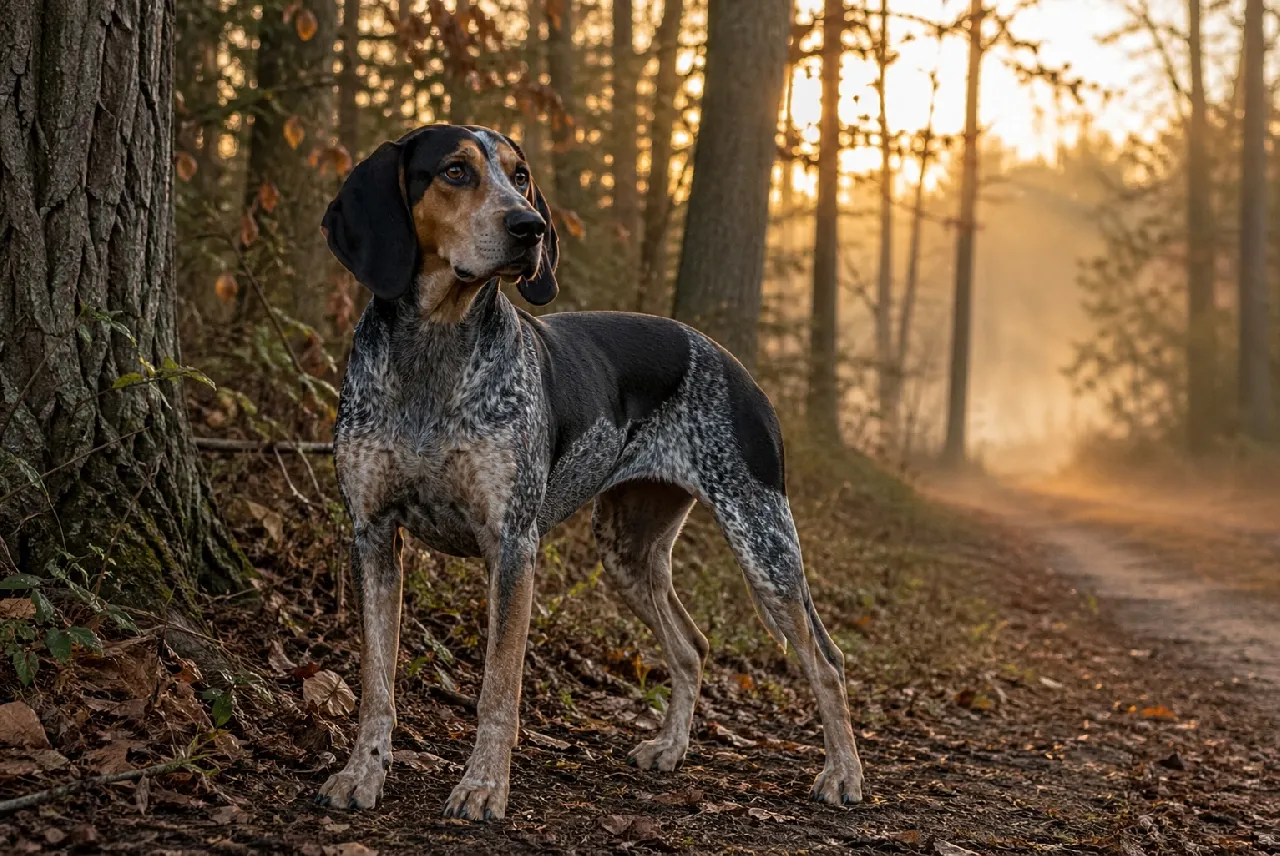
On paper, descriptions are one thing. In person, the American English Coonhound is a clean-built, athletic hound with long ears, a deep chest, and enough leg under him to eat up miles. He should look balanced rather than heavy. There is usually a little fire in the eye and a kind of alert readiness that tells you he is listening, smelling, and taking in more than people realize.
Coat care is simple compared to many breeds. The coat is short, close, and practical. You may see a range of color patterns, including redtick, bluetick, tricolor, and combinations with ticking. That short coat makes him easy enough to brush down after a hunt, but it also means he is not a dog you can neglect after a muddy night in the woods. Burrs, scratches, ear debris, and sore feet are part of life with any hardworking hound, and this breed is no exception.
American English Coonhound Temperament
At home, the American English Coonhound can be affectionate, social, and downright pleasant to live with if his needs are met. That last part matters. A well-exercised hound with structure and clear expectations is usually a much better house companion than one left to make his own fun. These dogs often enjoy their people, and many are good-natured with children when properly supervised and raised in a stable environment.
Still, this is a scent hound through and through. He is independent in a way that many non-hound owners underestimate. Independence does not mean he is stubborn for the sake of being difficult. It means he was bred to work away from the handler, solve scent problems, and keep going when the trail gets thin. In training and daily life, that can look like selective hearing, intense distraction outdoors, and a strong urge to follow his nose wherever it leads.
The breed is usually not sharp without reason, but it can be vocal. Anyone considering an American English Coonhound needs to be honest about that. A hound voice is part of the package. Some folks hear music in it. Neighbors may hear something else, especially if the dog is bored in a suburban backyard with too little exercise and too much time to complain.
Are They Good Family Dogs?
They can be, especially for active families who appreciate hound temperament and do not expect the dog to behave like a laid-back couch breed. The best homes for this breed usually provide room to move, a secure fence, and owners who enjoy training and outdoor activity. A family that hikes, spends time outside, and understands that scent hounds need management often does very well with this breed.
They may live peaceably with other dogs, and many do, but smaller pets can be more complicated because of prey drive. Early socialization helps, but instinct is instinct. It is wise to supervise carefully and never assume that a hound bred to pursue game will ignore fast-moving animals just because he was told to.
Exercise and Mental Stimulation Needs
If there is one area where people get in trouble with the American English Coonhound, it is underestimating his exercise needs. This dog was built to hunt for hours, not for a quick lap around the block. A short walk may take the edge off for a moment, but it will not satisfy the mind or body of a healthy adult hound.
These dogs do best with steady physical activity and chances to use their noses. Long walks, hikes, controlled running, scent games, tracking work, and field time all help. Without enough exercise, they can become noisy, destructive, restless, or skilled escape artists. A bored coonhound often turns into a problem that was preventable from the start.
I have seen hounds settle beautifully after a hard outing, feet stretched out and head down like they have earned the right to sleep. That calm does not come from nowhere. It comes from giving a working breed something close to the life his body and brain were designed for.
Training an American English Coonhound
Training this breed takes patience, consistency, and a sense of humor. Heavy-handed methods usually backfire. A hound may not argue with you openly, but he can decide your opinion carries very little value once a scent is in front of him. Fair training, repeated often and started early, goes a long way.
Basic obedience matters, especially recall, leash manners, kennel manners, and the ability to settle. Even then, no experienced hound person will tell you a coonhound is magically reliable off lead in every setting. If scent is hot and the dog is driven, instinct can outrun obedience in a hurry. Secure fencing and common sense are not optional with this breed.
Food rewards, praise, and short, purposeful sessions tend to work better than drilling. Socialization from puppyhood is just as important. Let the dog see new places, hear new sounds, meet stable people, and learn how to handle the world without becoming overexcited or unruly. If you plan to hunt, early exposure to woods, creeks, and proper game scent should be done thoughtfully and without rushing a young dog faster than his mind can develop.
House Training and Everyday Manners
Most American English Coonhounds are perfectly capable of becoming solid house dogs, but it does not happen by accident. Crate training helps. So does routine. If you let a young hound entertain himself unchecked, you may discover just how creative a nose-driven dog can be. Counter surfing, trash raiding, and roaming are all natural temptations for a breed that likes to investigate first and ask questions never.
Health and Grooming
The American English Coonhound is generally a hardy breed, but that does not mean maintenance can be ignored. Ear care is important because those long ears can trap moisture and debris. Nail trimming matters more than some owners realize, especially for a dog meant to move soundly over rough ground. Regular checks of pads, skin, and body condition should be part of the routine.
Like many medium to large active dogs, they can face issues such as hip problems, ear infections, and occasional injuries tied to hard activity. A serious owner keeps weight in check, feeds a quality diet, and works with a veterinarian who understands active dogs. Lean and fit is usually better than heavy, especially in a breed expected to stay athletic.
Grooming is straightforward. A weekly brushing removes loose hair and dirt, and a bath only needs to happen as necessary unless the dog has found something foul enough to roll in, which hounds seem to consider a special privilege. In hunting season, routine inspection after every outing can prevent small problems from turning into larger ones.
Is the American English Coonhound the Right Dog for You?
This is where honesty matters most. If you want a dog that is easy to exercise, naturally quiet, and content with a low-key lifestyle, this probably is not your breed. If you love the sound of a hound, enjoy the outdoors, and respect a dog with drive, grit, and independent intelligence, the American English Coonhound can be a fine companion.
For hunters, he offers what many have always valued in a true coonhound: desire, speed, endurance, and the tools to work a track over real country. For non-hunting owners, he can still be a rewarding dog, but only if his need for movement, structure, and scent-driven activity is taken seriously. The worst match for this breed is an owner who admires the look but does not understand the engine underneath it.
At his best, the American English Coonhound is a genuine hound in every good sense of the word. He is not polished around the edges like some modern companion breeds, and that is part of his appeal. There is honesty in him. Put him in the right hands, give him enough to do, and you will see why old houndsmen have held onto dogs like this for generations.
The American English Coonhound was built for work. He is leggy, tough, and able to cover country in a way that makes sense once you have watched him push through rough timber, creek crossings, and uneven ground without missing much of a beat. This is not a decorative dog. Even when he is resting on the porch, there is something about him that says he was made for movement, scent, and purpose. That truth shapes everything about the breed, from temperament to training to how well he fits into family life.
History and Purpose of the American English Coonhound
The roots of the American English Coonhound go back to the old English foxhounds brought to America and refined over generations for local game and local country. Hunters needed a dog that could move a cold trail, handle heat and rough terrain, and stay honest enough on game to finish what he started. Over time, that breeding produced a coonhound with speed, endurance, and a strong desire to run and tree.
In the field, this breed earned respect by being versatile. While many know the American English Coonhound for raccoon hunting, these dogs have also been used on fox and other game, depending on the region and the style of hunting. They are known for covering ground efficiently and often doing it with intensity. A good one does not just wander around hoping to bump into scent. He hunts with purpose, and when he opens on a line, seasoned hunters pay attention.
What the Breed Looks Like in the Real World
On paper, descriptions are one thing. In person, the American English Coonhound is a clean-built, athletic hound with long ears, a deep chest, and enough leg under him to eat up miles. He should look balanced rather than heavy. There is usually a little fire in the eye and a kind of alert readiness that tells you he is listening, smelling, and taking in more than people realize.
Coat care is simple compared to many breeds. The coat is short, close, and practical. You may see a range of color patterns, including redtick, bluetick, tricolor, and combinations with ticking. That short coat makes him easy enough to brush down after a hunt, but it also means he is not a dog you can neglect after a muddy night in the woods. Burrs, scratches, ear debris, and sore feet are part of life with any hardworking hound, and this breed is no exception.
American English Coonhound Temperament
At home, the American English Coonhound can be affectionate, social, and downright pleasant to live with if his needs are met. That last part matters. A well-exercised hound with structure and clear expectations is usually a much better house companion than one left to make his own fun. These dogs often enjoy their people, and many are good-natured with children when properly supervised and raised in a stable environment.
Still, this is a scent hound through and through. He is independent in a way that many non-hound owners underestimate. Independence does not mean he is stubborn for the sake of being difficult. It means he was bred to work away from the handler, solve scent problems, and keep going when the trail gets thin. In training and daily life, that can look like selective hearing, intense distraction outdoors, and a strong urge to follow his nose wherever it leads.
The breed is usually not sharp without reason, but it can be vocal. Anyone considering an American English Coonhound needs to be honest about that. A hound voice is part of the package. Some folks hear music in it. Neighbors may hear something else, especially if the dog is bored in a suburban backyard with too little exercise and too much time to complain.
Are They Good Family Dogs?
They can be, especially for active families who appreciate hound temperament and do not expect the dog to behave like a laid-back couch breed. The best homes for this breed usually provide room to move, a secure fence, and owners who enjoy training and outdoor activity. A family that hikes, spends time outside, and understands that scent hounds need management often does very well with this breed.
They may live peaceably with other dogs, and many do, but smaller pets can be more complicated because of prey drive. Early socialization helps, but instinct is instinct. It is wise to supervise carefully and never assume that a hound bred to pursue game will ignore fast-moving animals just because he was told to.
Exercise and Mental Stimulation Needs
If there is one area where people get in trouble with the American English Coonhound, it is underestimating his exercise needs. This dog was built to hunt for hours, not for a quick lap around the block. A short walk may take the edge off for a moment, but it will not satisfy the mind or body of a healthy adult hound.
These dogs do best with steady physical activity and chances to use their noses. Long walks, hikes, controlled running, scent games, tracking work, and field time all help. Without enough exercise, they can become noisy, destructive, restless, or skilled escape artists. A bored coonhound often turns into a problem that was preventable from the start.
I have seen hounds settle beautifully after a hard outing, feet stretched out and head down like they have earned the right to sleep. That calm does not come from nowhere. It comes from giving a working breed something close to the life his body and brain were designed for.
Training an American English Coonhound
Training this breed takes patience, consistency, and a sense of humor. Heavy-handed methods usually backfire. A hound may not argue with you openly, but he can decide your opinion carries very little value once a scent is in front of him. Fair training, repeated often and started early, goes a long way.
Basic obedience matters, especially recall, leash manners, kennel manners, and the ability to settle. Even then, no experienced hound person will tell you a coonhound is magically reliable off lead in every setting. If scent is hot and the dog is driven, instinct can outrun obedience in a hurry. Secure fencing and common sense are not optional with this breed.
Food rewards, praise, and short, purposeful sessions tend to work better than drilling. Socialization from puppyhood is just as important. Let the dog see new places, hear new sounds, meet stable people, and learn how to handle the world without becoming overexcited or unruly. If you plan to hunt, early exposure to woods, creeks, and proper game scent should be done thoughtfully and without rushing a young dog faster than his mind can develop.
House Training and Everyday Manners
Most American English Coonhounds are perfectly capable of becoming solid house dogs, but it does not happen by accident. Crate training helps. So does routine. If you let a young hound entertain himself unchecked, you may discover just how creative a nose-driven dog can be. Counter surfing, trash raiding, and roaming are all natural temptations for a breed that likes to investigate first and ask questions never.
Health and Grooming
The American English Coonhound is generally a hardy breed, but that does not mean maintenance can be ignored. Ear care is important because those long ears can trap moisture and debris. Nail trimming matters more than some owners realize, especially for a dog meant to move soundly over rough ground. Regular checks of pads, skin, and body condition should be part of the routine.
Like many medium to large active dogs, they can face issues such as hip problems, ear infections, and occasional injuries tied to hard activity. A serious owner keeps weight in check, feeds a quality diet, and works with a veterinarian who understands active dogs. Lean and fit is usually better than heavy, especially in a breed expected to stay athletic.
Grooming is straightforward. A weekly brushing removes loose hair and dirt, and a bath only needs to happen as necessary unless the dog has found something foul enough to roll in, which hounds seem to consider a special privilege. In hunting season, routine inspection after every outing can prevent small problems from turning into larger ones.
Is the American English Coonhound the Right Dog for You?
This is where honesty matters most. If you want a dog that is easy to exercise, naturally quiet, and content with a low-key lifestyle, this probably is not your breed. If you love the sound of a hound, enjoy the outdoors, and respect a dog with drive, grit, and independent intelligence, the American English Coonhound can be a fine companion.
For hunters, he offers what many have always valued in a true coonhound: desire, speed, endurance, and the tools to work a track over real country. For non-hunting owners, he can still be a rewarding dog, but only if his need for movement, structure, and scent-driven activity is taken seriously. The worst match for this breed is an owner who admires the look but does not understand the engine underneath it.
At his best, the American English Coonhound is a genuine hound in every good sense of the word. He is not polished around the edges like some modern companion breeds, and that is part of his appeal. There is honesty in him. Put him in the right hands, give him enough to do, and you will see why old houndsmen have held onto dogs like this for generations.




View all 0 comments