
Cur Dogs as Squirrel Dogs
Why They Still Shine in the Timber
Jeff Davis | https://hounddogcentral.com
 0
0 0
0 0
0 0
0 0
0
If you spend enough mornings in hardwood timber, you learn pretty quickly that not every dog is built for squirrel work. Some have plenty of go but no handle. Some are honest on the tree but lack the nose to move a track when conditions get tough. And some simply do not have the brains to adjust when a squirrel pulls a trick that would fool a lesser dog. That is where Cur dogs have long made their name. A good Cur dog as a squirrel dog is not a novelty or a compromise. In the right hands, and out of the right stock, that dog is one of the finest tree dogs a hunter can lead into the woods.
Folks who have hunted behind Mountain Curs, Black Mouth Curs, Stephens Curs, and tree-minded crossbred Curs know the appeal. These dogs bring grit, intelligence, and practical sense to the hunt. They are often close-working enough to stay in the game with you, but independent enough to drift out, strike sign, and put a squirrel on the outside of a tree where you can actually find it. That balance is hard to breed and harder to train, but when a Cur has it, the woods feel different. Every rustle matters. Every bark means something.
What Makes a Cur Dog Good on Squirrels?
The best Cur squirrel dogs are not always the flashiest dogs in the kennel. A lot of them are plain, businesslike animals that go hunting with purpose. What separates them is a combination of traits that matter in real woods, not just in stories told around a tailgate. They have enough nose to work cold or drifting scent, enough desire to range for game, and enough sense to check themselves when a squirrel starts making circles through den trees and leaning timber.
A good Cur also has what old-timers often call tree sense. That is not easy to define until you see it. One dog slams a tree every few minutes and has you staring at bark. Another works the ground honestly, checks the wind, watches the canopy, and settles on the right tree with confidence. That second dog is the one you remember. Cur dogs that become reliable squirrel dogs usually have a natural ability to move from track to tree without making the hunt harder than it has to be.
They also tend to have the kind of brains a squirrel hunter values. Squirrel hunting is not just speed. It is judgment. A dog has to know when to press and when to slow down. It has to deal with leaf cover early in the season, frozen ground later on, and those dry, windy mornings when scent seems to disappear before it ever settles. Many Cur dogs handle those changing conditions well because they are practical dogs by nature. They adapt instead of falling apart.
The Balance Between Range and Handle
One reason many hunters favor Curs over some other tree dogs for squirrels is their balance. Most squirrel hunters do not want a dog that is a mile deep every time it gets turned loose. They want a dog that hunts hard, checks likely cover, and stays huntable. A strong Cur dog often works in a way that suits walking hunters. It may cast ahead, sweep ridges, slip down creek bottoms, and then circle back into hearing if game is scarce. That style keeps the day enjoyable and productive.
Of course, there are hot-nosed and wide-running individuals in every breed type, and there are close-hunting Curs that need encouragement. But as a general rule, Cur dogs fit the rhythm of squirrel hunting well. They are often easier to call, easier to guide, and easier to keep focused on the kind of hunt most owners actually do on weekends and cool mornings before work.
How Cur Dogs Hunt Squirrels in Real Woods
A seasoned Cur dog does not usually hunt like a machine. It hunts like a thinking animal. In good squirrel country, the dog may move briskly, head up, checking wind and ground at the same time. If it catches fresh movement or body scent where squirrels have fed, it may begin to work more carefully. Sometimes the dog opens. Sometimes it stays quiet until the tree. That depends on the line, the individual dog, and how the squirrel is moving.
I have seen good Curs drift a track through white oak flats so lightly that you would think they were not on anything at all, then throw their heads up and lock onto a shaggy hickory where the squirrel had flattened itself against a limb. I have also seen them work cutovers and field edges where fox squirrels feed heavy, easing through briars and brush until they hit hot sign and drove it to the tree in a burst of excitement. That versatility is one of the breed type's strengths. Cur dogs can handle classic hardwood hunts, rougher edge cover, and mixed country where game does not always cooperate.
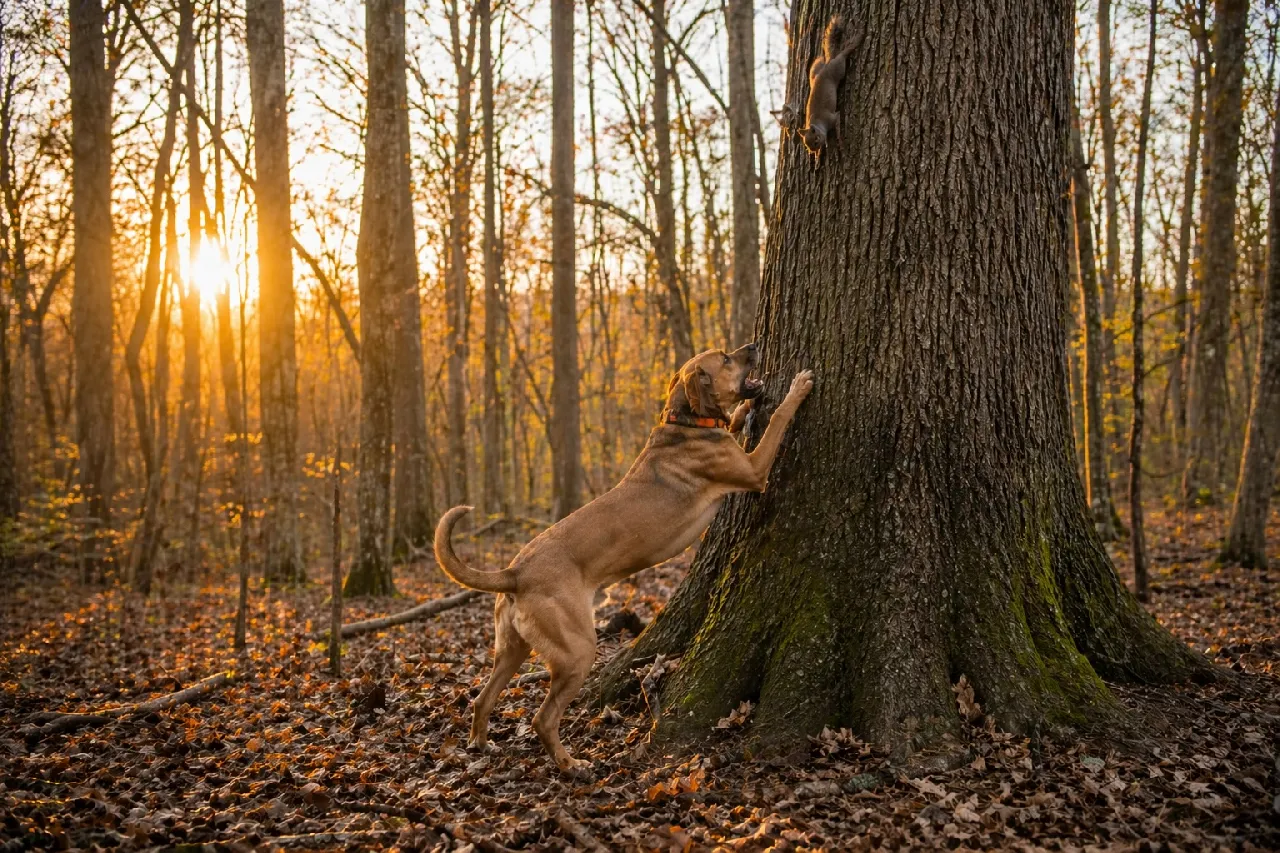
When they tree right, many Curs are stylish without being foolish. They bark enough to hold pressure and let you find them, but the better ones do not spend all morning chattering on slick timber. Their bark often has a sharp, urgent tone that carries well in hollows and ridges. Once you have heard your own dog lock down on a real squirrel tree a few dozen times, you begin to know the difference before you even get there.
Why Cur Dogs Appeal to Squirrel Hunters
Cur dogs appeal to serious squirrel hunters because they often offer more than one kind of usefulness. They are commonly rugged, athletic, and sensible around the home and truck. Many make fine farm or family dogs when given enough exercise and direction. For owners interested in hound dogs and working tree dogs, that matters. A squirrel dog does not live only in the woods. It lives in your routine. A Cur that can ride quietly, handle well, and settle down after a hunt becomes a pleasure to own, not just a tool you feed.
They also tend to mature into steady workers if they are started right. Some show early interest and begin treeing squirrels young. Others need a season to click. Either way, a lot of Cur dogs improve because they are paying attention. They are the kind of dogs that learn from game, learn from correction, and learn from success.
Training a Cur Dog for Squirrel Hunting
Starting a Cur dog on squirrels is usually straightforward if the dog has the genetics for it. Exposure matters. Woods time matters. Letting a young dog see game and connect scent, movement, and treeing behavior matters more than fancy training theories. The best starts I have seen came from pups that spent time in squirrel woods with a sensible older dog or with a patient hunter who knew when to keep quiet and let the dog figure things out.
Too much interference can slow a promising Cur down. These dogs often benefit from clear expectations and simple routines. Take them where squirrels are. Hunt them when game is moving. Reward honest work. Correct only what needs correcting. If a young dog mills around your feet, encourage it to hunt out. If it wants to leave the country every drop, rein that habit in before it becomes permanent. Balance starts early.
Tree accuracy should always matter more than excitement. A Cur dog that learns it can get praise for guessing will become a headache in a hurry. Let the woods teach honesty. Walk in, look hard, and take your time before rewarding a tree. The best squirrel hunters are patient at the trunk because they know how often a squirrel will hide behind a fork, flatten on a vine, or slip to a nearby tree if pressure gives it the chance.
Common Mistakes Owners Make
One mistake is expecting every Cur to hunt exactly alike. Even within the same family of dogs, style varies. Another is pushing a young dog too hard before its confidence catches up to its drive. Some pups need game-rich hunts and short sessions. Others can take more pressure early. Reading the dog in front of you is part of becoming a better handler.
Another common issue is neglecting obedience because the dog is doing well on game. A squirrel dog still needs recall, kennel manners, and enough discipline to hunt safely around roads, livestock, and other hunters. Cur dogs are smart enough to learn all of that, but smart dogs can also develop bad habits fast if you let things slide.
Choosing the Right Cur for Squirrel Hunting
If you are considering a Cur dog as a squirrel dog, start with proven stock. Papers can tell you what a dog is supposed to be, but the woods tell you what it really is. Look for parents or close relatives that are hunted regularly and that produce the kind of dog you want. Ask honest questions about range, mouth, tree style, accuracy, grit, and temperament. A good breeder or hunter will not act offended by practical questions. They will welcome them.
Think about your own hunting too. If you hunt small woodlots, you may prefer a closer-working Cur. If you hunt big public timber and like a dog that reaches, you may want more range. If children and family life are part of the picture, be realistic about energy level and management. Cur dogs can make excellent companions, but they are still working dogs at heart.
Why Cur Dogs Still Matter Today
Cur dogs remain relevant as squirrel dogs because they were built for honest work and because honest work never goes out of style. In a time when plenty of people want quick answers and easy shortcuts, these dogs still reward the old way of doing things. Put in the miles. Learn your dog. Hunt the seasons as they come. Pay attention to the wind, the mast, the tracks in the damp leaves, and the change in your dog's bark when it knows the game is up a tree.
That is the real charm of hunting squirrels behind a Cur. It feels personal. It feels active. You are not just following noise through the timber. You are reading a dog that is reading the woods. When the dog is right, and you slip in under a big oak while the morning light filters through bare limbs, the whole thing feels as natural as it ever did.
For dog owners interested in hound dogs and tree dogs, a well-bred Cur deserves serious consideration. These dogs have the instincts, brains, and toughness to make true squirrel dogs, and they do it with a style all their own. If you want a hunting companion that can work hard, think clearly, and make a frosty morning in the timber worth remembering, it is hard to overlook a good Cur.
Folks who have hunted behind Mountain Curs, Black Mouth Curs, Stephens Curs, and tree-minded crossbred Curs know the appeal. These dogs bring grit, intelligence, and practical sense to the hunt. They are often close-working enough to stay in the game with you, but independent enough to drift out, strike sign, and put a squirrel on the outside of a tree where you can actually find it. That balance is hard to breed and harder to train, but when a Cur has it, the woods feel different. Every rustle matters. Every bark means something.
What Makes a Cur Dog Good on Squirrels?
The best Cur squirrel dogs are not always the flashiest dogs in the kennel. A lot of them are plain, businesslike animals that go hunting with purpose. What separates them is a combination of traits that matter in real woods, not just in stories told around a tailgate. They have enough nose to work cold or drifting scent, enough desire to range for game, and enough sense to check themselves when a squirrel starts making circles through den trees and leaning timber.
A good Cur also has what old-timers often call tree sense. That is not easy to define until you see it. One dog slams a tree every few minutes and has you staring at bark. Another works the ground honestly, checks the wind, watches the canopy, and settles on the right tree with confidence. That second dog is the one you remember. Cur dogs that become reliable squirrel dogs usually have a natural ability to move from track to tree without making the hunt harder than it has to be.
They also tend to have the kind of brains a squirrel hunter values. Squirrel hunting is not just speed. It is judgment. A dog has to know when to press and when to slow down. It has to deal with leaf cover early in the season, frozen ground later on, and those dry, windy mornings when scent seems to disappear before it ever settles. Many Cur dogs handle those changing conditions well because they are practical dogs by nature. They adapt instead of falling apart.
The Balance Between Range and Handle
One reason many hunters favor Curs over some other tree dogs for squirrels is their balance. Most squirrel hunters do not want a dog that is a mile deep every time it gets turned loose. They want a dog that hunts hard, checks likely cover, and stays huntable. A strong Cur dog often works in a way that suits walking hunters. It may cast ahead, sweep ridges, slip down creek bottoms, and then circle back into hearing if game is scarce. That style keeps the day enjoyable and productive.
Of course, there are hot-nosed and wide-running individuals in every breed type, and there are close-hunting Curs that need encouragement. But as a general rule, Cur dogs fit the rhythm of squirrel hunting well. They are often easier to call, easier to guide, and easier to keep focused on the kind of hunt most owners actually do on weekends and cool mornings before work.
How Cur Dogs Hunt Squirrels in Real Woods
A seasoned Cur dog does not usually hunt like a machine. It hunts like a thinking animal. In good squirrel country, the dog may move briskly, head up, checking wind and ground at the same time. If it catches fresh movement or body scent where squirrels have fed, it may begin to work more carefully. Sometimes the dog opens. Sometimes it stays quiet until the tree. That depends on the line, the individual dog, and how the squirrel is moving.
I have seen good Curs drift a track through white oak flats so lightly that you would think they were not on anything at all, then throw their heads up and lock onto a shaggy hickory where the squirrel had flattened itself against a limb. I have also seen them work cutovers and field edges where fox squirrels feed heavy, easing through briars and brush until they hit hot sign and drove it to the tree in a burst of excitement. That versatility is one of the breed type's strengths. Cur dogs can handle classic hardwood hunts, rougher edge cover, and mixed country where game does not always cooperate.
When they tree right, many Curs are stylish without being foolish. They bark enough to hold pressure and let you find them, but the better ones do not spend all morning chattering on slick timber. Their bark often has a sharp, urgent tone that carries well in hollows and ridges. Once you have heard your own dog lock down on a real squirrel tree a few dozen times, you begin to know the difference before you even get there.
Why Cur Dogs Appeal to Squirrel Hunters
Cur dogs appeal to serious squirrel hunters because they often offer more than one kind of usefulness. They are commonly rugged, athletic, and sensible around the home and truck. Many make fine farm or family dogs when given enough exercise and direction. For owners interested in hound dogs and working tree dogs, that matters. A squirrel dog does not live only in the woods. It lives in your routine. A Cur that can ride quietly, handle well, and settle down after a hunt becomes a pleasure to own, not just a tool you feed.
They also tend to mature into steady workers if they are started right. Some show early interest and begin treeing squirrels young. Others need a season to click. Either way, a lot of Cur dogs improve because they are paying attention. They are the kind of dogs that learn from game, learn from correction, and learn from success.
Training a Cur Dog for Squirrel Hunting
Starting a Cur dog on squirrels is usually straightforward if the dog has the genetics for it. Exposure matters. Woods time matters. Letting a young dog see game and connect scent, movement, and treeing behavior matters more than fancy training theories. The best starts I have seen came from pups that spent time in squirrel woods with a sensible older dog or with a patient hunter who knew when to keep quiet and let the dog figure things out.
Too much interference can slow a promising Cur down. These dogs often benefit from clear expectations and simple routines. Take them where squirrels are. Hunt them when game is moving. Reward honest work. Correct only what needs correcting. If a young dog mills around your feet, encourage it to hunt out. If it wants to leave the country every drop, rein that habit in before it becomes permanent. Balance starts early.
Tree accuracy should always matter more than excitement. A Cur dog that learns it can get praise for guessing will become a headache in a hurry. Let the woods teach honesty. Walk in, look hard, and take your time before rewarding a tree. The best squirrel hunters are patient at the trunk because they know how often a squirrel will hide behind a fork, flatten on a vine, or slip to a nearby tree if pressure gives it the chance.
Common Mistakes Owners Make
One mistake is expecting every Cur to hunt exactly alike. Even within the same family of dogs, style varies. Another is pushing a young dog too hard before its confidence catches up to its drive. Some pups need game-rich hunts and short sessions. Others can take more pressure early. Reading the dog in front of you is part of becoming a better handler.
Another common issue is neglecting obedience because the dog is doing well on game. A squirrel dog still needs recall, kennel manners, and enough discipline to hunt safely around roads, livestock, and other hunters. Cur dogs are smart enough to learn all of that, but smart dogs can also develop bad habits fast if you let things slide.
Choosing the Right Cur for Squirrel Hunting
If you are considering a Cur dog as a squirrel dog, start with proven stock. Papers can tell you what a dog is supposed to be, but the woods tell you what it really is. Look for parents or close relatives that are hunted regularly and that produce the kind of dog you want. Ask honest questions about range, mouth, tree style, accuracy, grit, and temperament. A good breeder or hunter will not act offended by practical questions. They will welcome them.
Think about your own hunting too. If you hunt small woodlots, you may prefer a closer-working Cur. If you hunt big public timber and like a dog that reaches, you may want more range. If children and family life are part of the picture, be realistic about energy level and management. Cur dogs can make excellent companions, but they are still working dogs at heart.
Why Cur Dogs Still Matter Today
Cur dogs remain relevant as squirrel dogs because they were built for honest work and because honest work never goes out of style. In a time when plenty of people want quick answers and easy shortcuts, these dogs still reward the old way of doing things. Put in the miles. Learn your dog. Hunt the seasons as they come. Pay attention to the wind, the mast, the tracks in the damp leaves, and the change in your dog's bark when it knows the game is up a tree.
That is the real charm of hunting squirrels behind a Cur. It feels personal. It feels active. You are not just following noise through the timber. You are reading a dog that is reading the woods. When the dog is right, and you slip in under a big oak while the morning light filters through bare limbs, the whole thing feels as natural as it ever did.
For dog owners interested in hound dogs and tree dogs, a well-bred Cur deserves serious consideration. These dogs have the instincts, brains, and toughness to make true squirrel dogs, and they do it with a style all their own. If you want a hunting companion that can work hard, think clearly, and make a frosty morning in the timber worth remembering, it is hard to overlook a good Cur.




View all 0 comments