The Different Styles of Coonhounds
How Each Breed Hunts the Night Woods
Jeff Davis | https://hounddogcentral.com
 0
0 0
0 0
0 0
0 0
0
Spend enough nights in the woods listening to hounds and you quickly learn something important—no two coonhounds hunt exactly alike.
To someone new to the sport, the music of a pack of hounds echoing through a river bottom might sound similar. But seasoned hunters know better. Each breed, and often each individual dog, carries its own style of hunting. Some dogs burn through the country looking for a hot track. Others move slowly and carefully, unraveling a scent that might be hours old. Some tree quickly and stay put like they’re nailed to the bark. Others work the track longer before committing.
Those differences aren’t accidents. They’re the result of generations of breeding, regional hunting traditions, and the type of terrain where each hound developed.
Understanding the different styles of coonhounds is part of becoming a better hunter—and it’s one of the reasons the sport has remained so fascinating for generations.
The Treeing Walker: Speed and Accuracy
If there’s a breed that represents the modern competition-style coonhound, it’s the Treeing Walker.
Walkers are known for speed, drive, and an aggressive approach to striking a track. Turn one loose and it often won’t take long before the woods light up with a locate. Many Walker hounds hunt with their heads up, covering ground quickly until they cross fresh scent. Once they hit a good track, they tend to move it fast.
That speed is part of what made them dominate night hunts and field competitions across the country. Walkers are often described as “quick strike and quick tree” dogs. They’re built to get treed first.
But speed doesn’t mean recklessness when the dog is bred right. A good Walker hound balances speed with accuracy, driving the track until the raccoon climbs and then locking down on the tree with a loud, ringing chop that carries through the timber.
Listen to a good Walker hound tree on a cold autumn night and you’ll hear the confidence in every bark.
The Bluetick: Methodical Track Power
Blueticks often hunt with a completely different mindset.
Where Walkers may push the woods looking for hot scent, Blueticks are known for their ability to work colder tracks that other dogs might struggle with. Many hunters describe them as “track dogs first and tree dogs second.”
A Bluetick tends to work deliberately. When it strikes a track, you might hear long, steady bawls as the dog sorts out the scent. Instead of racing through the woods, the Bluetick often methodically moves the track forward, piece by piece, until the trail finally heats up.
Once the track comes together, the pace usually picks up. But the real strength of the breed is their nose and determination.
In big river bottoms, swamp edges, and colder northern climates where tracks age quickly, that kind of trailing ability can make all the difference.
There’s a reason many old-time hunters swore by Blueticks when the conditions were tough.
The Redbone: Balanced and Steady
Redbones occupy a middle ground in many ways.
They’re known for being balanced hounds—dogs that can both trail and tree with consistency. While individual dogs vary, many Redbones show a steady style that blends tracking ability with reliable tree instinct.
A Redbone often works a track with confidence but without the extreme speed of some Walker dogs or the ultra-deliberate style sometimes seen in Blueticks. When the track heats up, they can move it quickly and transition smoothly to the tree.
One thing many hunters appreciate about Redbones is their temperament. They tend to be level-headed dogs that are easy to hunt and dependable night after night.
Their rich red coats glowing in the beam of a headlamp is a sight many coonhunters know well.
The Black and Tan: Old-School Grit
The Black and Tan Coonhound is one of the oldest recognized coonhound breeds in America, and its hunting style reflects that heritage.
Black and Tans are often known for a powerful nose and strong tracking ability. Many hunters describe them as gritty, determined hounds that won’t quit on a tough track.
They may not always be the fastest dog in the woods, but when conditions are difficult—frost on the ground, dry leaves underfoot, or an old track drifting through the timber—Black and Tans often shine.
Their deep, booming bawl mouth is one of the most recognizable sounds in coon hunting. When a Black and Tan opens on track, you can usually hear it for a long distance.
Once treed, many Black and Tans settle into a steady rhythm that can go on for hours if necessary.
The Plott: Intensity and Drive
Plotts bring a slightly different personality to the coonhound world.
Originally bred in the mountains of North Carolina, Plotts were developed not just for raccoons but for larger game like bear and wild boar. That heritage still shows in their hunting style.
Plott hounds often hunt with intensity and toughness. They tend to be gritty dogs that push a track hard and show strong determination when game is moving.
In rough terrain, especially mountain country, that drive becomes an advantage. Plotts are known for being physically durable and mentally stubborn when it comes to finishing a track.
Their voices often carry a distinctive sharpness that experienced hunters can recognize quickly in the dark woods.
The American English: Versatile and Fast
The American English Coonhound combines traits that many hunters admire.
These dogs are often fast on track and capable of covering a lot of ground quickly. Many English hounds hunt wide and aggressively, striking tracks with enthusiasm.
Once they hit scent, they often push the track with speed while maintaining enough nose to handle varying conditions.
One of the reasons English hounds remain popular is their versatility. They can perform well in pleasure hunting, competition hunts, and a variety of terrain types across the country.
When you hear a pack of English dogs driving a track across a hollow, the excitement builds quickly.
Style Matters in the Night Woods
For hunters, understanding these styles helps explain why different people prefer different breeds.
A hunter in swamp country might prefer a cold-nosed Bluetick that can unravel old tracks. Someone competing in night hunts might lean toward the explosive speed of a Walker. A mountain hunter chasing bear or lion might trust the grit of a Plott.
But the truth is that individual dogs matter just as much as breed labels.
Within every breed you’ll find dogs that break the stereotypes. Some Walkers trail like Blueticks. Some Redbones tree with blistering speed. Some Black and Tans hunt harder than anything in the woods.
That’s part of what keeps coon hunting interesting. Every dog brings its own personality to the hunt.
The Music of Hounds
Ask any old coonhunter what keeps them coming back to the woods and most will give the same answer.
It’s the sound.
The strike of a hound opening on track. The steady rhythm of trailing through the timber. The sudden locate that echoes across a hollow before the dog settles into a hard tree bark.
Each breed contributes its own voice to that nighttime symphony.
Walkers ringing through the bottoms. Blueticks bawling on a drifting track. Black and Tans rolling out a deep, booming mouth. Plotts driving hard in the mountains.
Together they form a tradition that stretches back generations.
And whether you prefer one style over another, every coonhunter knows that feeling when the dog finally locates and the woods erupt in tree bark.
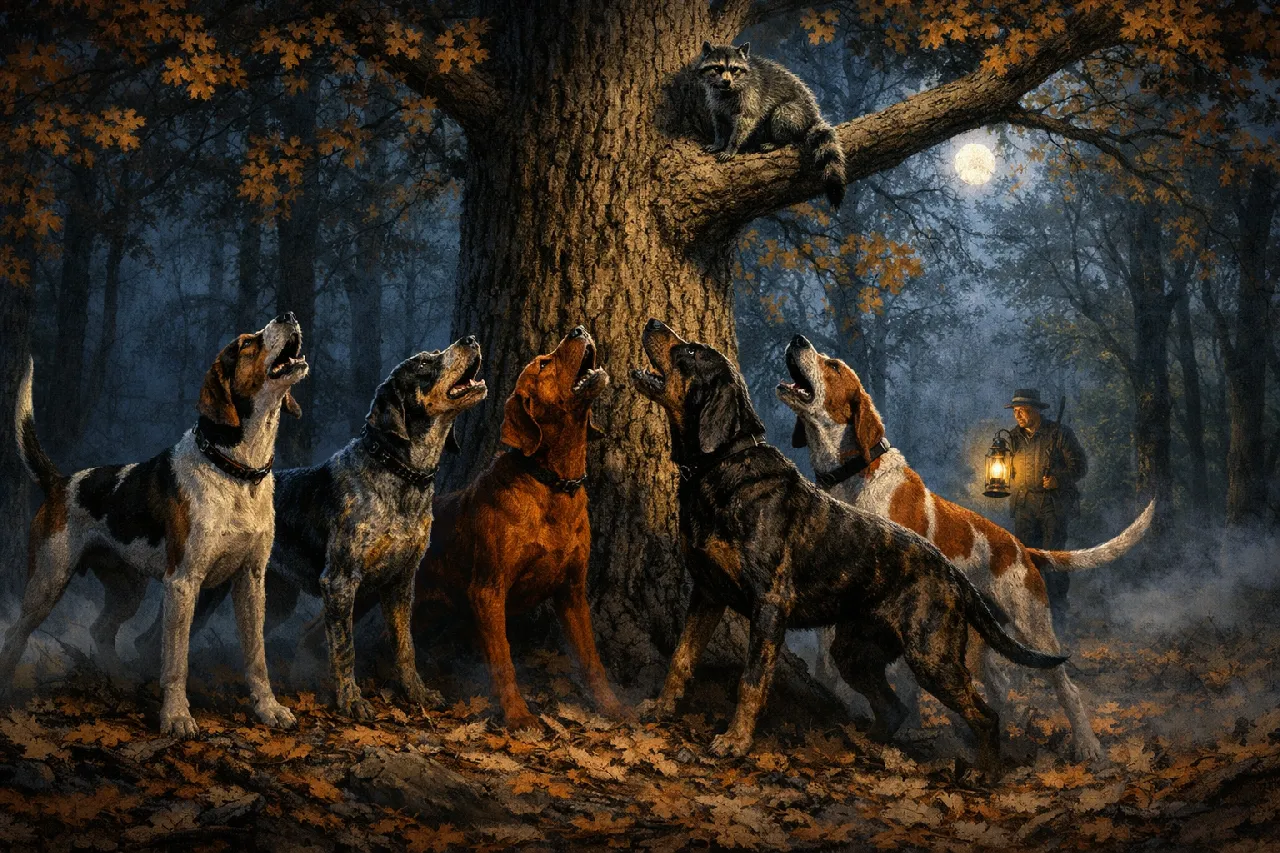
That’s when you grab your light, start walking toward the sound, and hope to see a pair of glowing eyes looking down from the branches above.
To someone new to the sport, the music of a pack of hounds echoing through a river bottom might sound similar. But seasoned hunters know better. Each breed, and often each individual dog, carries its own style of hunting. Some dogs burn through the country looking for a hot track. Others move slowly and carefully, unraveling a scent that might be hours old. Some tree quickly and stay put like they’re nailed to the bark. Others work the track longer before committing.
Those differences aren’t accidents. They’re the result of generations of breeding, regional hunting traditions, and the type of terrain where each hound developed.
Understanding the different styles of coonhounds is part of becoming a better hunter—and it’s one of the reasons the sport has remained so fascinating for generations.
The Treeing Walker: Speed and Accuracy
If there’s a breed that represents the modern competition-style coonhound, it’s the Treeing Walker.
Walkers are known for speed, drive, and an aggressive approach to striking a track. Turn one loose and it often won’t take long before the woods light up with a locate. Many Walker hounds hunt with their heads up, covering ground quickly until they cross fresh scent. Once they hit a good track, they tend to move it fast.
That speed is part of what made them dominate night hunts and field competitions across the country. Walkers are often described as “quick strike and quick tree” dogs. They’re built to get treed first.
But speed doesn’t mean recklessness when the dog is bred right. A good Walker hound balances speed with accuracy, driving the track until the raccoon climbs and then locking down on the tree with a loud, ringing chop that carries through the timber.
Listen to a good Walker hound tree on a cold autumn night and you’ll hear the confidence in every bark.
The Bluetick: Methodical Track Power
Blueticks often hunt with a completely different mindset.
Where Walkers may push the woods looking for hot scent, Blueticks are known for their ability to work colder tracks that other dogs might struggle with. Many hunters describe them as “track dogs first and tree dogs second.”
A Bluetick tends to work deliberately. When it strikes a track, you might hear long, steady bawls as the dog sorts out the scent. Instead of racing through the woods, the Bluetick often methodically moves the track forward, piece by piece, until the trail finally heats up.
Once the track comes together, the pace usually picks up. But the real strength of the breed is their nose and determination.
In big river bottoms, swamp edges, and colder northern climates where tracks age quickly, that kind of trailing ability can make all the difference.
There’s a reason many old-time hunters swore by Blueticks when the conditions were tough.
The Redbone: Balanced and Steady
Redbones occupy a middle ground in many ways.
They’re known for being balanced hounds—dogs that can both trail and tree with consistency. While individual dogs vary, many Redbones show a steady style that blends tracking ability with reliable tree instinct.
A Redbone often works a track with confidence but without the extreme speed of some Walker dogs or the ultra-deliberate style sometimes seen in Blueticks. When the track heats up, they can move it quickly and transition smoothly to the tree.
One thing many hunters appreciate about Redbones is their temperament. They tend to be level-headed dogs that are easy to hunt and dependable night after night.
Their rich red coats glowing in the beam of a headlamp is a sight many coonhunters know well.
The Black and Tan: Old-School Grit
The Black and Tan Coonhound is one of the oldest recognized coonhound breeds in America, and its hunting style reflects that heritage.
Black and Tans are often known for a powerful nose and strong tracking ability. Many hunters describe them as gritty, determined hounds that won’t quit on a tough track.
They may not always be the fastest dog in the woods, but when conditions are difficult—frost on the ground, dry leaves underfoot, or an old track drifting through the timber—Black and Tans often shine.
Their deep, booming bawl mouth is one of the most recognizable sounds in coon hunting. When a Black and Tan opens on track, you can usually hear it for a long distance.
Once treed, many Black and Tans settle into a steady rhythm that can go on for hours if necessary.
The Plott: Intensity and Drive
Plotts bring a slightly different personality to the coonhound world.
Originally bred in the mountains of North Carolina, Plotts were developed not just for raccoons but for larger game like bear and wild boar. That heritage still shows in their hunting style.
Plott hounds often hunt with intensity and toughness. They tend to be gritty dogs that push a track hard and show strong determination when game is moving.
In rough terrain, especially mountain country, that drive becomes an advantage. Plotts are known for being physically durable and mentally stubborn when it comes to finishing a track.
Their voices often carry a distinctive sharpness that experienced hunters can recognize quickly in the dark woods.
The American English: Versatile and Fast
The American English Coonhound combines traits that many hunters admire.
These dogs are often fast on track and capable of covering a lot of ground quickly. Many English hounds hunt wide and aggressively, striking tracks with enthusiasm.
Once they hit scent, they often push the track with speed while maintaining enough nose to handle varying conditions.
One of the reasons English hounds remain popular is their versatility. They can perform well in pleasure hunting, competition hunts, and a variety of terrain types across the country.
When you hear a pack of English dogs driving a track across a hollow, the excitement builds quickly.
Style Matters in the Night Woods
For hunters, understanding these styles helps explain why different people prefer different breeds.
A hunter in swamp country might prefer a cold-nosed Bluetick that can unravel old tracks. Someone competing in night hunts might lean toward the explosive speed of a Walker. A mountain hunter chasing bear or lion might trust the grit of a Plott.
But the truth is that individual dogs matter just as much as breed labels.
Within every breed you’ll find dogs that break the stereotypes. Some Walkers trail like Blueticks. Some Redbones tree with blistering speed. Some Black and Tans hunt harder than anything in the woods.
That’s part of what keeps coon hunting interesting. Every dog brings its own personality to the hunt.
The Music of Hounds
Ask any old coonhunter what keeps them coming back to the woods and most will give the same answer.
It’s the sound.
The strike of a hound opening on track. The steady rhythm of trailing through the timber. The sudden locate that echoes across a hollow before the dog settles into a hard tree bark.
Each breed contributes its own voice to that nighttime symphony.
Walkers ringing through the bottoms. Blueticks bawling on a drifting track. Black and Tans rolling out a deep, booming mouth. Plotts driving hard in the mountains.
Together they form a tradition that stretches back generations.
And whether you prefer one style over another, every coonhunter knows that feeling when the dog finally locates and the woods erupt in tree bark.
That’s when you grab your light, start walking toward the sound, and hope to see a pair of glowing eyes looking down from the branches above.

What Makes a Hard Tree Dog
Spend enough nights in the woods behind coonhounds and you’ll hear the term hard tree dog tossed around like a badge of honor. It’s one of those phrases that means a lot more than it sounds like on the surface. Anyone c.. more ..
Posted on Sunday 15th March 2026 12:00:00 AM
By Jeff Davis

The Soundtrack of Fall
There is a certain music that belongs only to autumn in the hardwoods, and if you’ve walked behind a good squirrel dog, you know exactly what it sounds like. It begins softly—leaves shifting under boots, a faint breeze moving through hi.. more ..
Posted on Saturday 28th February 2026 12:00:00 AM
By Jeff Davis




View all 0 comments