
Why Feist Dogs Excel in Hardwood Timber
Jeff Davis | https://hounddogcentral.com
 0
0 0
0 0
0 0
0 0
0
If you’ve spent much time squirrel hunting in big hardwood timber, you eventually learn something that old hunters have known for generations: a good Feist dog is built almost perfectly for the job.
There’s something about watching a Feist work the woods that just makes sense. These little dogs slip through timber ridges and creek bottoms like they belong there, moving quickly but never recklessly. They check trees, work scent, and constantly keep their eyes up in the canopy. It’s a style of hunting that looks natural because it is natural. Feists were developed for exactly this kind of country.
And when you turn one loose in a hardwood forest full of squirrels, it doesn’t take long to understand why these dogs have earned such a loyal following among serious hunters.
Built for the Timber
Hardwood forests create a unique hunting environment. Oak ridges, hickory flats, and mixed hardwood bottoms are often thick with fallen leaves, brushy understory, and scattered deadfalls. Squirrels use the treetops like highways, moving quickly from limb to limb while staying just out of sight.
A dog hunting in that kind of terrain needs more than just a good nose.
It needs speed. It needs agility. And maybe most importantly, it needs the instinct to constantly watch the trees.
That’s where the Feist shines.
Most Feists weigh somewhere between fifteen and thirty pounds, which makes them light on their feet and extremely agile. They can weave through saplings, jump over logs, and cover ground quickly without burning out. In hardwood timber where the terrain is uneven and cluttered, that kind of mobility makes a big difference.
A heavier dog can struggle in thick woods, but a Feist moves like it was designed for the job.
Eyes in the Canopy
One of the traits that separates a good Feist from many other squirrel dogs is how much they hunt with their eyes.
A squirrel slipping along a limb may leave only a faint scent trail, especially on dry autumn mornings when the woods are crisp and quiet. Feists are famous for spotting movement in the treetops that a hunter might miss completely.
More than once I’ve watched a Feist slam to a stop and stare straight up into the branches long before I ever saw the squirrel. A flick of a tail, a shake of leaves, or the faintest movement in the canopy is often all it takes.
That kind of visual awareness makes Feists incredibly effective in hardwood timber where squirrels spend most of their time above the ground.
Instead of simply trailing scent on the forest floor, they constantly check the trees. When they locate a squirrel, they waste no time locking down and treeing with sharp, excited barks that echo through the woods.
Speed That Keeps Pressure on Game
Another reason Feists excel in hardwood country is their speed.
Squirrels are fast. Anyone who has watched one sprint across branches or leap from tree to tree knows how quickly they can disappear. A slow dog allows squirrels to slip away quietly and settle down again before the hunter ever arrives.
A Feist changes that equation.
These dogs move through the woods with urgency. They push squirrels hard enough to force mistakes. A squirrel trying to escape a fast Feist often ends up making a desperate jump to the next tree or breaking across open limbs where the dog can mark exactly where it went.
That pressure is often what turns a fleeting glimpse of a squirrel into a solid tree.
And once a Feist locates game, they tend to stay locked in.
Natural Treeing Instinct
The treeing instinct in Feists runs deep.
Many of these dogs come from bloodlines that have been squirrel hunting for generations. Over time, hunters selected dogs that not only found squirrels but also stayed treed and announced it clearly.
A good Feist doesn’t just locate a squirrel and wander off.
When they know the game is in the tree, they set up at the base and start barking with sharp, excited chops. Some dogs circle the tree while watching the limbs overhead, while others sit back and hold their ground. Either way, their focus rarely wavers.
That kind of natural tree sense is exactly what you want in hardwood timber where squirrels can hide in dense leaves and tangled limbs.
With a Feist barking below, a hunter has time to ease in, study the branches, and pick out the squirrel that might otherwise stay hidden.
The Perfect Size for Big Woods
Another advantage Feists have in hardwood timber is their manageable size.
A big dog covering miles of ridges can wear out a hunter quickly. Feists tend to hunt within a comfortable distance, working back and forth through the woods rather than disappearing over the next hill.
That hunting style keeps the action closer and makes it easier to follow the dog’s work.
They’re also easy to handle in tight cover. A Feist can slip through briar patches, vine tangles, and thick saplings where larger dogs might struggle. In rough hardwood terrain, that agility keeps them moving while other dogs might slow down.
It’s a small advantage that adds up over the course of a long morning in the woods.
Quiet Intelligence in the Woods
Feists also bring a level of intelligence that experienced squirrel hunters appreciate.
These dogs tend to hunt with purpose. They check trees carefully, investigate fresh scent, and move on when the trail grows cold. Instead of making noise constantly, many Feists stay quiet until they know they’ve located game.
That calm, thinking style works perfectly in hardwood timber where squirrels often freeze against bark or hide along limbs.
A smart dog that knows how to work the woods methodically will consistently find more squirrels than one that simply runs through the forest hoping for luck.
A Tradition of American Hunting
Feist dogs are deeply tied to the history of American small game hunting.
For generations, hunters across the Appalachian Mountains, the Ozarks, and the hardwood forests of the South relied on these little dogs to put squirrels in the game bag. They were the dogs that farm kids carried into the woods before school and the dogs old hunters trusted when meat on the table mattered.
That tradition still carries on today.
Modern squirrel hunters continue to appreciate the same qualities that made Feists valuable decades ago: speed, intelligence, sharp eyes, and a natural ability to tree game.
In the hardwood timber, those traits come together in a way that feels almost perfectly balanced.
The Ideal Partner for Squirrel Hunters
Watching a good Feist work through hardwood timber is one of the great pleasures of small game hunting.
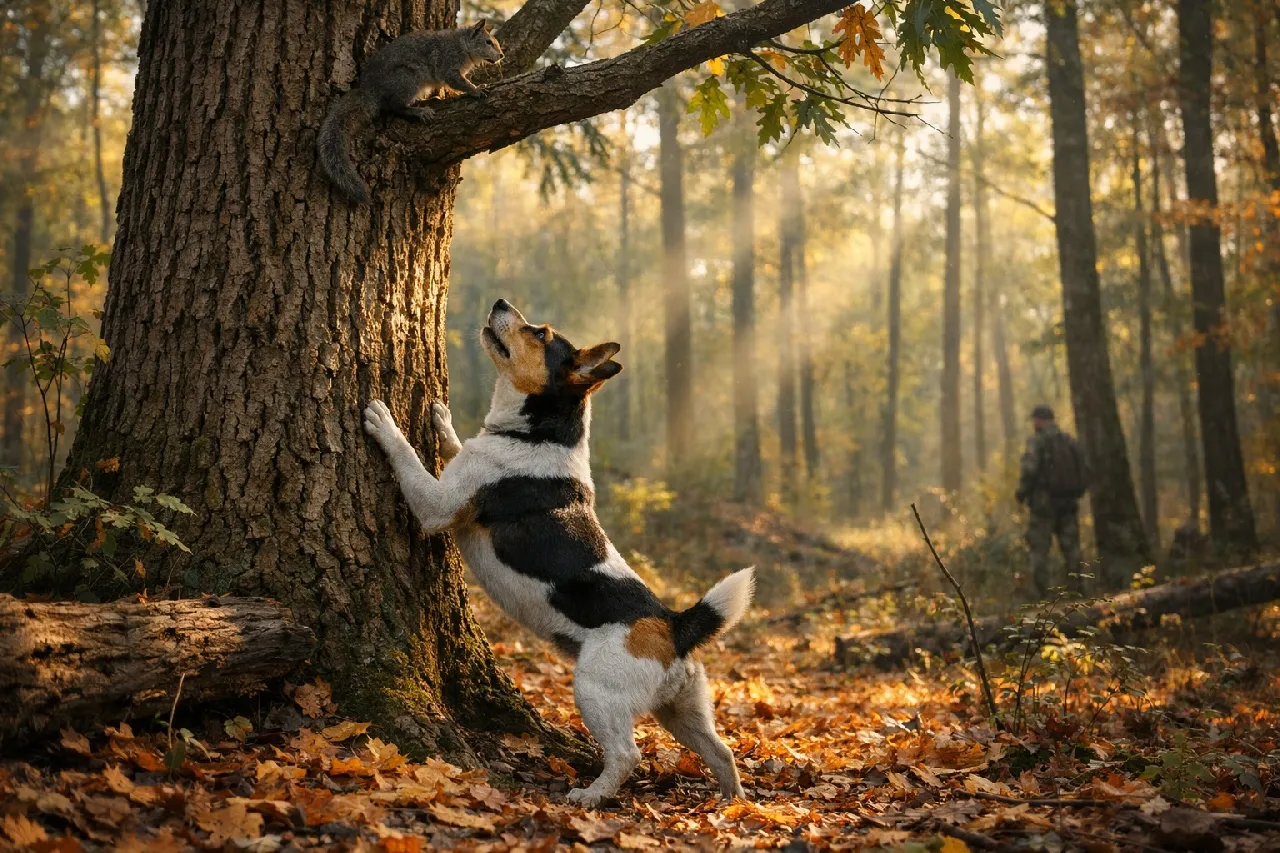
The dog moves quickly through fallen leaves, occasionally pausing to check a tree or investigate a scent trail. Suddenly it freezes, staring high into the canopy. A second later the woods explode with excited barking as the dog locks onto a squirrel high in the branches.
Moments like that are what keep hunters coming back season after season.
Feist dogs may be small, but in the hardwood timber they are among the most effective squirrel hunting companions a hunter can have. Their agility, instincts, and relentless curiosity make them perfectly suited for the job.
And once you’ve followed a good Feist through the autumn woods, it’s hard to imagine hunting squirrels any other way.
There’s something about watching a Feist work the woods that just makes sense. These little dogs slip through timber ridges and creek bottoms like they belong there, moving quickly but never recklessly. They check trees, work scent, and constantly keep their eyes up in the canopy. It’s a style of hunting that looks natural because it is natural. Feists were developed for exactly this kind of country.
And when you turn one loose in a hardwood forest full of squirrels, it doesn’t take long to understand why these dogs have earned such a loyal following among serious hunters.
Built for the Timber
Hardwood forests create a unique hunting environment. Oak ridges, hickory flats, and mixed hardwood bottoms are often thick with fallen leaves, brushy understory, and scattered deadfalls. Squirrels use the treetops like highways, moving quickly from limb to limb while staying just out of sight.
A dog hunting in that kind of terrain needs more than just a good nose.
It needs speed. It needs agility. And maybe most importantly, it needs the instinct to constantly watch the trees.
That’s where the Feist shines.
Most Feists weigh somewhere between fifteen and thirty pounds, which makes them light on their feet and extremely agile. They can weave through saplings, jump over logs, and cover ground quickly without burning out. In hardwood timber where the terrain is uneven and cluttered, that kind of mobility makes a big difference.
A heavier dog can struggle in thick woods, but a Feist moves like it was designed for the job.
Eyes in the Canopy
One of the traits that separates a good Feist from many other squirrel dogs is how much they hunt with their eyes.
A squirrel slipping along a limb may leave only a faint scent trail, especially on dry autumn mornings when the woods are crisp and quiet. Feists are famous for spotting movement in the treetops that a hunter might miss completely.
More than once I’ve watched a Feist slam to a stop and stare straight up into the branches long before I ever saw the squirrel. A flick of a tail, a shake of leaves, or the faintest movement in the canopy is often all it takes.
That kind of visual awareness makes Feists incredibly effective in hardwood timber where squirrels spend most of their time above the ground.
Instead of simply trailing scent on the forest floor, they constantly check the trees. When they locate a squirrel, they waste no time locking down and treeing with sharp, excited barks that echo through the woods.
Speed That Keeps Pressure on Game
Another reason Feists excel in hardwood country is their speed.
Squirrels are fast. Anyone who has watched one sprint across branches or leap from tree to tree knows how quickly they can disappear. A slow dog allows squirrels to slip away quietly and settle down again before the hunter ever arrives.
A Feist changes that equation.
These dogs move through the woods with urgency. They push squirrels hard enough to force mistakes. A squirrel trying to escape a fast Feist often ends up making a desperate jump to the next tree or breaking across open limbs where the dog can mark exactly where it went.
That pressure is often what turns a fleeting glimpse of a squirrel into a solid tree.
And once a Feist locates game, they tend to stay locked in.
Natural Treeing Instinct
The treeing instinct in Feists runs deep.
Many of these dogs come from bloodlines that have been squirrel hunting for generations. Over time, hunters selected dogs that not only found squirrels but also stayed treed and announced it clearly.
A good Feist doesn’t just locate a squirrel and wander off.
When they know the game is in the tree, they set up at the base and start barking with sharp, excited chops. Some dogs circle the tree while watching the limbs overhead, while others sit back and hold their ground. Either way, their focus rarely wavers.
That kind of natural tree sense is exactly what you want in hardwood timber where squirrels can hide in dense leaves and tangled limbs.
With a Feist barking below, a hunter has time to ease in, study the branches, and pick out the squirrel that might otherwise stay hidden.
The Perfect Size for Big Woods
Another advantage Feists have in hardwood timber is their manageable size.
A big dog covering miles of ridges can wear out a hunter quickly. Feists tend to hunt within a comfortable distance, working back and forth through the woods rather than disappearing over the next hill.
That hunting style keeps the action closer and makes it easier to follow the dog’s work.
They’re also easy to handle in tight cover. A Feist can slip through briar patches, vine tangles, and thick saplings where larger dogs might struggle. In rough hardwood terrain, that agility keeps them moving while other dogs might slow down.
It’s a small advantage that adds up over the course of a long morning in the woods.
Quiet Intelligence in the Woods
Feists also bring a level of intelligence that experienced squirrel hunters appreciate.
These dogs tend to hunt with purpose. They check trees carefully, investigate fresh scent, and move on when the trail grows cold. Instead of making noise constantly, many Feists stay quiet until they know they’ve located game.
That calm, thinking style works perfectly in hardwood timber where squirrels often freeze against bark or hide along limbs.
A smart dog that knows how to work the woods methodically will consistently find more squirrels than one that simply runs through the forest hoping for luck.
A Tradition of American Hunting
Feist dogs are deeply tied to the history of American small game hunting.
For generations, hunters across the Appalachian Mountains, the Ozarks, and the hardwood forests of the South relied on these little dogs to put squirrels in the game bag. They were the dogs that farm kids carried into the woods before school and the dogs old hunters trusted when meat on the table mattered.
That tradition still carries on today.
Modern squirrel hunters continue to appreciate the same qualities that made Feists valuable decades ago: speed, intelligence, sharp eyes, and a natural ability to tree game.
In the hardwood timber, those traits come together in a way that feels almost perfectly balanced.
The Ideal Partner for Squirrel Hunters
Watching a good Feist work through hardwood timber is one of the great pleasures of small game hunting.
The dog moves quickly through fallen leaves, occasionally pausing to check a tree or investigate a scent trail. Suddenly it freezes, staring high into the canopy. A second later the woods explode with excited barking as the dog locks onto a squirrel high in the branches.
Moments like that are what keep hunters coming back season after season.
Feist dogs may be small, but in the hardwood timber they are among the most effective squirrel hunting companions a hunter can have. Their agility, instincts, and relentless curiosity make them perfectly suited for the job.
And once you’ve followed a good Feist through the autumn woods, it’s hard to imagine hunting squirrels any other way.




View all 0 comments