The History of Beagles as Hunting Dogs
Jeff Davis | https://hounddogcentral.com
 0
0 0
0 0
0 0
0 0
0
Spend enough mornings behind a pack of Beagles, and it becomes easy to understand why this breed has held its ground for so many generations. The Beagle was never built for show first or for fashion. It was shaped by the field, by hard country, and by hunters who needed a dog with a cold nose, honest tongue, and the kind of grit that keeps a rabbit moving through briars, creek bottoms, and winter cover. For dog owners interested in hound dogs, the history of Beagles as hunting dogs offers a clear look at how useful breeding creates a breed that lasts.
Today, most folks know the Beagle as a friendly family dog with soulful eyes and a merry attitude. Hunters know another side of the breed, one just as true. Under that easygoing nature lives a serious scent hound, one bred to work close to the ground and unravel a line with patience. That combination of companionship and field sense is part of what made the Beagle one of the most enduring hunting dogs in the world.
Early Roots of the Beagle
The story of the Beagle reaches back farther than most people realize. Small scent hounds used for tracking hare and rabbit existed in Britain long before the breed was standardized. Historians still debate the exact origin of the name “Beagle,” but the dogs themselves likely developed from a mix of old Southern hounds, smaller harriers, and compact tracking dogs valued for their nose rather than their speed alone.
In early England, hunters often chose dogs according to the game they pursued and the land they hunted. Larger hounds had their place, especially when the quarry called for long chases over open country. But when the game was hare, and when the hunter wanted a dog that could work methodically, smaller hounds became valuable. These early Beagle-type dogs could follow a scent line through brush and uneven ground without overrunning it. That careful style would become one of the breed’s defining traits.
Some of the earliest references describe very small hounds, even “pocket beagles,” said to be small enough to carry in a saddlebag or by hand. Whether every tale was as literal as later storytellers claimed is another matter, but there is little doubt that miniature hare hounds were known in Britain. Over time, however, practical field breeding favored sturdier dogs with enough leg and endurance to handle a full day’s hunt.
From Hare Hunting to a Defined Breed
For centuries, the Beagle’s purpose was closely tied to hare hunting. Unlike a sight hunter, the Beagle worked by nose, moving steadily and speaking on track. That voice mattered. A good Beagle let the hunter know what was happening in cover long before the dog came back into view. A pack of hounds opening honestly on a line was and still is one of the finest sounds in hunting.
As foxhunting gained prestige among the upper classes, some smaller hounds lost ground in popularity. Still, the Beagle persisted because it filled a different role. It was accessible. A hunter did not need a horse, wide estates, or a grand kennel to keep and use Beagles. A modest pack, a patchwork of fields and hedgerows, and a strong population of hare or rabbit were enough. That practical appeal helped the breed survive shifts in fashion that might have buried a less useful dog.
The Beagle in 19th-Century Britain
By the 1800s, more deliberate breeding began shaping the Beagle into the recognizable hunting hound we know today. Reverend Phillip Honeywood is often credited with maintaining one of the foundational packs in England. His dogs were valued for hunting ability above all else, and that point deserves attention. The Beagle was not refined in the abstract. It was refined in the chase. Nose, line control, pack manners, and stamina were what mattered.
Another major influence came from Thomas Johnson, who worked to produce Beagles that had both field ability and a more consistent appearance. Between hard-driving hunting stock and more uniform breeding, the Beagle gradually became a true established breed rather than just a general type of small hound. Even then, serious hunters continued to judge the dog by what it did in cover, not by how neatly it stood in a yard.
This was also the period when organized packs and breed clubs helped stabilize the Beagle’s identity. Standards gave breeders a target, but field performance remained central to the breed’s reputation. In truth, the Beagle earned respect because it could account for game day after day. No written standard can preserve a hunting dog if hunters stop trusting it in the field.
The Beagle Comes to America
The history of Beagles as hunting dogs took an important turn when the breed came to the United States. Early imports arrived in the 1800s, but many of those first dogs lacked the consistency American hunters wanted. As better stock was brought over from England, the breed began to take hold. American sportsmen quickly saw the Beagle’s value on cottontail rabbits, which presented a style of hunting that suited the breed extremely well.
Here in the United States, the Beagle found more than a new home. It found a strong working identity. Rabbit hunting was within reach of ordinary folks, and the Beagle fit the lifestyle. A man could keep a few hounds, run them before work, or turn them loose on a frosty Saturday morning without the cost and scale required by larger pack hounds. In farm country, cutovers, fencerows, and thickets, Beagles proved they could put game on its feet and keep the race going.
By the late 19th and early 20th centuries, the breed’s popularity surged. The American Kennel Club recognized the Beagle, and field trials helped shape discussion around style, speed, and accuracy. Those debates have never really ended. Any hunter who has stood around a tailgate after a run knows Beagle men can argue bloodlines, mouth, check work, and foot speed until the light fades. In many ways, that passion is part of the breed’s history too.
Why American Hunters Took to the Beagle
The answer is simple enough: the dog could hunt, and it fit real life. Beagles were small enough to house and transport easily, tough enough to handle rough cover, and social enough to work well in packs. They hunted with enthusiasm but did not require the acreage or management that larger hounds often demanded. For rabbit and hare hunters, they were practical in the best sense of the word.
There is also the matter of temperament. A good Beagle can spend the morning hammering a rabbit through blackberry tangles and spend the evening asleep by the stove. That balance made the breed welcome in family life without dulling its edge in the field. Dog owners interested in hound dogs often find the Beagle appealing for exactly that reason.
How the Beagle Was Bred for the Hunt
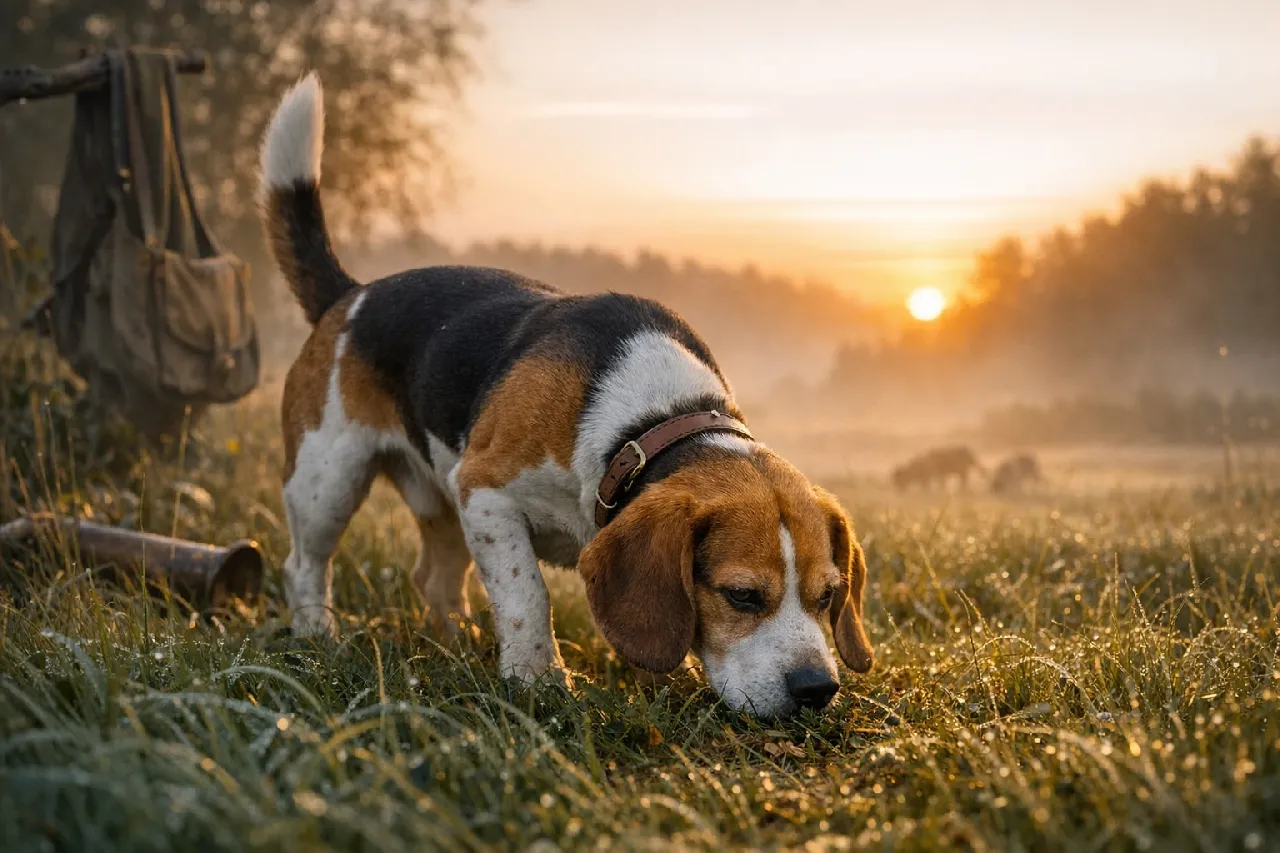
To understand the Beagle’s history, you have to look at the traits hunters protected. First came scenting ability. A rabbit hound that cannot work out a difficult line will not last long in a serious kennel. Beagles were bred to keep their nose down, sort out losses, and move the track with enough patience to recover when scenting conditions turned poor.
Then came voice. The classic Beagle cry is more than pleasant music. It is part of the hunt itself, telling the hunter when a line is struck, when the pack is driving, and when confusion enters the race. Honest mouth has always mattered. Too much babbling can ruin a run, while a dog that opens true and with purpose is worth feeding.
Endurance and pack sense also shaped the breed. Beagles were expected to work together, honor another hound’s line, and maintain pressure on game without constant handling. They needed enough toughness to push through multiflora rose, frozen grass, and brush-choked draws, but also enough sense not to waste themselves in wild overrunning. The best Beagles were never just busy. They were effective.
The Beagle’s Place in Modern Hunting
Even now, with so many dogs bred for companionship first, the Beagle remains one of the truest working hounds available to everyday hunters. In many parts of the country, rabbit hunting still begins and ends with a brace or small pack of Beagles casting through cover. The essentials have not changed much. A rabbit jumps, the dogs open, the line bends through weeds and timber, and every hunter listening knows he is hearing something old and dependable.
Modern field lines vary, of course. Some hunters prefer a conservative dog with tight check work, while others like more foot and drive. Trial formats influence breeding, and different regions prize different traits. Yet the core of the breed is still there: nose, voice, determination, and a strong desire to pursue small game. That continuity is what makes the Beagle’s history feel alive rather than preserved.
It is worth saying plainly that the Beagle’s success was never an accident. The breed survived because generation after generation of hunters demanded usefulness. When a hound could account for rabbits under hard conditions, those traits were carried forward. When a dog lacked hunt, lacked nose, or lacked honesty, hunters noticed. Working breeds stay honest when hunters stay honest about what they need.
Why Beagle History Still Matters Today
For modern dog owners, the Beagle’s hunting background explains a great deal about the breed’s behavior. That independent nose, that determination to follow scent, that musical voice, and that tendency to stay focused on what lies ahead all come from centuries of practical field use. A Beagle was designed to investigate the world through scent and pursue it with commitment. Owners who understand that history tend to manage and appreciate the breed far better.
It also reminds us that a Beagle is not merely a smaller hound in appearance. It is a specialist with deep roots in rabbit and hare hunting. The breed’s size, structure, and temperament all reflect that purpose. Strip away the cartoons and the suburban image, and you still find the same little hunting hound that earned respect in British hedgerows and American brush lots.
On a cold morning, when the frost is silver on broom sage and a Beagle throws its head up after puzzling out a loss, history does not feel distant. It feels present and practical. The cry that rolls out then is the same kind of sound hunters have followed for generations. That is the heart of the Beagle story. It is a history written less in books than in scent lines, muddy boots, and the steady work of a small hound doing exactly what it was bred to do.
Today, most folks know the Beagle as a friendly family dog with soulful eyes and a merry attitude. Hunters know another side of the breed, one just as true. Under that easygoing nature lives a serious scent hound, one bred to work close to the ground and unravel a line with patience. That combination of companionship and field sense is part of what made the Beagle one of the most enduring hunting dogs in the world.
Early Roots of the Beagle
The story of the Beagle reaches back farther than most people realize. Small scent hounds used for tracking hare and rabbit existed in Britain long before the breed was standardized. Historians still debate the exact origin of the name “Beagle,” but the dogs themselves likely developed from a mix of old Southern hounds, smaller harriers, and compact tracking dogs valued for their nose rather than their speed alone.
In early England, hunters often chose dogs according to the game they pursued and the land they hunted. Larger hounds had their place, especially when the quarry called for long chases over open country. But when the game was hare, and when the hunter wanted a dog that could work methodically, smaller hounds became valuable. These early Beagle-type dogs could follow a scent line through brush and uneven ground without overrunning it. That careful style would become one of the breed’s defining traits.
Some of the earliest references describe very small hounds, even “pocket beagles,” said to be small enough to carry in a saddlebag or by hand. Whether every tale was as literal as later storytellers claimed is another matter, but there is little doubt that miniature hare hounds were known in Britain. Over time, however, practical field breeding favored sturdier dogs with enough leg and endurance to handle a full day’s hunt.
From Hare Hunting to a Defined Breed
For centuries, the Beagle’s purpose was closely tied to hare hunting. Unlike a sight hunter, the Beagle worked by nose, moving steadily and speaking on track. That voice mattered. A good Beagle let the hunter know what was happening in cover long before the dog came back into view. A pack of hounds opening honestly on a line was and still is one of the finest sounds in hunting.
As foxhunting gained prestige among the upper classes, some smaller hounds lost ground in popularity. Still, the Beagle persisted because it filled a different role. It was accessible. A hunter did not need a horse, wide estates, or a grand kennel to keep and use Beagles. A modest pack, a patchwork of fields and hedgerows, and a strong population of hare or rabbit were enough. That practical appeal helped the breed survive shifts in fashion that might have buried a less useful dog.
The Beagle in 19th-Century Britain
By the 1800s, more deliberate breeding began shaping the Beagle into the recognizable hunting hound we know today. Reverend Phillip Honeywood is often credited with maintaining one of the foundational packs in England. His dogs were valued for hunting ability above all else, and that point deserves attention. The Beagle was not refined in the abstract. It was refined in the chase. Nose, line control, pack manners, and stamina were what mattered.
Another major influence came from Thomas Johnson, who worked to produce Beagles that had both field ability and a more consistent appearance. Between hard-driving hunting stock and more uniform breeding, the Beagle gradually became a true established breed rather than just a general type of small hound. Even then, serious hunters continued to judge the dog by what it did in cover, not by how neatly it stood in a yard.
This was also the period when organized packs and breed clubs helped stabilize the Beagle’s identity. Standards gave breeders a target, but field performance remained central to the breed’s reputation. In truth, the Beagle earned respect because it could account for game day after day. No written standard can preserve a hunting dog if hunters stop trusting it in the field.
The Beagle Comes to America
The history of Beagles as hunting dogs took an important turn when the breed came to the United States. Early imports arrived in the 1800s, but many of those first dogs lacked the consistency American hunters wanted. As better stock was brought over from England, the breed began to take hold. American sportsmen quickly saw the Beagle’s value on cottontail rabbits, which presented a style of hunting that suited the breed extremely well.
Here in the United States, the Beagle found more than a new home. It found a strong working identity. Rabbit hunting was within reach of ordinary folks, and the Beagle fit the lifestyle. A man could keep a few hounds, run them before work, or turn them loose on a frosty Saturday morning without the cost and scale required by larger pack hounds. In farm country, cutovers, fencerows, and thickets, Beagles proved they could put game on its feet and keep the race going.
By the late 19th and early 20th centuries, the breed’s popularity surged. The American Kennel Club recognized the Beagle, and field trials helped shape discussion around style, speed, and accuracy. Those debates have never really ended. Any hunter who has stood around a tailgate after a run knows Beagle men can argue bloodlines, mouth, check work, and foot speed until the light fades. In many ways, that passion is part of the breed’s history too.
Why American Hunters Took to the Beagle
The answer is simple enough: the dog could hunt, and it fit real life. Beagles were small enough to house and transport easily, tough enough to handle rough cover, and social enough to work well in packs. They hunted with enthusiasm but did not require the acreage or management that larger hounds often demanded. For rabbit and hare hunters, they were practical in the best sense of the word.
There is also the matter of temperament. A good Beagle can spend the morning hammering a rabbit through blackberry tangles and spend the evening asleep by the stove. That balance made the breed welcome in family life without dulling its edge in the field. Dog owners interested in hound dogs often find the Beagle appealing for exactly that reason.
How the Beagle Was Bred for the Hunt
To understand the Beagle’s history, you have to look at the traits hunters protected. First came scenting ability. A rabbit hound that cannot work out a difficult line will not last long in a serious kennel. Beagles were bred to keep their nose down, sort out losses, and move the track with enough patience to recover when scenting conditions turned poor.
Then came voice. The classic Beagle cry is more than pleasant music. It is part of the hunt itself, telling the hunter when a line is struck, when the pack is driving, and when confusion enters the race. Honest mouth has always mattered. Too much babbling can ruin a run, while a dog that opens true and with purpose is worth feeding.
Endurance and pack sense also shaped the breed. Beagles were expected to work together, honor another hound’s line, and maintain pressure on game without constant handling. They needed enough toughness to push through multiflora rose, frozen grass, and brush-choked draws, but also enough sense not to waste themselves in wild overrunning. The best Beagles were never just busy. They were effective.
The Beagle’s Place in Modern Hunting
Even now, with so many dogs bred for companionship first, the Beagle remains one of the truest working hounds available to everyday hunters. In many parts of the country, rabbit hunting still begins and ends with a brace or small pack of Beagles casting through cover. The essentials have not changed much. A rabbit jumps, the dogs open, the line bends through weeds and timber, and every hunter listening knows he is hearing something old and dependable.
Modern field lines vary, of course. Some hunters prefer a conservative dog with tight check work, while others like more foot and drive. Trial formats influence breeding, and different regions prize different traits. Yet the core of the breed is still there: nose, voice, determination, and a strong desire to pursue small game. That continuity is what makes the Beagle’s history feel alive rather than preserved.
It is worth saying plainly that the Beagle’s success was never an accident. The breed survived because generation after generation of hunters demanded usefulness. When a hound could account for rabbits under hard conditions, those traits were carried forward. When a dog lacked hunt, lacked nose, or lacked honesty, hunters noticed. Working breeds stay honest when hunters stay honest about what they need.
Why Beagle History Still Matters Today
For modern dog owners, the Beagle’s hunting background explains a great deal about the breed’s behavior. That independent nose, that determination to follow scent, that musical voice, and that tendency to stay focused on what lies ahead all come from centuries of practical field use. A Beagle was designed to investigate the world through scent and pursue it with commitment. Owners who understand that history tend to manage and appreciate the breed far better.
It also reminds us that a Beagle is not merely a smaller hound in appearance. It is a specialist with deep roots in rabbit and hare hunting. The breed’s size, structure, and temperament all reflect that purpose. Strip away the cartoons and the suburban image, and you still find the same little hunting hound that earned respect in British hedgerows and American brush lots.
On a cold morning, when the frost is silver on broom sage and a Beagle throws its head up after puzzling out a loss, history does not feel distant. It feels present and practical. The cry that rolls out then is the same kind of sound hunters have followed for generations. That is the heart of the Beagle story. It is a history written less in books than in scent lines, muddy boots, and the steady work of a small hound doing exactly what it was bred to do.




View all 0 comments