Hog hunting with dogs
Jeff Davis | https://hounddogcentral.com
 1
1 0
0 0
0 0
0 0
0
A hog hunt with dogs is fast, physical, and deeply rooted in Southern hunting tradition. Unlike stand hunting or spot-and-stalk, this method relies on trained dogs to locate, pursue, and hold wild hogs until the hunter arrives. It’s equal parts teamwork, instinct, and controlled chaos.
Before the Cast
The hunt usually starts at daylight or just before dark, depending on hog movement and weather. Hunters unload dogs from dog boxes mounted in truck beds and fit them with tracking collars—GPS systems are standard today. Thick briar patches, river bottoms, cutovers, palmetto flats, and swamp edges are common starting points. Hogs prefer heavy cover during daylight hours, and that’s where the dogs will be sent.
There are typically two types of dogs involved: bay dogs and catch dogs.
Bay dogs( often Curs, Catahoulas, Plotts, or hound crosses) are responsible for finding the hog and pressuring it until it stops and turns to face them.
Catch dogs (often bulldog-type breeds) are held back until the hog is located and bayed. They are built for strength and are equipped with protective vests and cut collars.
Before casting the dogs, hunters check the wind and read the terrain. Even though the dogs will do the locating, knowing how hogs travel and bed increases the odds of a quick strike.
The Strike
Once released, the bay dogs spread out, using their noses to search for fresh scent. This phase can take minutes or hours depending on hog density and conditions. When a dog strikes a track, the tone of the bark changes—excited, sharp, urgent. On a GPS screen, hunters see dogs lock onto a direction and move with purpose.
If the hog runs, the race is on. The sound of dogs trailing through brush builds intensity. Sometimes hogs will run a short distance and then stop. Mature boars, especially, often choose to stand and fight rather than flee far.
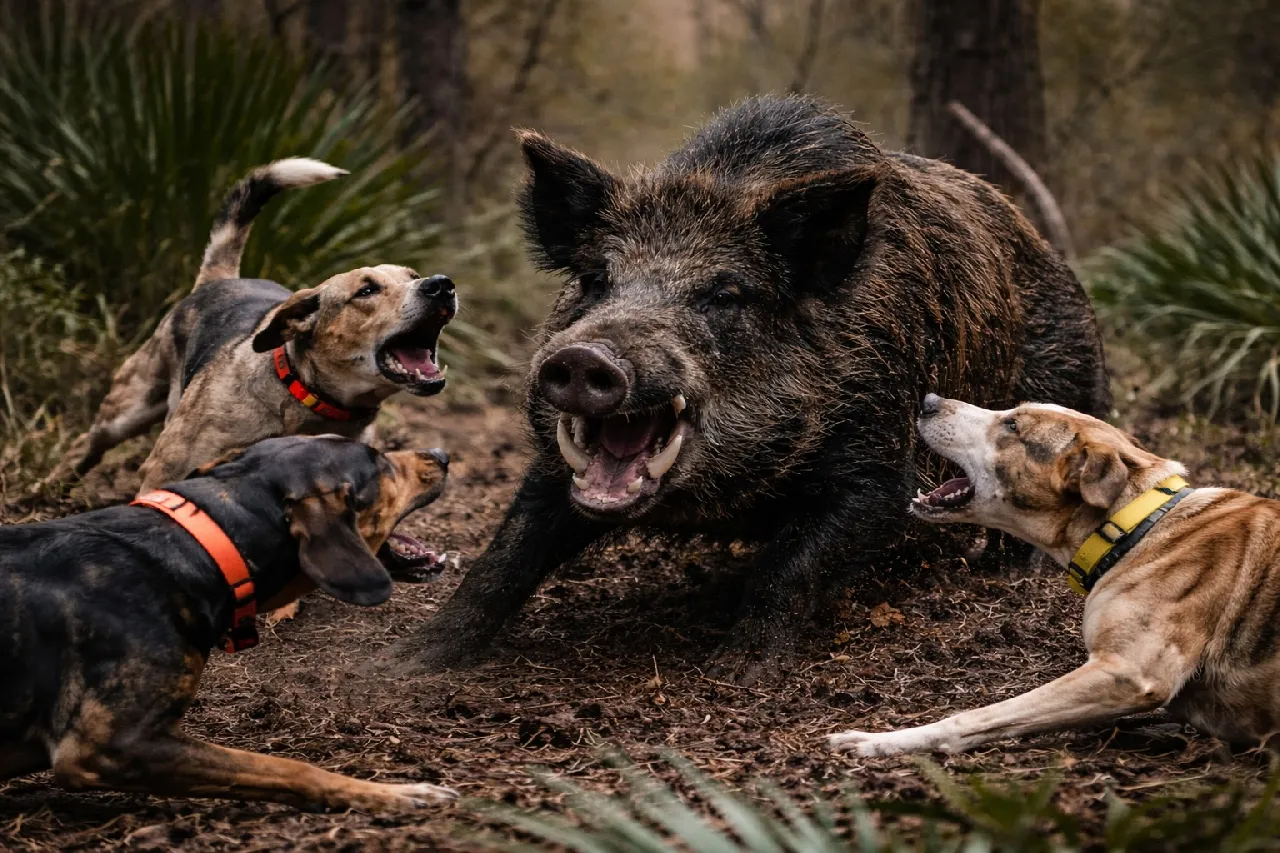
When the hog stops and turns to face the pressure, the bay begins. Bay dogs circle, barking continuously but keeping just enough distance to avoid being slashed by tusks. Their job is not to catch—it’s to hold the hog in place by intimidation and pressure.
For the hunter, this is the moment to move quickly.
Closing the Distance
Following the sound of a bay can mean crashing through briars, wading creeks, or pushing through thick understory. The barking grows louder and more intense as the hunter approaches. GPS collars help pinpoint exact location, but often the last stretch is guided by sound.
Safety is critical here. A cornered hog can be extremely dangerous. Boars carry razor-sharp tusks capable of severe injury to dogs or people. Hunters approach cautiously, reading the scene before acting.
When the hog is clearly bayed and controlled by the bay dogs, the catch dog is released.
The Catch
The catch dog charges in and seizes the hog—usually by the ear. This grip gives the hunter control of the hog’s head and tusks. The moment is loud and chaotic: dogs barking, hog squealing, brush snapping.
The hunter steps in immediately. Depending on the goal of the hunt and local regulations, the hog may be dispatched on the spot or restrained and secured alive. In traditional catch-and-dispatch hunts, a knife is often used for a quick, humane finish at close range. The emphasis is on speed and precision to minimize stress and risk to the dogs.
The entire bay-to-catch sequence may last only a few minutes, but it feels much longer in the moment.
After the Hog is Secured
Once the hog is down, dogs are pulled off quickly and checked for injuries. Even with protective vests and cut collars, nicks and punctures happen. Experienced hunters carry basic first-aid supplies for their dogs in the truck.
If the hog is to be processed for meat, field dressing happens as soon as practical—especially in warm climates where spoilage can set in quickly. Many dog hunters work in teams to load the hog and reset for another cast.
Some hunts may involve multiple bays in a single outing. Other days, one hog is enough.
The Role of the Dogs
More than any other method, hog hunting with dogs is about the dogs themselves. A good bay dog must have nose, grit, intelligence, and the ability to pressure without recklessness. Too much aggression leads to injury; too little won’t stop a determined boar. Balance is everything.
Catch dogs must be powerful and disciplined. They wait patiently—sometimes in the truck for hours—until it’s time to perform. When released, they must commit fully and hold until the hunter arrives.
Handlers spend years training and conditioning these dogs. Bond and trust matter. A hunter learns to recognize each dog’s bark, personality, and strengths. It’s a partnership built through repetition and experience.
The Experience
Hog hunting with dogs is not quiet or sedentary. It’s muddy boots, thorn scratches, adrenaline spikes, and hard breathing. It’s listening for a change in bark tone. It’s reading a GPS screen while pushing through brush. It’s teamwork—between hunters and between humans and dogs.
There’s also a practical side. In many regions, feral hogs cause extensive agricultural damage and ecological disruption. Dog hunting can be an effective management tool in thick terrain where other methods are difficult.
But beyond management, there’s tradition. Families pass down dogs, bloodlines, and knowledge. Stories are told about big boars that broke bays or long races through swamps. Every hunt adds another story.
Before the Cast
The hunt usually starts at daylight or just before dark, depending on hog movement and weather. Hunters unload dogs from dog boxes mounted in truck beds and fit them with tracking collars—GPS systems are standard today. Thick briar patches, river bottoms, cutovers, palmetto flats, and swamp edges are common starting points. Hogs prefer heavy cover during daylight hours, and that’s where the dogs will be sent.
There are typically two types of dogs involved: bay dogs and catch dogs.
Bay dogs( often Curs, Catahoulas, Plotts, or hound crosses) are responsible for finding the hog and pressuring it until it stops and turns to face them.
Catch dogs (often bulldog-type breeds) are held back until the hog is located and bayed. They are built for strength and are equipped with protective vests and cut collars.
Before casting the dogs, hunters check the wind and read the terrain. Even though the dogs will do the locating, knowing how hogs travel and bed increases the odds of a quick strike.
The Strike
Once released, the bay dogs spread out, using their noses to search for fresh scent. This phase can take minutes or hours depending on hog density and conditions. When a dog strikes a track, the tone of the bark changes—excited, sharp, urgent. On a GPS screen, hunters see dogs lock onto a direction and move with purpose.
If the hog runs, the race is on. The sound of dogs trailing through brush builds intensity. Sometimes hogs will run a short distance and then stop. Mature boars, especially, often choose to stand and fight rather than flee far.
When the hog stops and turns to face the pressure, the bay begins. Bay dogs circle, barking continuously but keeping just enough distance to avoid being slashed by tusks. Their job is not to catch—it’s to hold the hog in place by intimidation and pressure.
For the hunter, this is the moment to move quickly.
Closing the Distance
Following the sound of a bay can mean crashing through briars, wading creeks, or pushing through thick understory. The barking grows louder and more intense as the hunter approaches. GPS collars help pinpoint exact location, but often the last stretch is guided by sound.
Safety is critical here. A cornered hog can be extremely dangerous. Boars carry razor-sharp tusks capable of severe injury to dogs or people. Hunters approach cautiously, reading the scene before acting.
When the hog is clearly bayed and controlled by the bay dogs, the catch dog is released.
The Catch
The catch dog charges in and seizes the hog—usually by the ear. This grip gives the hunter control of the hog’s head and tusks. The moment is loud and chaotic: dogs barking, hog squealing, brush snapping.
The hunter steps in immediately. Depending on the goal of the hunt and local regulations, the hog may be dispatched on the spot or restrained and secured alive. In traditional catch-and-dispatch hunts, a knife is often used for a quick, humane finish at close range. The emphasis is on speed and precision to minimize stress and risk to the dogs.
The entire bay-to-catch sequence may last only a few minutes, but it feels much longer in the moment.
After the Hog is Secured
Once the hog is down, dogs are pulled off quickly and checked for injuries. Even with protective vests and cut collars, nicks and punctures happen. Experienced hunters carry basic first-aid supplies for their dogs in the truck.
If the hog is to be processed for meat, field dressing happens as soon as practical—especially in warm climates where spoilage can set in quickly. Many dog hunters work in teams to load the hog and reset for another cast.
Some hunts may involve multiple bays in a single outing. Other days, one hog is enough.
The Role of the Dogs
More than any other method, hog hunting with dogs is about the dogs themselves. A good bay dog must have nose, grit, intelligence, and the ability to pressure without recklessness. Too much aggression leads to injury; too little won’t stop a determined boar. Balance is everything.
Catch dogs must be powerful and disciplined. They wait patiently—sometimes in the truck for hours—until it’s time to perform. When released, they must commit fully and hold until the hunter arrives.
Handlers spend years training and conditioning these dogs. Bond and trust matter. A hunter learns to recognize each dog’s bark, personality, and strengths. It’s a partnership built through repetition and experience.
The Experience
Hog hunting with dogs is not quiet or sedentary. It’s muddy boots, thorn scratches, adrenaline spikes, and hard breathing. It’s listening for a change in bark tone. It’s reading a GPS screen while pushing through brush. It’s teamwork—between hunters and between humans and dogs.
There’s also a practical side. In many regions, feral hogs cause extensive agricultural damage and ecological disruption. Dog hunting can be an effective management tool in thick terrain where other methods are difficult.
But beyond management, there’s tradition. Families pass down dogs, bloodlines, and knowledge. Stories are told about big boars that broke bays or long races through swamps. Every hunt adds another story.




View all 0 comments