How Coonhounds Track Raccoons at Night
Jeff Davis | https://hounddogcentral.com
 0
0 0
0 0
0 0
0 0
0
There is nothing quite like standing on the edge of a creek bottom after sunset and hearing a hound open on a track. The woods seem bigger at night. Every sound carries. A rustle in the leaves, a splash in the shallows, and then that long, ringing bawl that tells you a coonhound has found something worth following. If you have ever wondered how coonhounds track raccoons at night, the answer is part breeding, part instinct, part training, and part hard-earned experience in the dark timber.
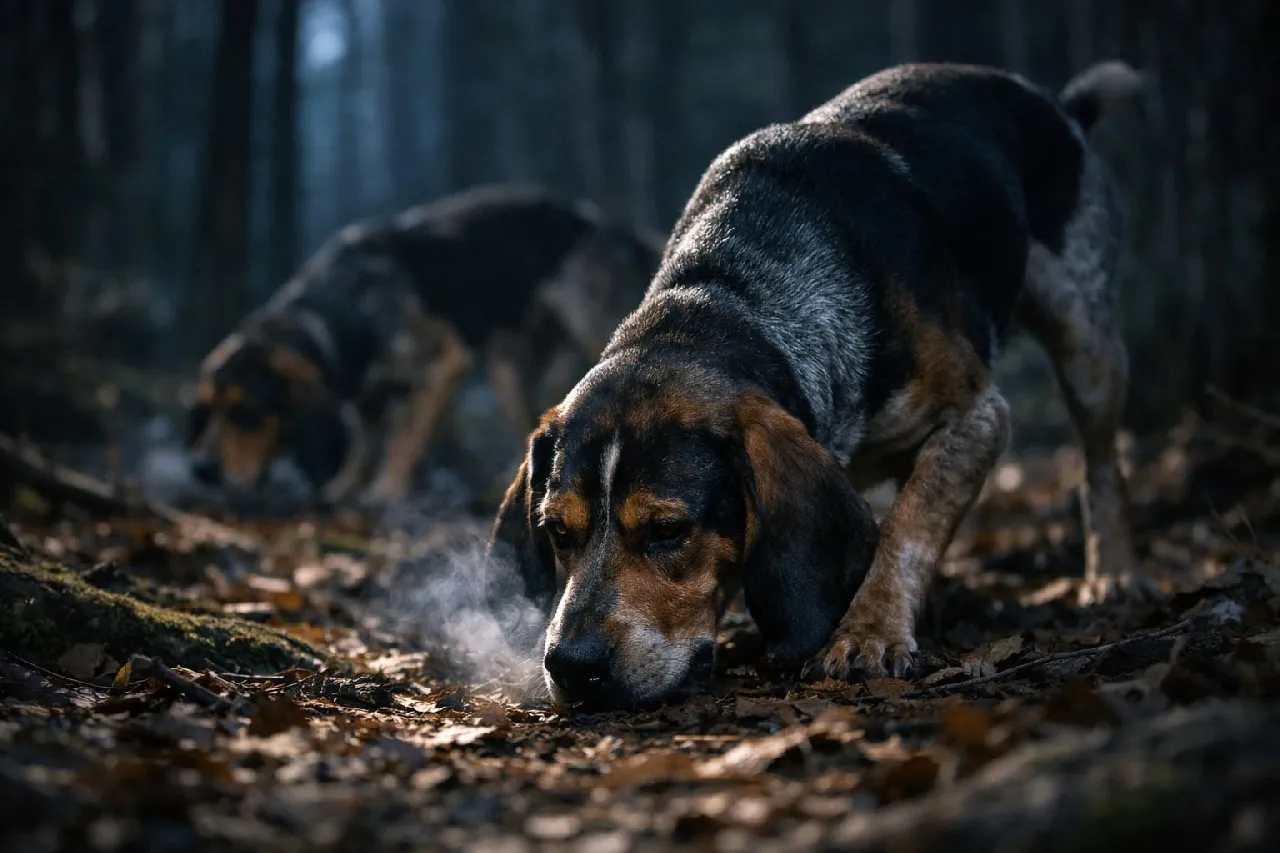
Coonhounds are not guessing when they work a raccoon trail. They are using a nose that can sort through layers of scent most people cannot even imagine. Add to that a natural drive to hunt, the stamina to keep moving through rough country, and a voice that lets a hunter follow the chase without seeing a thing, and you begin to understand why these dogs have been trusted for generations. A good coonhound does not just run through the woods making noise. It reads the ground, the wind, the moisture in the air, and the behavior of the game itself.
Why Coonhounds Excel After Dark
Raccoons are creatures of the night. They move under cover of darkness, slipping along creek banks, crossing cornfields, and feeding in thickets where they feel safe. Coonhounds were developed to match that schedule. Breeds like the Treeing Walker Coonhound, Bluetick Coonhound, Black and Tan Coonhound, Redbone Coonhound, English Coonhound, and Plott all bring slightly different styles to the hunt, but they share the same basic purpose: locate the scent, follow it honestly, and tell the hunter where the raccoon ends up.
Night hunting favors a dog with confidence and independence. In daylight, a person can rely on sight to fill in the blanks. At night, the dog becomes your eyes. A seasoned coonhound hunts with its head down when the scent is weak, lifting it when the track floats on damp air. It checks itself at a loss, circles carefully, and moves on when the line straightens out. These are not random actions. They are signs of a dog processing scent in real time.
How a Coonhound Uses Its Nose on a Raccoon Track
The real magic starts with scent. A raccoon leaves odor on the ground with every step, but that is only part of the picture. Body scent drifts into the air. It clings to weeds, brush, bark, and muddy edges along a ditch. Temperature, humidity, wind direction, and recent weather all change how that scent behaves. On a cool, damp night, a track may hold beautifully. On a dry, windy night, a coon can seem to vanish and reappear in pockets.
A good coonhound learns to work both ground scent and air scent. On a fresh track, the dog may move quickly, almost pulling itself along with certainty. On an older track, what hunters call a cold track, the hound has to slow down and piece things together. You can hear the difference if you have spent enough nights listening. The dog may bawl every few seconds, then go quiet, then open again as it sorts out where the raccoon turned. That kind of track work is where experienced hounds separate themselves from average ones.
Cold Tracks, Hot Tracks, and What They Sound Like
Hunters often talk about cold-nosed and hot-nosed dogs. A cold-nosed coonhound can smell and work an older trail that other dogs might pass over. A hot-nosed dog prefers fresher scent and may move it faster. Neither style is automatically better in every situation. In thin coon country or rough winter conditions, a cold-nosed hound can be a real blessing. In thick coon country where tracks are fresh and plentiful, a faster dog may shine.
What matters most is honesty. A dependable hound tells the truth with its mouth. When the track is difficult, the voice reflects that struggle. When the scent is smoking hot, the dog drives with speed and confidence. A hunter who knows his hound can tell a lot just by the rhythm of the bawls and chops echoing through the dark.
From Strike to Tree: The Night Hunt Unfolds
Most coonhound hunts begin with the cast or turnout. The dogs are released into likely cover, often near water, crop edges, hardwood ridges, or swampy bottoms where raccoons travel. At first there may be silence except for feet crunching leaves and a collar beep fading into the distance. Then one dog opens. That is the strike, the moment the hound identifies a raccoon scent worth pursuing.
Once struck, the track develops according to conditions and the raccoon’s movements. Raccoons are crafty. They will double back, climb briefly and come down, run creek edges, and use water to throw off pursuit. Young dogs can get fooled by these tricks. Older hounds learn to check likely escape routes and keep pressure on the line. I have seen a smart old hound hit a shallow crossing, overshoot twenty yards, stop dead, swing downstream, and pick the track back up where the coon angled into a cane patch. That is not luck. That is experience layered over instinct.
Eventually, if all goes right, the race changes. The track running ends and the tree barking begins. Every coon hunter knows that shift in sound. The hound settles into a steady, hard chop or ringing tree bark, planted under a trunk with its head thrown up. At that point the dog is saying the raccoon went up. The hunter still has to come in, shine the tree, and confirm the coon, but a good tree dog makes its case loud and clear.
Why Treeing Is So Important
Tracking alone is not enough in coonhunting. The dog must finish. Treeing is the final piece that turns a wandering scent trail into a completed hunt. Some hounds are naturally strong tree dogs. Others need time and confidence to lock down and stay. The best ones do not leave when the handler approaches, and they do not quit because another dog mills around or the tree is hard to inspect.
A raccoon may den in a hollow, cross into a leaning tree, or sit high in a canopy where it takes a sharp eye and a good light to spot it. That is why accuracy matters. A hound that trees often but misses often can waste a lot of time. A hound that works a track carefully and trees with conviction is worth feeding all year.
The Role of Breeding, Training, and Age
No matter how much natural talent a coonhound has, training shapes how that talent shows up in the woods. Good breeding gives a pup tools. Proper exposure teaches it how to use them. Young dogs need time in real hunting conditions to understand raccoon scent, nighttime terrain, and the pressure of a moving track. Some pups start early. Others take a season or two before the light comes on.
Handlers matter more than many want to admit. A patient hunter who knows when to encourage, when to correct, and when to let a dog figure things out will usually build a better hound than the fellow who expects perfection too soon. Coonhounds learn by doing. They gain confidence from successful tracks, accurate trees, and steady handling. Too much interference can make a dog dependent. Too little guidance can let bad habits grow roots.
Age also changes style. Young hounds often hunt hard and make mistakes at full speed. Mature dogs waste less motion. They know where coons tend to travel on certain nights. They understand how weather shifts scent. If you hunt behind enough older finished hounds, you notice how quiet and efficient they can be before they ever open their mouths.
Weather, Terrain, and Night Conditions
If you want to understand how coonhounds track raccoons at night, you have to respect conditions. Frost can preserve scent in one place and kill it in another. Wind can carry odor across a hollow and confuse an inexperienced dog. Dry leaves make game movement easier to hear for the hunter but can leave less moisture for scent to hold. After a light rain, many hounds work better because the ground captures odor and the air feels heavier.
Terrain shapes the whole chase. Creek bottoms often hold scent well and give raccoons easy travel routes. Rocky ridges can break up a trail. Farm country creates quick races along field edges and fence lines. Swamps and river systems can turn a simple track into a long lesson in patience. A coonhound that can adjust to all of it is a versatile hunting dog and usually a pleasure to own outside the season too.
What Dog Owners Should Know About These Instincts
Even if you never plan to hunt, understanding this behavior helps you live better with a coonhound. These dogs are scent-driven, independent thinkers. They may follow a smell in the yard as if the world disappeared behind them. They may become vocal when excited because generations of selective breeding rewarded a dog that announced what it found. That does not make them stubborn in a bad sense. It means they were built to solve problems with their nose first.
Owners who give coonhounds enough exercise, scent games, structure, and patience usually get the best from them. A bored hound will make its own entertainment. A fulfilled hound is calmer, more responsive, and happier to settle in after its energy has a place to go. What you see in the night woods is the same engine that powers daily life at home.
The Last Word From the Woods
At the end of the night, when the lights are dimming and the dogs are loaded up, the whole thing can feel old as the hills. One animal slips through the darkness leaving a trail only another animal can read. The hound sorts out the story step by step, opening when it is sure, pressing when the scent improves, and finally planting itself under a tree to say the chase is over. That is how coonhounds track raccoons at night. It is nose, instinct, grit, and training working together in the kind of country where a man has to trust his dog.
For dog owners interested in hound dogs, there is a lot to admire in that process. A coonhound is not just a pet with a loud bark and long ears. It is a specialist, shaped by generations to do difficult work in difficult conditions. Spend one clear night in the woods listening to a good hound unravel a raccoon track, and you will never hear those voices the same way again.
Coonhounds are not guessing when they work a raccoon trail. They are using a nose that can sort through layers of scent most people cannot even imagine. Add to that a natural drive to hunt, the stamina to keep moving through rough country, and a voice that lets a hunter follow the chase without seeing a thing, and you begin to understand why these dogs have been trusted for generations. A good coonhound does not just run through the woods making noise. It reads the ground, the wind, the moisture in the air, and the behavior of the game itself.
Why Coonhounds Excel After Dark
Raccoons are creatures of the night. They move under cover of darkness, slipping along creek banks, crossing cornfields, and feeding in thickets where they feel safe. Coonhounds were developed to match that schedule. Breeds like the Treeing Walker Coonhound, Bluetick Coonhound, Black and Tan Coonhound, Redbone Coonhound, English Coonhound, and Plott all bring slightly different styles to the hunt, but they share the same basic purpose: locate the scent, follow it honestly, and tell the hunter where the raccoon ends up.
Night hunting favors a dog with confidence and independence. In daylight, a person can rely on sight to fill in the blanks. At night, the dog becomes your eyes. A seasoned coonhound hunts with its head down when the scent is weak, lifting it when the track floats on damp air. It checks itself at a loss, circles carefully, and moves on when the line straightens out. These are not random actions. They are signs of a dog processing scent in real time.
How a Coonhound Uses Its Nose on a Raccoon Track
The real magic starts with scent. A raccoon leaves odor on the ground with every step, but that is only part of the picture. Body scent drifts into the air. It clings to weeds, brush, bark, and muddy edges along a ditch. Temperature, humidity, wind direction, and recent weather all change how that scent behaves. On a cool, damp night, a track may hold beautifully. On a dry, windy night, a coon can seem to vanish and reappear in pockets.
A good coonhound learns to work both ground scent and air scent. On a fresh track, the dog may move quickly, almost pulling itself along with certainty. On an older track, what hunters call a cold track, the hound has to slow down and piece things together. You can hear the difference if you have spent enough nights listening. The dog may bawl every few seconds, then go quiet, then open again as it sorts out where the raccoon turned. That kind of track work is where experienced hounds separate themselves from average ones.
Cold Tracks, Hot Tracks, and What They Sound Like
Hunters often talk about cold-nosed and hot-nosed dogs. A cold-nosed coonhound can smell and work an older trail that other dogs might pass over. A hot-nosed dog prefers fresher scent and may move it faster. Neither style is automatically better in every situation. In thin coon country or rough winter conditions, a cold-nosed hound can be a real blessing. In thick coon country where tracks are fresh and plentiful, a faster dog may shine.
What matters most is honesty. A dependable hound tells the truth with its mouth. When the track is difficult, the voice reflects that struggle. When the scent is smoking hot, the dog drives with speed and confidence. A hunter who knows his hound can tell a lot just by the rhythm of the bawls and chops echoing through the dark.
From Strike to Tree: The Night Hunt Unfolds
Most coonhound hunts begin with the cast or turnout. The dogs are released into likely cover, often near water, crop edges, hardwood ridges, or swampy bottoms where raccoons travel. At first there may be silence except for feet crunching leaves and a collar beep fading into the distance. Then one dog opens. That is the strike, the moment the hound identifies a raccoon scent worth pursuing.
Once struck, the track develops according to conditions and the raccoon’s movements. Raccoons are crafty. They will double back, climb briefly and come down, run creek edges, and use water to throw off pursuit. Young dogs can get fooled by these tricks. Older hounds learn to check likely escape routes and keep pressure on the line. I have seen a smart old hound hit a shallow crossing, overshoot twenty yards, stop dead, swing downstream, and pick the track back up where the coon angled into a cane patch. That is not luck. That is experience layered over instinct.
Eventually, if all goes right, the race changes. The track running ends and the tree barking begins. Every coon hunter knows that shift in sound. The hound settles into a steady, hard chop or ringing tree bark, planted under a trunk with its head thrown up. At that point the dog is saying the raccoon went up. The hunter still has to come in, shine the tree, and confirm the coon, but a good tree dog makes its case loud and clear.
Why Treeing Is So Important
Tracking alone is not enough in coonhunting. The dog must finish. Treeing is the final piece that turns a wandering scent trail into a completed hunt. Some hounds are naturally strong tree dogs. Others need time and confidence to lock down and stay. The best ones do not leave when the handler approaches, and they do not quit because another dog mills around or the tree is hard to inspect.
A raccoon may den in a hollow, cross into a leaning tree, or sit high in a canopy where it takes a sharp eye and a good light to spot it. That is why accuracy matters. A hound that trees often but misses often can waste a lot of time. A hound that works a track carefully and trees with conviction is worth feeding all year.
The Role of Breeding, Training, and Age
No matter how much natural talent a coonhound has, training shapes how that talent shows up in the woods. Good breeding gives a pup tools. Proper exposure teaches it how to use them. Young dogs need time in real hunting conditions to understand raccoon scent, nighttime terrain, and the pressure of a moving track. Some pups start early. Others take a season or two before the light comes on.
Handlers matter more than many want to admit. A patient hunter who knows when to encourage, when to correct, and when to let a dog figure things out will usually build a better hound than the fellow who expects perfection too soon. Coonhounds learn by doing. They gain confidence from successful tracks, accurate trees, and steady handling. Too much interference can make a dog dependent. Too little guidance can let bad habits grow roots.
Age also changes style. Young hounds often hunt hard and make mistakes at full speed. Mature dogs waste less motion. They know where coons tend to travel on certain nights. They understand how weather shifts scent. If you hunt behind enough older finished hounds, you notice how quiet and efficient they can be before they ever open their mouths.
Weather, Terrain, and Night Conditions
If you want to understand how coonhounds track raccoons at night, you have to respect conditions. Frost can preserve scent in one place and kill it in another. Wind can carry odor across a hollow and confuse an inexperienced dog. Dry leaves make game movement easier to hear for the hunter but can leave less moisture for scent to hold. After a light rain, many hounds work better because the ground captures odor and the air feels heavier.
Terrain shapes the whole chase. Creek bottoms often hold scent well and give raccoons easy travel routes. Rocky ridges can break up a trail. Farm country creates quick races along field edges and fence lines. Swamps and river systems can turn a simple track into a long lesson in patience. A coonhound that can adjust to all of it is a versatile hunting dog and usually a pleasure to own outside the season too.
What Dog Owners Should Know About These Instincts
Even if you never plan to hunt, understanding this behavior helps you live better with a coonhound. These dogs are scent-driven, independent thinkers. They may follow a smell in the yard as if the world disappeared behind them. They may become vocal when excited because generations of selective breeding rewarded a dog that announced what it found. That does not make them stubborn in a bad sense. It means they were built to solve problems with their nose first.
Owners who give coonhounds enough exercise, scent games, structure, and patience usually get the best from them. A bored hound will make its own entertainment. A fulfilled hound is calmer, more responsive, and happier to settle in after its energy has a place to go. What you see in the night woods is the same engine that powers daily life at home.
The Last Word From the Woods
At the end of the night, when the lights are dimming and the dogs are loaded up, the whole thing can feel old as the hills. One animal slips through the darkness leaving a trail only another animal can read. The hound sorts out the story step by step, opening when it is sure, pressing when the scent improves, and finally planting itself under a tree to say the chase is over. That is how coonhounds track raccoons at night. It is nose, instinct, grit, and training working together in the kind of country where a man has to trust his dog.
For dog owners interested in hound dogs, there is a lot to admire in that process. A coonhound is not just a pet with a loud bark and long ears. It is a specialist, shaped by generations to do difficult work in difficult conditions. Spend one clear night in the woods listening to a good hound unravel a raccoon track, and you will never hear those voices the same way again.




View all 0 comments