Lessons Learned from a Lifetime Behind Hounds
Jeff Davis | https://hounddogcentral.com
 0
0 0
0 0
0 0
0 0
0
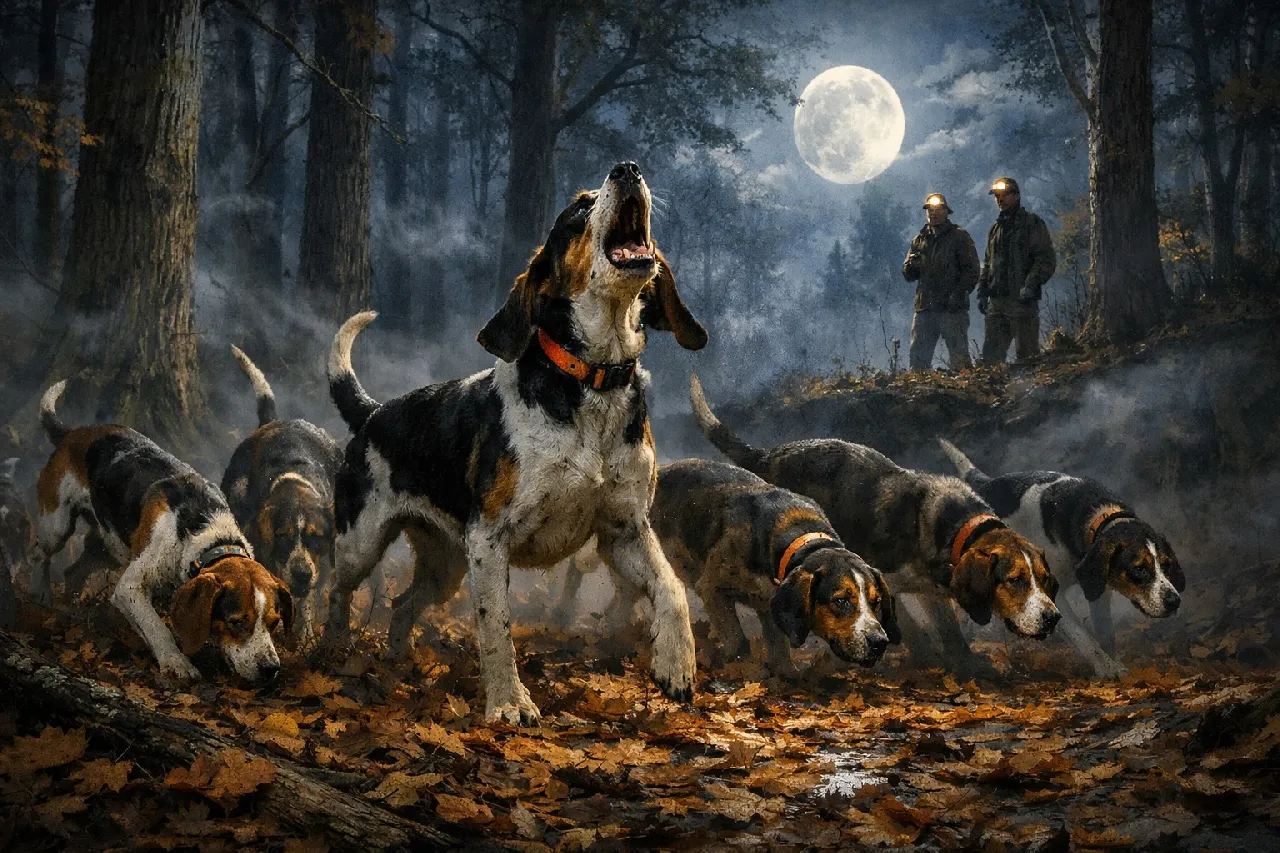
There are certain sounds that stay with a man for life. For some folks it’s the whistle of a train or the crash of ocean waves. For a houndsman, it’s the sound of a dog opening on a cold track somewhere in the dark timber.
I’ve spent most of my life following that sound.
From frosty November mornings running rabbits with beagles to long winter nights walking behind coonhounds, the years have a way of piling up faster than you expect. The dogs change. The trucks change. The lights get brighter and the collars get smarter. But the lessons a man learns behind hounds remain surprisingly constant.
You don’t realize it at first, of course. When you’re young, you’re mostly concerned with the excitement of the chase. You want the dogs to run hard, tree fast, and make game. The older hunters who talk about patience and understanding seem a little slow to you.
Then the years start teaching you things the hard way.
And if you’ve stayed with hounds long enough, those lessons shape the way you look at dogs, hunting, and even life itself.
The First Lesson: Good Hounds Take Time
One of the earliest truths a hunter learns is that good hounds are not built overnight.
Young hunters often expect a pup to start quickly and run like a seasoned dog by the end of the season. Sometimes that happens, but most of the time a good hound develops slowly, layer by layer. Instinct shows up early, but maturity takes time.
I’ve seen plenty of pups that looked ordinary during their first year turn into exceptional dogs once they reached three or four seasons in the woods. The reverse happens too. A flashy young dog may look promising early on but fade once the novelty wears off.
Experience teaches you to judge dogs over years, not weeks.
The woods have a way of revealing a dog’s true character eventually.
The Dogs Will Teach You If You Listen
The longer you hunt behind hounds, the more you realize the dogs are the real teachers.
Every track they work is a lesson in scent, wind, terrain, and instinct. If you pay attention to how experienced dogs handle a track, you start to see patterns.
A good trailing dog doesn’t panic when the scent gets thin. It slows down, works the edges, and patiently solves the puzzle. Young dogs tend to rush and overrun the line, but older hounds learn to trust their nose instead of their excitement.
Watching a seasoned hound work a difficult track is like watching a master craftsman at work.
There’s no wasted movement. No unnecessary noise. Just quiet, deliberate progress.
Those dogs teach patience better than any human ever could.
Weather, Terrain, and Scent Matter More Than Most People Realize
When I first started hunting, I thought dogs either had the ability to run game or they didn’t.
That’s not entirely wrong, but it’s far from the whole story.
Over time you begin to understand just how much the environment affects scent. Cold ground, dry leaves, wind direction, humidity, and even moonlight can influence how a track holds.
Some nights the scent seems to float through the woods like smoke, and the dogs run like they’re on rails. Other nights they struggle to move a track fifty yards.
Those conditions separate average dogs from great ones.
But they also teach hunters to be humble. When the scenting conditions are poor, even the best hounds in the world may look average. Blaming the dog too quickly is a mistake most hunters eventually grow out of.
The woods are always part of the equation.
Breeding Matters More Than Most People Admit
Another lesson learned over decades behind hounds is that breeding plays a bigger role than many hunters want to admit.
Training matters. Handling matters. Experience matters.
But the foundation of a great hound is written in its genetics.
Some dogs simply have a stronger nose, more drive, or better natural tracking ability. Those traits are passed down through generations of careful breeding by hunters who understood what they were selecting for.
The best houndsmen I’ve known paid close attention to bloodlines. They remembered which crosses produced track dogs, which ones produced tree dogs, and which ones produced balanced hounds that could do both.
You can train a dog to improve.
But you can’t train instinct where none exists.
That’s why serious hunters spend as much time studying pedigrees as they do studying tracks in the woods.
Patience Is the Greatest Skill a Houndsman Can Learn
If there’s one lesson that stands above all others, it’s patience.
Patience with young dogs that are still figuring things out.
Patience with old dogs whose pace slows but whose wisdom grows.
Patience with bad weather, rough terrain, and nights when nothing seems to go right.
Hound hunting is not a fast sport. It unfolds at the pace of scent drifting through leaves and dogs working through problems one step at a time.
You can’t rush it.
The hunters who enjoy it most are the ones who learn to slow down and appreciate the process.
Listening to dogs work through a difficult track is often more rewarding than the moment the game is finally treed.
The Pack Is Stronger Than the Individual
Another truth that becomes clear over time is the power of a good pack.
A single exceptional dog can do impressive things, but a well-balanced pack of hounds can accomplish even more. Each dog brings different strengths to the chase. One may excel at cold trailing, another may have the speed to push the track, while another might be the dog that locates and trees with authority.
When those abilities come together, the hunt becomes something special.
Watching a pack of experienced hounds work together is like hearing a choir where every voice has its place.
That harmony doesn’t happen by accident. It comes from years of hunting dogs together and learning which personalities and abilities complement each other.
The Tradition Matters as Much as the Game
When you’ve spent decades behind hounds, you eventually realize the hunt is about more than the animal being pursued.
It’s about the early mornings and late nights.
It’s about tailgates and thermoses of coffee.
It’s about the friendships built in the dark while listening to dogs drift across distant ridges.
Some of the best nights I’ve ever spent hunting ended without a single tree made. But the dogs ran well, the air smelled like frost and leaves, and the woods felt alive with possibility.
Those are the memories that stick with you.
The tradition of hunting behind hounds stretches back generations in this country. Every hunter who turns loose a dog in the woods becomes part of that long story.
In the End, the Dogs Are the Real Reward
After a lifetime of hunting behind hounds, a man eventually understands something simple but important.
The dogs themselves are the real reward.
A great hound isn’t just a tool for catching game. It’s a partner, a companion, and often a reflection of the hunter who raised and hunted it.
Every dog leaves behind memories of particular hunts, particular nights, and particular moments in the woods. Long after those dogs are gone, their voices still echo in your mind when the woods grow quiet.
That’s the gift of hunting behind hounds.
The years pass, the seasons change, and the hunters grow older. But somewhere out in the dark timber, a dog opens on a track, and the chase begins again.
For those of us who’ve spent our lives listening for that sound, there’s nothing else quite like it.
And there never will be.
I’ve spent most of my life following that sound.
From frosty November mornings running rabbits with beagles to long winter nights walking behind coonhounds, the years have a way of piling up faster than you expect. The dogs change. The trucks change. The lights get brighter and the collars get smarter. But the lessons a man learns behind hounds remain surprisingly constant.
You don’t realize it at first, of course. When you’re young, you’re mostly concerned with the excitement of the chase. You want the dogs to run hard, tree fast, and make game. The older hunters who talk about patience and understanding seem a little slow to you.
Then the years start teaching you things the hard way.
And if you’ve stayed with hounds long enough, those lessons shape the way you look at dogs, hunting, and even life itself.
The First Lesson: Good Hounds Take Time
One of the earliest truths a hunter learns is that good hounds are not built overnight.
Young hunters often expect a pup to start quickly and run like a seasoned dog by the end of the season. Sometimes that happens, but most of the time a good hound develops slowly, layer by layer. Instinct shows up early, but maturity takes time.
I’ve seen plenty of pups that looked ordinary during their first year turn into exceptional dogs once they reached three or four seasons in the woods. The reverse happens too. A flashy young dog may look promising early on but fade once the novelty wears off.
Experience teaches you to judge dogs over years, not weeks.
The woods have a way of revealing a dog’s true character eventually.
The Dogs Will Teach You If You Listen
The longer you hunt behind hounds, the more you realize the dogs are the real teachers.
Every track they work is a lesson in scent, wind, terrain, and instinct. If you pay attention to how experienced dogs handle a track, you start to see patterns.
A good trailing dog doesn’t panic when the scent gets thin. It slows down, works the edges, and patiently solves the puzzle. Young dogs tend to rush and overrun the line, but older hounds learn to trust their nose instead of their excitement.
Watching a seasoned hound work a difficult track is like watching a master craftsman at work.
There’s no wasted movement. No unnecessary noise. Just quiet, deliberate progress.
Those dogs teach patience better than any human ever could.
Weather, Terrain, and Scent Matter More Than Most People Realize
When I first started hunting, I thought dogs either had the ability to run game or they didn’t.
That’s not entirely wrong, but it’s far from the whole story.
Over time you begin to understand just how much the environment affects scent. Cold ground, dry leaves, wind direction, humidity, and even moonlight can influence how a track holds.
Some nights the scent seems to float through the woods like smoke, and the dogs run like they’re on rails. Other nights they struggle to move a track fifty yards.
Those conditions separate average dogs from great ones.
But they also teach hunters to be humble. When the scenting conditions are poor, even the best hounds in the world may look average. Blaming the dog too quickly is a mistake most hunters eventually grow out of.
The woods are always part of the equation.
Breeding Matters More Than Most People Admit
Another lesson learned over decades behind hounds is that breeding plays a bigger role than many hunters want to admit.
Training matters. Handling matters. Experience matters.
But the foundation of a great hound is written in its genetics.
Some dogs simply have a stronger nose, more drive, or better natural tracking ability. Those traits are passed down through generations of careful breeding by hunters who understood what they were selecting for.
The best houndsmen I’ve known paid close attention to bloodlines. They remembered which crosses produced track dogs, which ones produced tree dogs, and which ones produced balanced hounds that could do both.
You can train a dog to improve.
But you can’t train instinct where none exists.
That’s why serious hunters spend as much time studying pedigrees as they do studying tracks in the woods.
Patience Is the Greatest Skill a Houndsman Can Learn
If there’s one lesson that stands above all others, it’s patience.
Patience with young dogs that are still figuring things out.
Patience with old dogs whose pace slows but whose wisdom grows.
Patience with bad weather, rough terrain, and nights when nothing seems to go right.
Hound hunting is not a fast sport. It unfolds at the pace of scent drifting through leaves and dogs working through problems one step at a time.
You can’t rush it.
The hunters who enjoy it most are the ones who learn to slow down and appreciate the process.
Listening to dogs work through a difficult track is often more rewarding than the moment the game is finally treed.
The Pack Is Stronger Than the Individual
Another truth that becomes clear over time is the power of a good pack.
A single exceptional dog can do impressive things, but a well-balanced pack of hounds can accomplish even more. Each dog brings different strengths to the chase. One may excel at cold trailing, another may have the speed to push the track, while another might be the dog that locates and trees with authority.
When those abilities come together, the hunt becomes something special.
Watching a pack of experienced hounds work together is like hearing a choir where every voice has its place.
That harmony doesn’t happen by accident. It comes from years of hunting dogs together and learning which personalities and abilities complement each other.
The Tradition Matters as Much as the Game
When you’ve spent decades behind hounds, you eventually realize the hunt is about more than the animal being pursued.
It’s about the early mornings and late nights.
It’s about tailgates and thermoses of coffee.
It’s about the friendships built in the dark while listening to dogs drift across distant ridges.
Some of the best nights I’ve ever spent hunting ended without a single tree made. But the dogs ran well, the air smelled like frost and leaves, and the woods felt alive with possibility.
Those are the memories that stick with you.
The tradition of hunting behind hounds stretches back generations in this country. Every hunter who turns loose a dog in the woods becomes part of that long story.
In the End, the Dogs Are the Real Reward
After a lifetime of hunting behind hounds, a man eventually understands something simple but important.
The dogs themselves are the real reward.
A great hound isn’t just a tool for catching game. It’s a partner, a companion, and often a reflection of the hunter who raised and hunted it.
Every dog leaves behind memories of particular hunts, particular nights, and particular moments in the woods. Long after those dogs are gone, their voices still echo in your mind when the woods grow quiet.
That’s the gift of hunting behind hounds.
The years pass, the seasons change, and the hunters grow older. But somewhere out in the dark timber, a dog opens on a track, and the chase begins again.
For those of us who’ve spent our lives listening for that sound, there’s nothing else quite like it.
And there never will be.




View all 0 comments