Night Hunting Hogs with Dogs
What Experienced Hunters Know Before the Sun Goes Down
Jeff Davis | https://hounddogcentral.com
 0
0 0
0 0
0 0
0 0
0
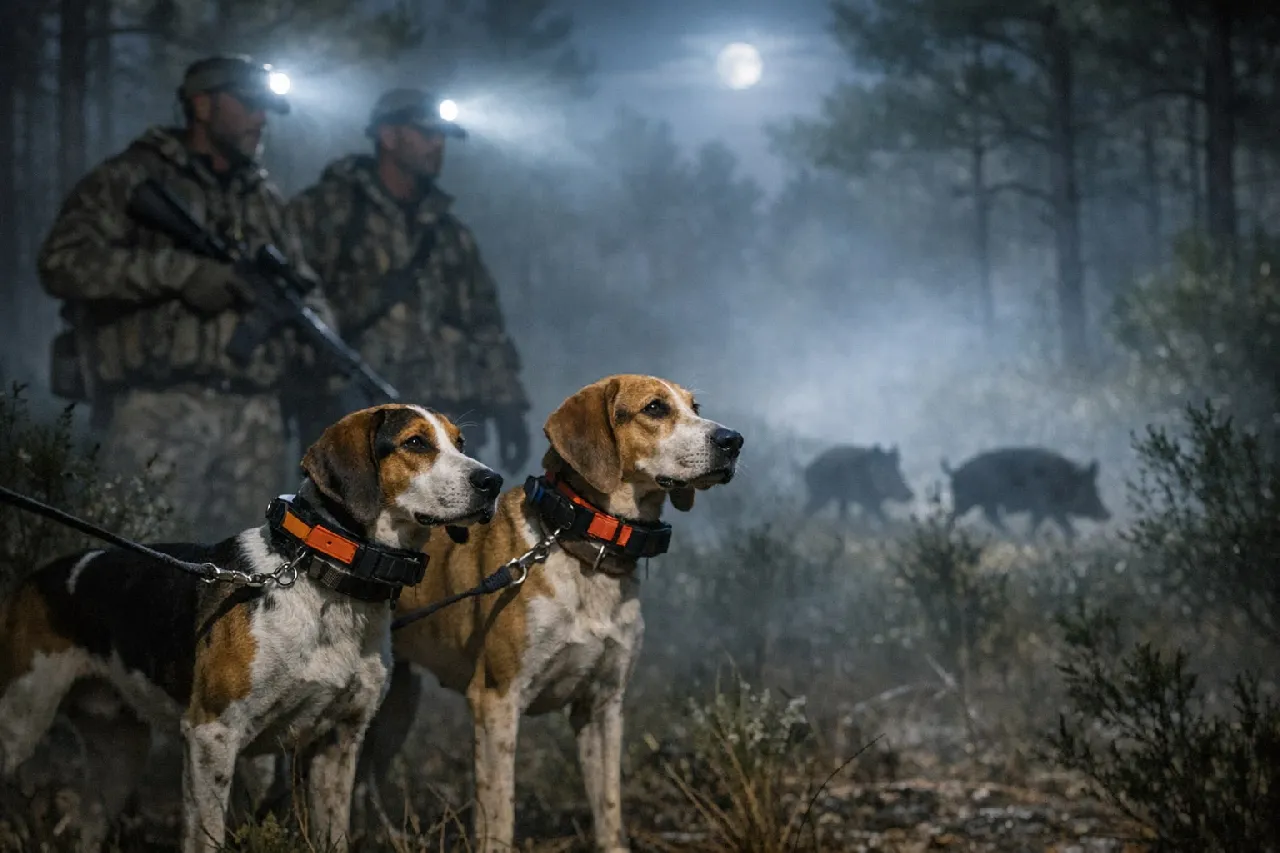
There is a different feel to the woods after dark when you are turning out on hogs. The air settles, sounds carry farther, and every dog in the box seems to know the job is about to get serious. Night hunting hogs with dogs is not just a daytime hunt pushed later into the clock. It is its own game, with its own rhythm, hazards, and lessons. A man who has spent enough nights behind good hounds learns quickly that success depends on more than bravery. It takes dogs with sense, hunters with patience, and a willingness to prepare long before the tailgate drops.
For many dog owners interested in hound dogs, hog hunting at night is where working bloodlines show their worth. In the dark, a dog cannot rely on a handler standing nearby to fix every mistake. The dog has to use nose, ears, brains, and grit. A loose-mouthed dog that sounds good on a daylight pleasure run can become a liability when a rank boar cuts through thick cover and heads toward water, cutovers, or posted land. At night, flaws show up fast, and so do the qualities that make a real hog dog.
Why Night Hunts Change the Whole Hunt
Hogs move differently after sunset, especially in warm weather and on pressured ground. They leave thick bedding cover to feed, travel field edges, slip through creek bottoms, and root in places they may avoid in daylight. That movement can make locating fresh sign easier, but it also means the race can cover country in a hurry. A sounder that lifts out of a peanut field can be a half mile away in what feels like minutes, and if your dogs do not handle well, the whole hunt can turn into a recovery job.
Darkness also sharpens every decision a hunter makes. You cannot always see where the dogs are headed, and the woods have a way of making distance lie to you. A bay that sounds close may sit across a slough or behind a wall of palmetto. A track that starts easy can turn ugly when a wounded or cornered boar decides he is done running. That is why seasoned hunters talk so much about control, conditioning, and dog sense. Anybody can admire hard dogs, but the ones worth feeding are the dogs that know how to pressure a hog without getting wrecked every time they catch a bad one.
Choosing the Right Dogs for Night Hunting Hogs
The best setup for night hunting hogs with dogs usually comes down to two jobs: finding and baying, then catching and holding if the situation calls for it and the law allows. Some hunters prefer straight bay dogs with enough grit to hold pressure. Others run a combination of bay dogs and catch dogs. Either way, the dogs need to complement one another. A pack full of too much heat and not enough sense can blow hogs out of the country or get torn up in a bay before the hunters ever arrive.
What Makes a Good Bay Dog After Dark
A solid bay dog at night needs nose, hunt, range, and enough brains to stay alive. The dog should strike old sign, sort out fresh movement, and move a track with purpose instead of milling around where the truck last stopped. Good bay dogs know how to locate, apply pressure, and keep a hog talking without constantly diving in where they do not belong. In the dark, that matters even more. You may not be standing close enough to save a reckless dog from a bad cut.
Experienced hunters also appreciate dogs that handle. That trait gets overlooked by newcomers who are fascinated by speed and aggression. But when the hunt is over at two in the morning and you are standing beside a flooded ditch trying to gather dogs before crossing onto the wrong property, handle becomes priceless. A dog that comes when called, loads when told, and checks back is worth more than a wild one with all the heart in the world.
The Role of Catch Dogs
If you use catch dogs, they need to be steady, obedient, and physically prepared. A catch dog is not just a bulldog with muscle. It has to wait until it is sent, hit clean, and hold correctly. Turning a catch dog loose too early can scatter a bay or force a bad hog to break. Turning one loose too late can leave bay dogs exposed. Good hog hunters do not brag on foolish catches. They respect timing, terrain, and the safety of every dog involved.
Preparing for the Hunt Before the Gate Opens
The best night hunts are usually won before the dogs ever strike. That starts with knowing the land. Walk it in daylight when you can. Learn the creeks, fences, roads, swamps, feeders, crop edges, and likely bedding areas. Mark property lines and access points. A hunter who knows how hogs use a place at dusk and after midnight will make better casts and spend less time chasing bad guesses.
Dog conditioning matters just as much. Hogs are rough, and nighttime terrain hides every hole, stump, log, and strand of wire. Dogs need feet tough enough to travel, wind enough to stay in a long race, and muscle enough to recover. Keeping nails in shape, checking pads, and maintaining body weight sound like simple chores, but they separate consistent hunters from people who only talk about hunting.
Gear should be checked before dark, not after the dogs are out. Tracking collars, lights, leads, cut gear, first-aid supplies, and communication all need to be ready. Nothing feels longer than fumbling for dead equipment while hearing a bay turn rough in the distance. A calm hunter with reliable gear can focus on the dogs. A disorganized hunter creates problems that did not need to exist.
Reading a Race in the Dark
One of the real skills in night hunting hogs with dogs is learning to read what the dogs are telling you when you cannot see the whole picture. The tone of a strike, the way a track opens, the spacing between barks, and the sudden shift from trailing to baying all matter. Old hunters can often tell whether the dogs are drifting a feeder hog, pushing a sounder, or dealing with a single hard boar just by listening.
A steady track with forward movement usually sounds honest and efficient. Loose barking with no progress often means confusion, old sign, or dogs feeding off each other instead of the hog. When a bay locks down hard and then breaks in a burst, that can mean the hog charged, cut through the bay, or found an opening. Those details matter because they tell you how fast you need to move and what kind of trouble may be waiting when you get there.
The woods at night can fool your ears, so smart hunters do not rely on sound alone. They use tracking technology, but they do not let a screen replace judgment. The collar may show distance, but experience tells you how terrain, water, and thick cover affect the time it will take to reach the dogs. Many hunters have learned the hard way that a two-hundred-yard straight line on a map can feel like half a mile when you are crossing black water and vine-choked timber.
Safety for Dogs and Hunters
No honest article about hog hunting with dogs should ignore the danger. Hogs can cut a dog badly in seconds, especially a mature boar with good teeth and a mean streak. Thick cover makes everything harder, and night makes every hazard less forgiving. That is why smart hunters protect dogs with proper cut gear when needed, avoid overcrowding a bay, and refuse to let excitement outrun common sense.
Hunters need discipline too. Know where your partners are before stepping into a bay. Move with purpose, but do not rush blind into noise and confusion. Mud, roots, barbed wire, holes, and water all become more dangerous after dark. Add an angry hog and excited dogs, and the margin for error gets thin in a hurry. The best hunters I have known were not reckless men. They were careful men who had seen enough to respect what a bad situation can do.
After the bay, check every dog before loading up. Small punctures can hide under mud and hair, and what looks minor in the field can swell by morning. A dog that hunted hard deserves the same attention after the race as he did before the cast. Good dog men do not just praise a dog when it performs. They care for it when the work is done.
Training Young Dogs for Night Hog Hunts
Young dogs should not be thrown into chaos and expected to figure everything out in one night. Start by building obedience, recall, and confidence. Let them learn the woods, the box, the lead, and the routine. Then expose them to the right older dogs. A seasoned dog with a level head can teach a youngster more in a few clean races than a month of confusion ever will.
Be careful about what habits you allow early. A pup that hangs back too much may need encouragement, but one that dives into every hog without thinking may need even more guidance. The goal is not to create a reckless dog. The goal is to build one that hunts hard, bays honestly, and stays useful for years. The best hog dogs are not accidents. They are shaped through repetition, correction, and opportunity.
The Part Most Outsiders Miss
People who have never followed hounds on hogs at night sometimes think the whole thing is noise, speed, and bravado. The truth is quieter than that. It is listening from the tailgate before the cast. It is seeing a dog lift its head into the night wind and knowing from that posture it smelled something worth finding. It is hearing a race swing through a creek bottom, then settle into a hard bay, and feeling that old mix of urgency and gratitude that comes when good dogs do exactly what they were bred to do.
Night hunting hogs with dogs is not for everybody, and it should never be approached casually. But for those who understand hounds and value working dogs, it remains one of the clearest tests of breeding, training, and trust. In the dark, pretense falls away. You find out what kind of dogs you own, what kind of hunter you are, and whether the bond between the two is strong enough to hold when the woods get loud and the stakes get high.
That is why men keep going back. Not just for the hogs, and not just for the chase, but for the chance to hear good dogs working honestly under a black sky. If you spend enough nights at it, those sounds stay with you. And if you are fortunate enough to own a true hog dog, you know there are few better feelings in hunting than turning that dog loose and hearing it do what it was born to do.
For many dog owners interested in hound dogs, hog hunting at night is where working bloodlines show their worth. In the dark, a dog cannot rely on a handler standing nearby to fix every mistake. The dog has to use nose, ears, brains, and grit. A loose-mouthed dog that sounds good on a daylight pleasure run can become a liability when a rank boar cuts through thick cover and heads toward water, cutovers, or posted land. At night, flaws show up fast, and so do the qualities that make a real hog dog.
Why Night Hunts Change the Whole Hunt
Hogs move differently after sunset, especially in warm weather and on pressured ground. They leave thick bedding cover to feed, travel field edges, slip through creek bottoms, and root in places they may avoid in daylight. That movement can make locating fresh sign easier, but it also means the race can cover country in a hurry. A sounder that lifts out of a peanut field can be a half mile away in what feels like minutes, and if your dogs do not handle well, the whole hunt can turn into a recovery job.
Darkness also sharpens every decision a hunter makes. You cannot always see where the dogs are headed, and the woods have a way of making distance lie to you. A bay that sounds close may sit across a slough or behind a wall of palmetto. A track that starts easy can turn ugly when a wounded or cornered boar decides he is done running. That is why seasoned hunters talk so much about control, conditioning, and dog sense. Anybody can admire hard dogs, but the ones worth feeding are the dogs that know how to pressure a hog without getting wrecked every time they catch a bad one.
Choosing the Right Dogs for Night Hunting Hogs
The best setup for night hunting hogs with dogs usually comes down to two jobs: finding and baying, then catching and holding if the situation calls for it and the law allows. Some hunters prefer straight bay dogs with enough grit to hold pressure. Others run a combination of bay dogs and catch dogs. Either way, the dogs need to complement one another. A pack full of too much heat and not enough sense can blow hogs out of the country or get torn up in a bay before the hunters ever arrive.
What Makes a Good Bay Dog After Dark
A solid bay dog at night needs nose, hunt, range, and enough brains to stay alive. The dog should strike old sign, sort out fresh movement, and move a track with purpose instead of milling around where the truck last stopped. Good bay dogs know how to locate, apply pressure, and keep a hog talking without constantly diving in where they do not belong. In the dark, that matters even more. You may not be standing close enough to save a reckless dog from a bad cut.
Experienced hunters also appreciate dogs that handle. That trait gets overlooked by newcomers who are fascinated by speed and aggression. But when the hunt is over at two in the morning and you are standing beside a flooded ditch trying to gather dogs before crossing onto the wrong property, handle becomes priceless. A dog that comes when called, loads when told, and checks back is worth more than a wild one with all the heart in the world.
The Role of Catch Dogs
If you use catch dogs, they need to be steady, obedient, and physically prepared. A catch dog is not just a bulldog with muscle. It has to wait until it is sent, hit clean, and hold correctly. Turning a catch dog loose too early can scatter a bay or force a bad hog to break. Turning one loose too late can leave bay dogs exposed. Good hog hunters do not brag on foolish catches. They respect timing, terrain, and the safety of every dog involved.
Preparing for the Hunt Before the Gate Opens
The best night hunts are usually won before the dogs ever strike. That starts with knowing the land. Walk it in daylight when you can. Learn the creeks, fences, roads, swamps, feeders, crop edges, and likely bedding areas. Mark property lines and access points. A hunter who knows how hogs use a place at dusk and after midnight will make better casts and spend less time chasing bad guesses.
Dog conditioning matters just as much. Hogs are rough, and nighttime terrain hides every hole, stump, log, and strand of wire. Dogs need feet tough enough to travel, wind enough to stay in a long race, and muscle enough to recover. Keeping nails in shape, checking pads, and maintaining body weight sound like simple chores, but they separate consistent hunters from people who only talk about hunting.
Gear should be checked before dark, not after the dogs are out. Tracking collars, lights, leads, cut gear, first-aid supplies, and communication all need to be ready. Nothing feels longer than fumbling for dead equipment while hearing a bay turn rough in the distance. A calm hunter with reliable gear can focus on the dogs. A disorganized hunter creates problems that did not need to exist.
Reading a Race in the Dark
One of the real skills in night hunting hogs with dogs is learning to read what the dogs are telling you when you cannot see the whole picture. The tone of a strike, the way a track opens, the spacing between barks, and the sudden shift from trailing to baying all matter. Old hunters can often tell whether the dogs are drifting a feeder hog, pushing a sounder, or dealing with a single hard boar just by listening.
A steady track with forward movement usually sounds honest and efficient. Loose barking with no progress often means confusion, old sign, or dogs feeding off each other instead of the hog. When a bay locks down hard and then breaks in a burst, that can mean the hog charged, cut through the bay, or found an opening. Those details matter because they tell you how fast you need to move and what kind of trouble may be waiting when you get there.
The woods at night can fool your ears, so smart hunters do not rely on sound alone. They use tracking technology, but they do not let a screen replace judgment. The collar may show distance, but experience tells you how terrain, water, and thick cover affect the time it will take to reach the dogs. Many hunters have learned the hard way that a two-hundred-yard straight line on a map can feel like half a mile when you are crossing black water and vine-choked timber.
Safety for Dogs and Hunters
No honest article about hog hunting with dogs should ignore the danger. Hogs can cut a dog badly in seconds, especially a mature boar with good teeth and a mean streak. Thick cover makes everything harder, and night makes every hazard less forgiving. That is why smart hunters protect dogs with proper cut gear when needed, avoid overcrowding a bay, and refuse to let excitement outrun common sense.
Hunters need discipline too. Know where your partners are before stepping into a bay. Move with purpose, but do not rush blind into noise and confusion. Mud, roots, barbed wire, holes, and water all become more dangerous after dark. Add an angry hog and excited dogs, and the margin for error gets thin in a hurry. The best hunters I have known were not reckless men. They were careful men who had seen enough to respect what a bad situation can do.
After the bay, check every dog before loading up. Small punctures can hide under mud and hair, and what looks minor in the field can swell by morning. A dog that hunted hard deserves the same attention after the race as he did before the cast. Good dog men do not just praise a dog when it performs. They care for it when the work is done.
Training Young Dogs for Night Hog Hunts
Young dogs should not be thrown into chaos and expected to figure everything out in one night. Start by building obedience, recall, and confidence. Let them learn the woods, the box, the lead, and the routine. Then expose them to the right older dogs. A seasoned dog with a level head can teach a youngster more in a few clean races than a month of confusion ever will.
Be careful about what habits you allow early. A pup that hangs back too much may need encouragement, but one that dives into every hog without thinking may need even more guidance. The goal is not to create a reckless dog. The goal is to build one that hunts hard, bays honestly, and stays useful for years. The best hog dogs are not accidents. They are shaped through repetition, correction, and opportunity.
The Part Most Outsiders Miss
People who have never followed hounds on hogs at night sometimes think the whole thing is noise, speed, and bravado. The truth is quieter than that. It is listening from the tailgate before the cast. It is seeing a dog lift its head into the night wind and knowing from that posture it smelled something worth finding. It is hearing a race swing through a creek bottom, then settle into a hard bay, and feeling that old mix of urgency and gratitude that comes when good dogs do exactly what they were bred to do.
Night hunting hogs with dogs is not for everybody, and it should never be approached casually. But for those who understand hounds and value working dogs, it remains one of the clearest tests of breeding, training, and trust. In the dark, pretense falls away. You find out what kind of dogs you own, what kind of hunter you are, and whether the bond between the two is strong enough to hold when the woods get loud and the stakes get high.
That is why men keep going back. Not just for the hogs, and not just for the chase, but for the chance to hear good dogs working honestly under a black sky. If you spend enough nights at it, those sounds stay with you. And if you are fortunate enough to own a true hog dog, you know there are few better feelings in hunting than turning that dog loose and hearing it do what it was born to do.




View all 0 comments