Music in the Briars
The Sound of Beagles on a Rabbit Track
Jeff Davis | https://hounddogcentral.com
 0
0 0
0 0
0 0
0 0
0
There are men who hunt for meat. There are men who hunt for horns.
And then there are those of us who hunt for music.
I have followed beagles into briar thickets for more than forty years, and I can tell you plain as day — the rabbit is just an excuse. What I’m after is that first honest note breaking the stillness of a cold morning.
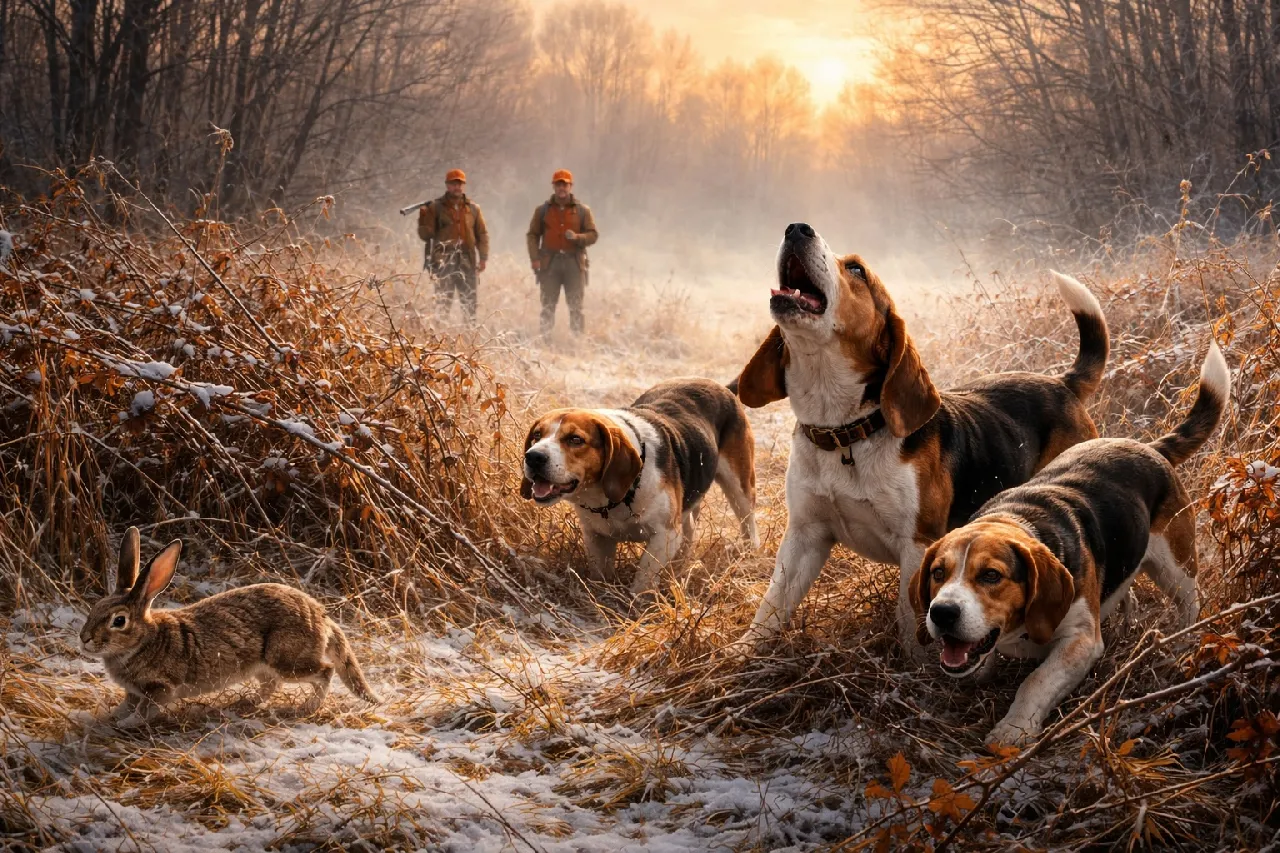
It usually starts quiet. Frost clings to the broom sedge. The briars shine silver in the early light. Your boots are already wet, and the dogs are casting wide, noses down, tails ticking like metronomes in the brush. You can hear them breathing before you hear anything else.
Then one of them hits scent.
It’s never a roar at first. Just a whimper. A question.
A soft “yip” that hangs in the air like the first pluck of a fiddle string.
If you’ve been doing it long enough, you know that sound means something. It means a rabbit fed here in the night. It means he left warm tracks in the dew. It means the morning is about to wake up.
Another dog honors. Then another.
And suddenly the briars are singing.
A good beagle doesn’t just bark — he opens with purpose. There’s rhythm in it. Chop-mouthed dogs hammer quick and sharp. Long bawlers roll it out like a slow country hymn. When the pack locks in together, it becomes something bigger than noise. It becomes a chorus.
That’s the music I wait for.
The rabbit jumps, usually when you least expect it. A flash of brown slipping low through greenbrier and blackberry vine. The dogs shift gears instantly. What was scattered becomes organized. You can hear the line straighten out. The tempo increases.
Now it’s a race.
But not the kind folks imagine. Rabbit hunting with beagles isn’t speed for the sake of speed. It’s precision. Rabbits don’t run straight to the next county. They circle. They twist. They double back. They slip under fence rows and through culverts and sometimes right between your legs if you’re not paying attention.
The dogs have to account for every move.
When the rabbit makes a hard turn, the music breaks. The pack overruns. There’s confusion for a moment — a silence that feels too big. That’s when you learn the quality of your hounds.
A seasoned dog will drop his head, work the check, and puzzle it out. You’ll hear one determined bark — slow, deliberate. Then another as he pieces the line back together.
And just like that, the music resumes.
I’ve stood on cutovers in Georgia, swamp edges in Mississippi, and frozen fence rows in Tennessee listening to that sound roll through the cover. Sometimes you can’t see a single dog. All you have is their voices moving through the land like a living thing.
On still mornings the sound carries forever. It echoes off hardwood bottoms and drifts across open fields. You can tell where the race is headed without ever laying eyes on it. A man who’s followed beagles long enough can map the chase in his head like reading sheet music.
There’s something honest about it.
No spotlight. No trick. No long glassing session from a ridge top. Just hounds and a rabbit doing what they were born to do. The rabbit survives by wit and instinct. The beagle survives by nose and heart.
And somewhere in between stands the hunter, shotgun broken over his arm, listening.
I’ve killed my share of rabbits over the years. A young man gets eager when the pack swings a circle his way. You learn to pick your hole, watch the brush line, and hold steady when that gray blur appears.
But if I’m telling the truth, the older I get, the less I care whether I pull the trigger.
These days I find myself stepping back against a sweetgum tree and letting the race unfold. I watch the younger hunters move into position. I listen to the cadence of my dogs — some of them gone now, but still alive in memory every time another hound opens the same way.
There was an old gyp I once owned who had a voice like a church bell. Clear. Steady. Certain. When she struck, you knew it was right. I can still hear her in my mind when a cold morning settles just so.
That’s the thing about rabbit hunting with beagles.
It isn’t measured in limits or trophies. It’s measured in mornings. In frost-covered briars and thermoses of coffee balanced on tailgates. In young dogs figuring it out and old dogs teaching them without anyone saying a word.
It’s measured in that first note breaking the silence.
Some folks will never understand why a grown man would willingly crawl through thorns to chase an animal no bigger than a house cat. They’ve never stood in a winter thicket and felt the ground vibrate with the rhythm of a tight pack driving a circle.
They’ve never heard the music.
When the race finally winds down — maybe the rabbit holes up or slips away clean — the woods grow quiet again. The dogs come back tongues lolling, sides heaving, briars tangled in their ears. You kneel down, check their pads, rub their heads, and tell them they did good.
Because they did.
And as we head back toward the truck, I know something for certain.
If my legs hold out and the good Lord allows it, I’ll keep following that music as long as I can still hear it.
Not for the rabbit.
For the song in the briars.
And then there are those of us who hunt for music.
I have followed beagles into briar thickets for more than forty years, and I can tell you plain as day — the rabbit is just an excuse. What I’m after is that first honest note breaking the stillness of a cold morning.
It usually starts quiet. Frost clings to the broom sedge. The briars shine silver in the early light. Your boots are already wet, and the dogs are casting wide, noses down, tails ticking like metronomes in the brush. You can hear them breathing before you hear anything else.
Then one of them hits scent.
It’s never a roar at first. Just a whimper. A question.
A soft “yip” that hangs in the air like the first pluck of a fiddle string.
If you’ve been doing it long enough, you know that sound means something. It means a rabbit fed here in the night. It means he left warm tracks in the dew. It means the morning is about to wake up.
Another dog honors. Then another.
And suddenly the briars are singing.
A good beagle doesn’t just bark — he opens with purpose. There’s rhythm in it. Chop-mouthed dogs hammer quick and sharp. Long bawlers roll it out like a slow country hymn. When the pack locks in together, it becomes something bigger than noise. It becomes a chorus.
That’s the music I wait for.
The rabbit jumps, usually when you least expect it. A flash of brown slipping low through greenbrier and blackberry vine. The dogs shift gears instantly. What was scattered becomes organized. You can hear the line straighten out. The tempo increases.
Now it’s a race.
But not the kind folks imagine. Rabbit hunting with beagles isn’t speed for the sake of speed. It’s precision. Rabbits don’t run straight to the next county. They circle. They twist. They double back. They slip under fence rows and through culverts and sometimes right between your legs if you’re not paying attention.
The dogs have to account for every move.
When the rabbit makes a hard turn, the music breaks. The pack overruns. There’s confusion for a moment — a silence that feels too big. That’s when you learn the quality of your hounds.
A seasoned dog will drop his head, work the check, and puzzle it out. You’ll hear one determined bark — slow, deliberate. Then another as he pieces the line back together.
And just like that, the music resumes.
I’ve stood on cutovers in Georgia, swamp edges in Mississippi, and frozen fence rows in Tennessee listening to that sound roll through the cover. Sometimes you can’t see a single dog. All you have is their voices moving through the land like a living thing.
On still mornings the sound carries forever. It echoes off hardwood bottoms and drifts across open fields. You can tell where the race is headed without ever laying eyes on it. A man who’s followed beagles long enough can map the chase in his head like reading sheet music.
There’s something honest about it.
No spotlight. No trick. No long glassing session from a ridge top. Just hounds and a rabbit doing what they were born to do. The rabbit survives by wit and instinct. The beagle survives by nose and heart.
And somewhere in between stands the hunter, shotgun broken over his arm, listening.
I’ve killed my share of rabbits over the years. A young man gets eager when the pack swings a circle his way. You learn to pick your hole, watch the brush line, and hold steady when that gray blur appears.
But if I’m telling the truth, the older I get, the less I care whether I pull the trigger.
These days I find myself stepping back against a sweetgum tree and letting the race unfold. I watch the younger hunters move into position. I listen to the cadence of my dogs — some of them gone now, but still alive in memory every time another hound opens the same way.
There was an old gyp I once owned who had a voice like a church bell. Clear. Steady. Certain. When she struck, you knew it was right. I can still hear her in my mind when a cold morning settles just so.
That’s the thing about rabbit hunting with beagles.
It isn’t measured in limits or trophies. It’s measured in mornings. In frost-covered briars and thermoses of coffee balanced on tailgates. In young dogs figuring it out and old dogs teaching them without anyone saying a word.
It’s measured in that first note breaking the silence.
Some folks will never understand why a grown man would willingly crawl through thorns to chase an animal no bigger than a house cat. They’ve never stood in a winter thicket and felt the ground vibrate with the rhythm of a tight pack driving a circle.
They’ve never heard the music.
When the race finally winds down — maybe the rabbit holes up or slips away clean — the woods grow quiet again. The dogs come back tongues lolling, sides heaving, briars tangled in their ears. You kneel down, check their pads, rub their heads, and tell them they did good.
Because they did.
And as we head back toward the truck, I know something for certain.
If my legs hold out and the good Lord allows it, I’ll keep following that music as long as I can still hear it.
Not for the rabbit.
For the song in the briars.




View all 0 comments