
The Sound of the Pack
Why Hound Hunters Love the Chase
Jeff Davis | https://hounddogcentral.com
 0
0 0
0 0
0 0
0 0
0
There are few sounds in the hunting world that stir a man's blood like the voice of a hound opening on a track.
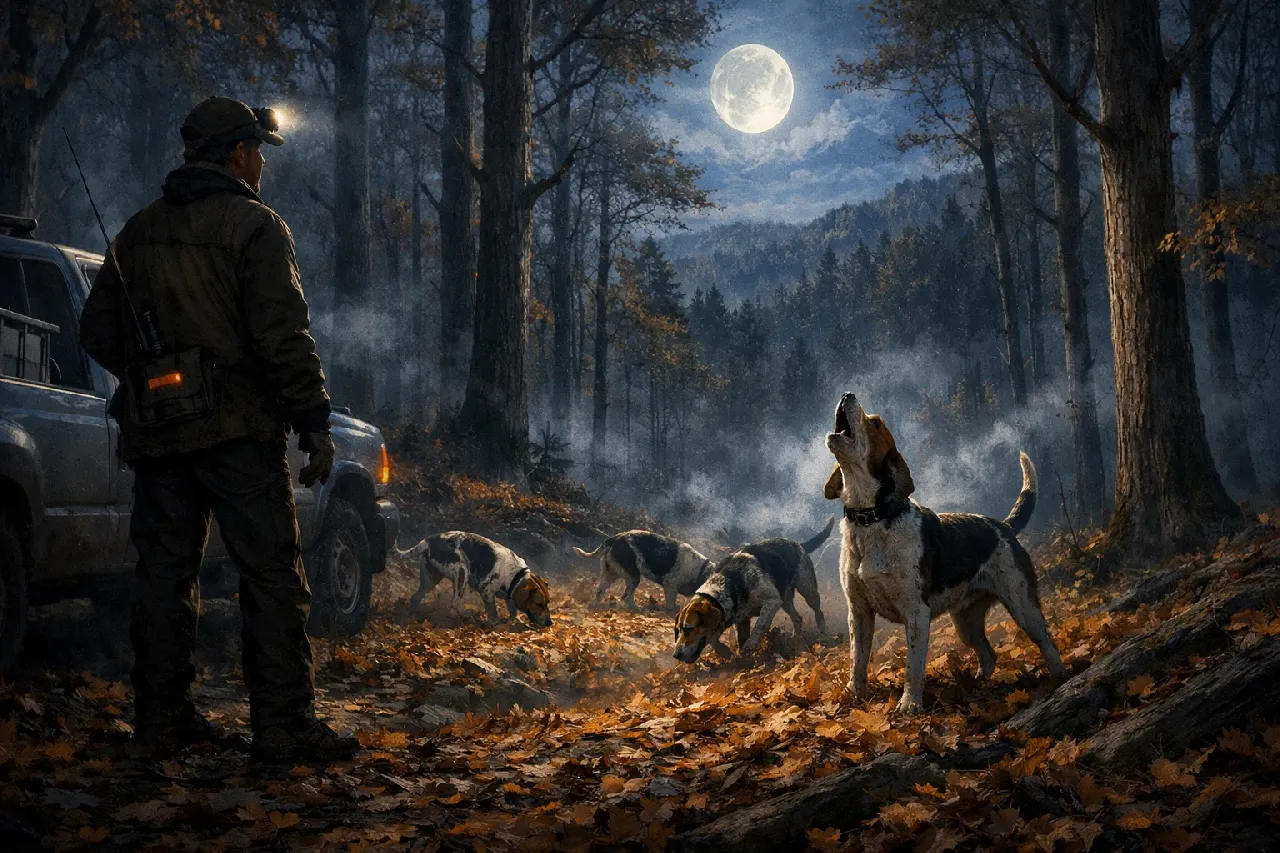
It starts quietly most nights. A truck door shuts somewhere down a gravel road. A couple of dogs shuffle in their boxes, chains clinking softly as they sense what’s coming. The woods are still. Maybe a barred owl calls somewhere in the darkness. Then a hound drops off the tailgate, lowers its nose to the ground, and a few seconds later that first long bawl rolls out across the timber.
To a houndsman, that sound is the beginning of the story.
People who have never hunted with hounds sometimes assume the thrill lies in the moment the game is treed or caught. In truth, many of us will tell you that the real heart of hound hunting is the chase itself. The race unfolding through the woods, heard more than seen, is what draws hunters back night after night and season after season.
The music of the pack is something you never quite forget.
The Language of Hounds
Every hound has its own voice.
Spend enough nights listening to a pack and you begin to recognize individual dogs the way a farmer recognizes his cattle or a shepherd knows the bells of his flock. One dog might have a deep bawl that echoes through the hollows like a foghorn. Another might chop sharply and fast when excitement builds. A younger dog may open uncertainly at first, then grow more confident as the track heats up.
The pack speaks a language experienced hunters learn to understand.
A long drifting bawl tells you a dog has found scent and is moving it along. A sudden burst of excited chopping often means the track has gotten hotter. When the whole pack locks down in steady rhythm at the base of a tree, there is no mistaking what has happened.
To someone standing quietly along a logging road or field edge, those sounds paint a picture in the dark woods. Without seeing a single dog, a hunter can often tell exactly how the race is unfolding.
A Tradition Older Than Most of Us
Hunting with hounds is one of the oldest traditions in the sporting world.
Long before modern rifles, rangefinders, or GPS collars, hunters depended on dogs to find and pursue game. Across Europe and early America, packs of hounds were used to trail everything from foxes to bears. When settlers moved into the forests and mountains of North America, they brought those dogs with them.
Over generations, the breeds we know today took shape.
Coonhounds, foxhounds, beagles, curs, and a long list of regional strains were developed for specific kinds of game and terrain. Some dogs specialized in trailing raccoons through hardwood river bottoms. Others ran rabbits through briar patches or drove foxes across rolling farmland.
But regardless of the quarry, the thrill remained the same.
The chase.
The Excitement of the Race
Once the track heats up, a good pack of hounds can turn a quiet night into something electric.
A single dog may strike first, giving voice as it works out the line. Another dog joins in. Then another. Before long the woods erupt with the rolling music of the pack as they push the track through hollows, across ridges, and through creek bottoms.
The sound rises and falls as the race moves through the country.
Sometimes it fades in the distance, then suddenly swings back closer as the animal circles or doubles back. Hunters often stand listening in the dark, heads tilted slightly, trying to follow the path of the chase by ear alone.
There is something deeply satisfying about that moment.
It is raw, unscripted nature unfolding exactly the way it has for centuries.
Why the Sound Matters So Much
Part of the reason hound hunters become so attached to the sound of the pack is because it represents the dogs doing exactly what they were bred to do.
These animals carry generations of instinct in their blood. When a hound opens on a track, it isn’t performing a trick for its owner. It is expressing a natural behavior shaped by decades—sometimes centuries—of careful breeding.
The voice is proof that instinct is alive and working.
A silent dog may still find game, but a hound that speaks along the track allows the hunter to experience the chase in real time. The woods become a living stage where every bark and bawl reveals another chapter in the story.
For many hunters, listening to that unfolding story is the greatest reward of all.
The Pack as a Team
Another part of the magic lies in how the dogs work together.
A pack of well-bred hounds operates almost like a single organism. One dog might excel at finding the initial track. Another may be better at pushing a cold trail forward. Yet another might be the dog that locks down hardest when the animal trees or bays.
Each voice contributes to the rhythm of the race.
Experienced hunters often describe their packs the way coaches talk about a good ball team. Every dog brings something different, and the pack as a whole becomes greater than the sum of its parts.
When they are running well, it sounds almost like music.
Nights That Stay With You
Ask a lifelong houndsman about his favorite hunts and he will rarely talk first about the animal taken at the end of the race.
Instead, he will tell you about a cold winter night when the frost was crunching underfoot and the dogs struck along a frozen creek bank. Or about a summer hunt when the pack pushed a raccoon through three sections of timber before finally settling into a steady tree.
He will remember where he was standing when the first dog opened.
He will remember how the race swung across a ridge or disappeared down into a hollow. He will remember the sound of those hounds rolling through the darkness.
Because those sounds are tied to moments in time.
Moments shared with dogs, friends, and the quiet woods.
More Than Just Hunting
To outsiders, hound hunting can sometimes seem mysterious. Much of the action takes place out of sight. Hunters often spend long stretches simply listening.
But those who understand the tradition know the listening is the whole point.
The sound of the pack connects a hunter to the land, to the dogs, and to generations of hunters who stood in those same woods long before GPS trackers or LED headlamps ever existed.
It is a tradition built on patience, instinct, and respect for the dogs that make it possible.
When the race finally ends and the woods grow quiet again, most hunters don’t rush back to the truck.
They stand for a moment longer, listening to the last echo of the hounds fade into the night.
And already, they are looking forward to the next chase.
It starts quietly most nights. A truck door shuts somewhere down a gravel road. A couple of dogs shuffle in their boxes, chains clinking softly as they sense what’s coming. The woods are still. Maybe a barred owl calls somewhere in the darkness. Then a hound drops off the tailgate, lowers its nose to the ground, and a few seconds later that first long bawl rolls out across the timber.
To a houndsman, that sound is the beginning of the story.
People who have never hunted with hounds sometimes assume the thrill lies in the moment the game is treed or caught. In truth, many of us will tell you that the real heart of hound hunting is the chase itself. The race unfolding through the woods, heard more than seen, is what draws hunters back night after night and season after season.
The music of the pack is something you never quite forget.
The Language of Hounds
Every hound has its own voice.
Spend enough nights listening to a pack and you begin to recognize individual dogs the way a farmer recognizes his cattle or a shepherd knows the bells of his flock. One dog might have a deep bawl that echoes through the hollows like a foghorn. Another might chop sharply and fast when excitement builds. A younger dog may open uncertainly at first, then grow more confident as the track heats up.
The pack speaks a language experienced hunters learn to understand.
A long drifting bawl tells you a dog has found scent and is moving it along. A sudden burst of excited chopping often means the track has gotten hotter. When the whole pack locks down in steady rhythm at the base of a tree, there is no mistaking what has happened.
To someone standing quietly along a logging road or field edge, those sounds paint a picture in the dark woods. Without seeing a single dog, a hunter can often tell exactly how the race is unfolding.
A Tradition Older Than Most of Us
Hunting with hounds is one of the oldest traditions in the sporting world.
Long before modern rifles, rangefinders, or GPS collars, hunters depended on dogs to find and pursue game. Across Europe and early America, packs of hounds were used to trail everything from foxes to bears. When settlers moved into the forests and mountains of North America, they brought those dogs with them.
Over generations, the breeds we know today took shape.
Coonhounds, foxhounds, beagles, curs, and a long list of regional strains were developed for specific kinds of game and terrain. Some dogs specialized in trailing raccoons through hardwood river bottoms. Others ran rabbits through briar patches or drove foxes across rolling farmland.
But regardless of the quarry, the thrill remained the same.
The chase.
The Excitement of the Race
Once the track heats up, a good pack of hounds can turn a quiet night into something electric.
A single dog may strike first, giving voice as it works out the line. Another dog joins in. Then another. Before long the woods erupt with the rolling music of the pack as they push the track through hollows, across ridges, and through creek bottoms.
The sound rises and falls as the race moves through the country.
Sometimes it fades in the distance, then suddenly swings back closer as the animal circles or doubles back. Hunters often stand listening in the dark, heads tilted slightly, trying to follow the path of the chase by ear alone.
There is something deeply satisfying about that moment.
It is raw, unscripted nature unfolding exactly the way it has for centuries.
Why the Sound Matters So Much
Part of the reason hound hunters become so attached to the sound of the pack is because it represents the dogs doing exactly what they were bred to do.
These animals carry generations of instinct in their blood. When a hound opens on a track, it isn’t performing a trick for its owner. It is expressing a natural behavior shaped by decades—sometimes centuries—of careful breeding.
The voice is proof that instinct is alive and working.
A silent dog may still find game, but a hound that speaks along the track allows the hunter to experience the chase in real time. The woods become a living stage where every bark and bawl reveals another chapter in the story.
For many hunters, listening to that unfolding story is the greatest reward of all.
The Pack as a Team
Another part of the magic lies in how the dogs work together.
A pack of well-bred hounds operates almost like a single organism. One dog might excel at finding the initial track. Another may be better at pushing a cold trail forward. Yet another might be the dog that locks down hardest when the animal trees or bays.
Each voice contributes to the rhythm of the race.
Experienced hunters often describe their packs the way coaches talk about a good ball team. Every dog brings something different, and the pack as a whole becomes greater than the sum of its parts.
When they are running well, it sounds almost like music.
Nights That Stay With You
Ask a lifelong houndsman about his favorite hunts and he will rarely talk first about the animal taken at the end of the race.
Instead, he will tell you about a cold winter night when the frost was crunching underfoot and the dogs struck along a frozen creek bank. Or about a summer hunt when the pack pushed a raccoon through three sections of timber before finally settling into a steady tree.
He will remember where he was standing when the first dog opened.
He will remember how the race swung across a ridge or disappeared down into a hollow. He will remember the sound of those hounds rolling through the darkness.
Because those sounds are tied to moments in time.
Moments shared with dogs, friends, and the quiet woods.
More Than Just Hunting
To outsiders, hound hunting can sometimes seem mysterious. Much of the action takes place out of sight. Hunters often spend long stretches simply listening.
But those who understand the tradition know the listening is the whole point.
The sound of the pack connects a hunter to the land, to the dogs, and to generations of hunters who stood in those same woods long before GPS trackers or LED headlamps ever existed.
It is a tradition built on patience, instinct, and respect for the dogs that make it possible.
When the race finally ends and the woods grow quiet again, most hunters don’t rush back to the truck.
They stand for a moment longer, listening to the last echo of the hounds fade into the night.
And already, they are looking forward to the next chase.




View all 0 comments