
What a Traditional Fox Hunt With Hounds Really Looks and Sounds Like
Jeff Davis | https://hounddogcentral.com
 0
0 0
0 0
0 0
0 0
0
There is a certain stillness in the dark before a fox hunt begins.
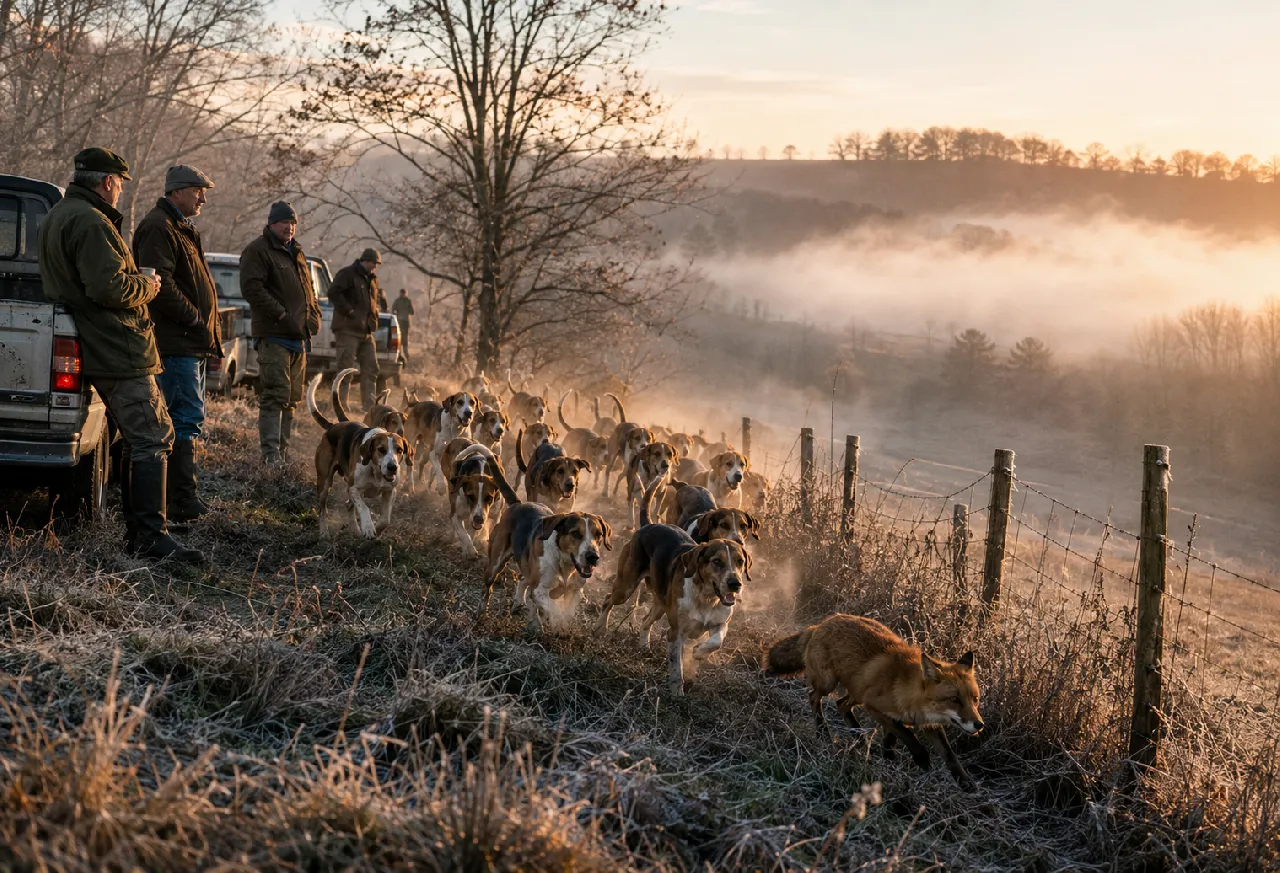
Truck doors close softly. Boots crunch gravel. Steam rolls from coffee cups into the cold morning air while men stand around dog boxes talking quietly about weather, wind, and where a fox crossed the road the evening before. Somewhere inside the dog box, a hound lets out a deep impatient bawl. Another answers. Then another. Before long the entire pack is awake and anxious, nails scratching aluminum floors while tails hammer against kennel doors.
The excitement starts long before the first track is found.
A traditional fox hunt with hounds is not a fast-moving sprint from beginning to end like many people imagine. In reality, it unfolds in stages. There are slow moments filled with anticipation, sudden bursts of chaos and noise, long listening periods on distant ridges, and stretches where hunters rely almost entirely on sound to understand what the dogs are doing miles away through thick country.
The morning usually starts before daylight because foxes move heavily during the night and early dawn hours. Hunters often gather near large farms, timber country, river bottoms, cutovers, or rolling agricultural land where red foxes or gray foxes are known to travel. Conditions matter. Damp mornings with heavy dew often help hold scent close to the ground, allowing hounds to work more confidently. Dry windy mornings can make scenting difficult and force dogs to slow down and puzzle through colder tracks.
Once the hounds are unloaded, the mood changes immediately.
Some hunters cast the dogs directly onto roads, sandy paths, or field edges where foxes commonly travel during the night. Others may road the dogs slowly from trucks or ATVs while watching for crossings. Experienced foxhounds move differently than inexperienced dogs. They drift with purpose, noses low, tails swinging methodically while testing the air and ground for scent.
Then it happens.
One hound opens.
A single long bawl cuts through the darkness.
The dog may only bark once or twice at first. Experienced hunters listen carefully because every bark means something. A hound speaking occasionally while moving slowly often indicates an older or colder track. Rapid excited barking usually means the scent is strengthening and the fox may be close ahead.
Within seconds another hound joins in.
Then another.
Suddenly the woods come alive.
The pack erupts into a rolling chorus that echoes through creek bottoms and hardwood ridges. The sound is impossible to mistake once someone has heard it in person. Some hounds carry deep mournful bawls that drift for miles. Others chop rapidly with sharp machine-gun urgency. Good foxhound packs develop rhythm together, almost like music. Hunters who have spent decades behind hounds can often identify individual dogs purely by voice.
At this stage the fox is usually moving steadily ahead of the race, staying just far enough in front of the hounds to avoid danger while trying to outmaneuver them through terrain and cover.
Contrary to popular imagination, a fox hunt is rarely a straight-line chase across open ground.
Foxes are masters of using country intelligently. They circle fields, cut through cattle pastures, run creeks, slip through swamps, skirt logging roads, and double back through timber in attempts to confuse the pack. Gray foxes especially are notorious for twisting races through rough terrain and even climbing or scrambling across obstacles where scent becomes difficult. Red foxes often rely more on distance and endurance, stretching races over large sections of country.
As the race builds, hunters spread out across roads and listening points.
A great fox hunt often becomes more about listening than seeing.
Most hunters may never actually lay eyes on the fox during the entire race. Instead, they follow the story through sound. Experienced houndsmen stand silently on ridges interpreting every change in the pack’s voice and movement. When the race swings left through a hollow, they hear it instantly. When the fox crosses water and the dogs struggle briefly to recover scent, the sudden breakdown becomes obvious. When a lead hound figures out the loss and drives the track forward again, the pack explodes back into full cry.
That moment can send chills through a hunter even after decades of running hounds.
On cold still mornings, the sound of foxhounds can travel incredible distances. A race may begin miles away yet still roll faintly through the hills like distant thunder. Sometimes the pack disappears entirely for several minutes before drifting back into hearing range. Hunters often stand quietly during these moments, heads tilted slightly, listening for a familiar dog to open somewhere deep in the timber.
Fox hunting with hounds is deeply tied to the atmosphere surrounding it.
The glow of headlights parked along dirt roads. Frost on creek banks. Damp leaves under boots. The smell of pine, wet earth, diesel fuel, and wood smoke lingering on heavy jackets. Radios crackling softly between hunters trying to predict where the race may swing next. Young hounds learning from older dogs. Veteran hunters quietly remembering famous races from years earlier whenever a particularly strong fox gives the pack a difficult run.
Not every race is perfect.
Some foxes outsmart the dogs quickly. Some tracks are too old or conditions too dry for hounds to move effectively. Young dogs overrun turns. Packs split temporarily. Hunters occasionally spend more time gathering scattered dogs afterward than actually listening to the race itself.
But that unpredictability is part of what keeps fox hunters passionate about the sport.
No two races ever sound exactly alike.
Some are slow methodical cold trails where hounds work carefully for an hour before jumping the fox. Others explode instantly into screaming fast races that leave hunters scrambling to keep up. Certain mornings produce long beautiful chases where the pack runs almost flawlessly for hours without a breakdown. Those are the races hunters talk about for years afterward.
At its heart, a traditional fox hunt is not simply about pursuing game. It is about hounds doing the work they were bred for over generations. The hunt becomes a partnership between dog, terrain, weather, instinct, and sound. Much of the enjoyment comes from appreciating the intelligence and determination of both the fox and the hounds pursuing it.
To an outsider, standing alone on a frosty ridge listening to foxhounds echo across distant hills may sound chaotic at first.
To a houndsman, it sounds like tradition itself.
Truck doors close softly. Boots crunch gravel. Steam rolls from coffee cups into the cold morning air while men stand around dog boxes talking quietly about weather, wind, and where a fox crossed the road the evening before. Somewhere inside the dog box, a hound lets out a deep impatient bawl. Another answers. Then another. Before long the entire pack is awake and anxious, nails scratching aluminum floors while tails hammer against kennel doors.
The excitement starts long before the first track is found.
A traditional fox hunt with hounds is not a fast-moving sprint from beginning to end like many people imagine. In reality, it unfolds in stages. There are slow moments filled with anticipation, sudden bursts of chaos and noise, long listening periods on distant ridges, and stretches where hunters rely almost entirely on sound to understand what the dogs are doing miles away through thick country.
The morning usually starts before daylight because foxes move heavily during the night and early dawn hours. Hunters often gather near large farms, timber country, river bottoms, cutovers, or rolling agricultural land where red foxes or gray foxes are known to travel. Conditions matter. Damp mornings with heavy dew often help hold scent close to the ground, allowing hounds to work more confidently. Dry windy mornings can make scenting difficult and force dogs to slow down and puzzle through colder tracks.
Once the hounds are unloaded, the mood changes immediately.
Some hunters cast the dogs directly onto roads, sandy paths, or field edges where foxes commonly travel during the night. Others may road the dogs slowly from trucks or ATVs while watching for crossings. Experienced foxhounds move differently than inexperienced dogs. They drift with purpose, noses low, tails swinging methodically while testing the air and ground for scent.
Then it happens.
One hound opens.
A single long bawl cuts through the darkness.
The dog may only bark once or twice at first. Experienced hunters listen carefully because every bark means something. A hound speaking occasionally while moving slowly often indicates an older or colder track. Rapid excited barking usually means the scent is strengthening and the fox may be close ahead.
Within seconds another hound joins in.
Then another.
Suddenly the woods come alive.
The pack erupts into a rolling chorus that echoes through creek bottoms and hardwood ridges. The sound is impossible to mistake once someone has heard it in person. Some hounds carry deep mournful bawls that drift for miles. Others chop rapidly with sharp machine-gun urgency. Good foxhound packs develop rhythm together, almost like music. Hunters who have spent decades behind hounds can often identify individual dogs purely by voice.
At this stage the fox is usually moving steadily ahead of the race, staying just far enough in front of the hounds to avoid danger while trying to outmaneuver them through terrain and cover.
Contrary to popular imagination, a fox hunt is rarely a straight-line chase across open ground.
Foxes are masters of using country intelligently. They circle fields, cut through cattle pastures, run creeks, slip through swamps, skirt logging roads, and double back through timber in attempts to confuse the pack. Gray foxes especially are notorious for twisting races through rough terrain and even climbing or scrambling across obstacles where scent becomes difficult. Red foxes often rely more on distance and endurance, stretching races over large sections of country.
As the race builds, hunters spread out across roads and listening points.
A great fox hunt often becomes more about listening than seeing.
Most hunters may never actually lay eyes on the fox during the entire race. Instead, they follow the story through sound. Experienced houndsmen stand silently on ridges interpreting every change in the pack’s voice and movement. When the race swings left through a hollow, they hear it instantly. When the fox crosses water and the dogs struggle briefly to recover scent, the sudden breakdown becomes obvious. When a lead hound figures out the loss and drives the track forward again, the pack explodes back into full cry.
That moment can send chills through a hunter even after decades of running hounds.
On cold still mornings, the sound of foxhounds can travel incredible distances. A race may begin miles away yet still roll faintly through the hills like distant thunder. Sometimes the pack disappears entirely for several minutes before drifting back into hearing range. Hunters often stand quietly during these moments, heads tilted slightly, listening for a familiar dog to open somewhere deep in the timber.
Fox hunting with hounds is deeply tied to the atmosphere surrounding it.
The glow of headlights parked along dirt roads. Frost on creek banks. Damp leaves under boots. The smell of pine, wet earth, diesel fuel, and wood smoke lingering on heavy jackets. Radios crackling softly between hunters trying to predict where the race may swing next. Young hounds learning from older dogs. Veteran hunters quietly remembering famous races from years earlier whenever a particularly strong fox gives the pack a difficult run.
Not every race is perfect.
Some foxes outsmart the dogs quickly. Some tracks are too old or conditions too dry for hounds to move effectively. Young dogs overrun turns. Packs split temporarily. Hunters occasionally spend more time gathering scattered dogs afterward than actually listening to the race itself.
But that unpredictability is part of what keeps fox hunters passionate about the sport.
No two races ever sound exactly alike.
Some are slow methodical cold trails where hounds work carefully for an hour before jumping the fox. Others explode instantly into screaming fast races that leave hunters scrambling to keep up. Certain mornings produce long beautiful chases where the pack runs almost flawlessly for hours without a breakdown. Those are the races hunters talk about for years afterward.
At its heart, a traditional fox hunt is not simply about pursuing game. It is about hounds doing the work they were bred for over generations. The hunt becomes a partnership between dog, terrain, weather, instinct, and sound. Much of the enjoyment comes from appreciating the intelligence and determination of both the fox and the hounds pursuing it.
To an outsider, standing alone on a frosty ridge listening to foxhounds echo across distant hills may sound chaotic at first.
To a houndsman, it sounds like tradition itself.




View all 0 comments