What Makes a Hard Tree Dog
The Traits Behind a True Stay-Put Hound
Jeff Davis | https://hounddogcentral.com
 0
0 0
0 0
0 0
0 0
0
Spend enough nights in the woods behind coonhounds and you’ll hear the term hard tree dog tossed around like a badge of honor. It’s one of those phrases that means a lot more than it sounds like on the surface. Anyone can train a dog to bark at a tree once in a while. But a true hard tree dog is something different altogether.
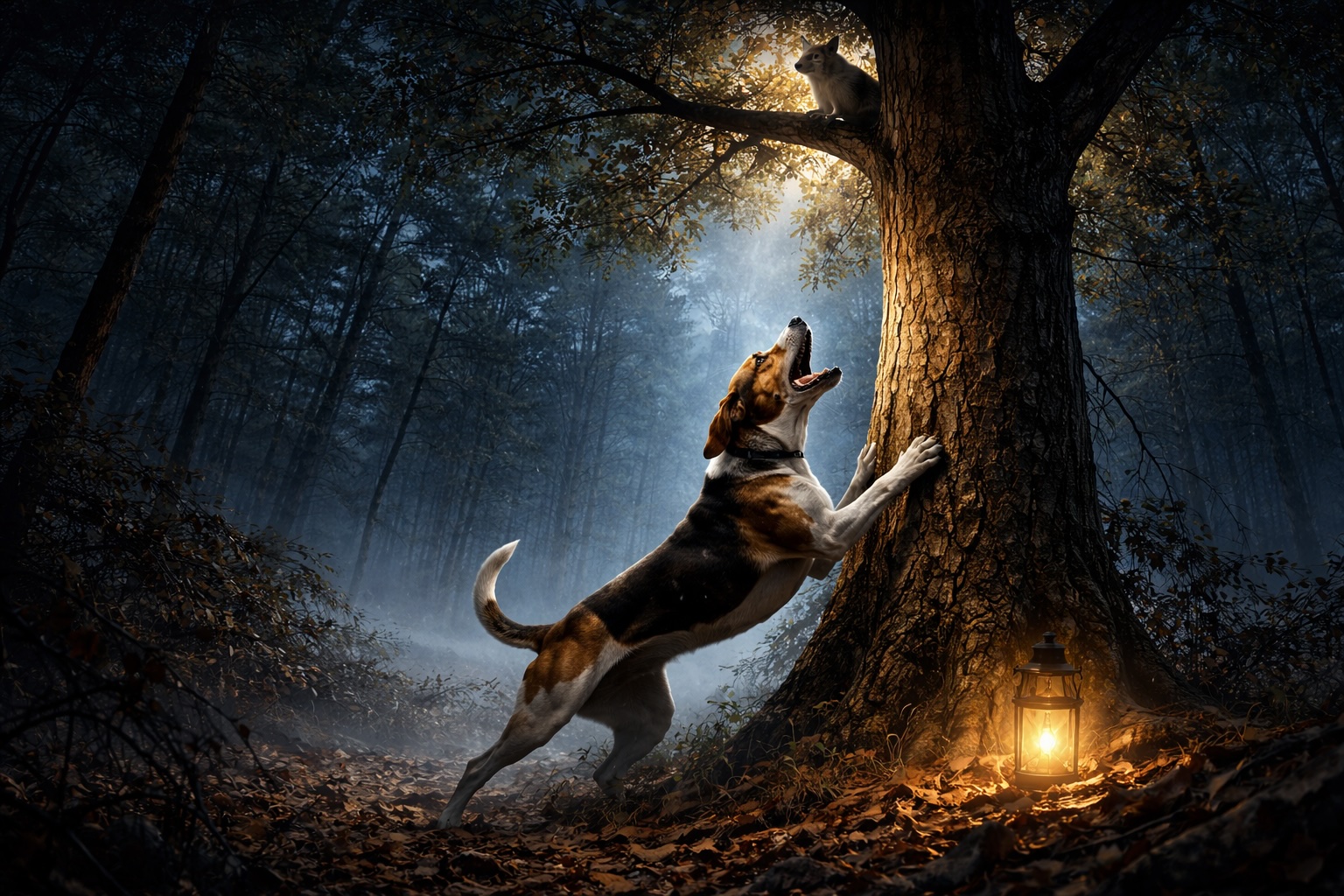
A hard tree dog is the kind of hound that hits a tree and stays there like it’s nailed down. It doesn’t wander. It doesn’t lose interest. It doesn’t drift off to hunt another track. That dog is locked in, hammering the bark with a steady chop until the hunter finally makes it through the dark woods to where the race ended.
Those kinds of dogs are the ones hunters remember.
The Instinct to Stay
The foundation of any hard tree dog begins with instinct.
Treeing is a behavior that has been refined through generations of breeding. Certain lines of hounds have been selected for a natural desire not only to locate game but to hold pressure at the tree. That instinct often shows up early in young dogs.
Some pups will track a scent, run it hard, and lose interest when the trail ends. Others reach the tree and immediately become animated, circling, barking, and looking up as if they know exactly where the quarry went.
The difference between those two dogs often comes down to inherited instinct.
A young hound with natural tree sense doesn’t need much encouragement. Once it understands that the game has gone up, the dog becomes fixated on that spot. That fixation is the first step toward becoming a hard tree dog.
Drive That Doesn't Quit
Instinct alone doesn’t make a dog hard on the tree.
What separates an average hound from a truly committed tree dog is drive The best tree dogs possess an almost stubborn level of determination. Once they locate the end of the track, they treat that tree like unfinished business.
You’ll hear it in the way they bark.
A true hard tree dog doesn’t bark casually. It hammers the tree with rhythm and urgency, often in a rapid chop that echoes through the timber. Every bark sounds like the dog is demanding the raccoon come back down and finish the argument.
That level of intensity doesn’t fade quickly either. Some dogs will bark a few minutes and then settle down. Hard tree dogs will stay engaged for long stretches, sometimes an hour or more if necessary.
Hunters who have walked miles through rough country to reach a tree know how important that trait can be.
Focus Under Pressure
Another trait that defines a hard tree dog is focus.
In the woods, there are countless distractions. Other animals pass through the area. Wind shifts carry new scents. Other dogs may move off to chase something else entirely.
A dog lacking focus may drift away from the tree when those distractions appear. A hard tree dog does the opposite. It becomes more determined.
Many hunters describe it as the dog being “locked in.”
Once that hound commits to the tree, the rest of the world fades away. It doesn’t matter if another track crosses nearby or if another dog leaves. The hard tree dog knows exactly where the race ended, and it intends to stay there until someone arrives.
Confidence at the Tree
Confidence also plays a major role in creating a solid tree dog.
Some dogs tree nervously. They circle wide, bark inconsistently, or move away from the trunk if something startles them. These dogs may have the right instincts but lack the confidence to hold their ground.
Hard tree dogs are different.
They stand tight to the tree, often with their front paws on the bark or their nose pressed against the trunk. Their body language shows absolute certainty that the game is above them.
That confidence tends to grow with experience. Once a dog trees a few raccoons and learns that its effort leads to success, the behavior becomes stronger. The dog begins to understand that staying put pays off.
Intelligence and Track Sense
A hard tree dog must also possess enough intelligence to understand when the track is finished.
Some hounds struggle with this transition. They trail well but hesitate when the scent disappears at the base of a tree. Without strong track sense, they may circle endlessly trying to recover the trail.
A good tree dog recognizes the moment when the track goes vertical.
That realization triggers the treeing behavior. Instead of searching outward, the dog redirects its focus upward. Experienced hounds will often check nearby trees quickly before committing to the right one.
When they’re confident, they settle in and begin treeing with purpose.
The Role of Breeding
Anyone who has spent years around coonhounds will eventually admit a simple truth.
You can train a dog to improve its treeing habits, but you can’t manufacture the kind of determination found in a true hard tree dog.
Breeding matters.
Generations of selective breeding have shaped hound lines that naturally excel at locating and holding game in a tree. Hunters who consistently produce strong tree dogs tend to start with bloodlines known for that trait.
That doesn’t mean every pup from those lines will be exceptional. But the odds improve dramatically when the genetics are already present.
Over time, hunters learn to recognize the signs in young dogs. A pup that shows early interest in looking up the tree often develops into the kind of dog that refuses to leave once the game climbs.
Experience in the Woods
Even with strong genetics, experience still plays a major role.
Young dogs often begin by treeing for short periods. They may bark enthusiastically for a few minutes before wandering off or losing interest. As they gain experience, that behavior usually tightens up.
Each successful tree reinforces the dog’s understanding of the hunt.
The more often a dog arrives at a tree and finds game waiting above, the more confident it becomes in its decision to stay. Over time, that confidence transforms into the unwavering commitment hunters call a hard tree dog.
The woods themselves become the dog’s classroom.
Cold nights, long tracks, and tough conditions all shape a young hound into a seasoned one.
The Sound of a True Tree Dog
Veteran hunters often say they can tell a hard tree dog just by listening.
The tone of the bark changes when a dog settles in on the tree. The rhythm becomes steady and intense, echoing through the forest with a kind of urgency that leaves little doubt about what’s happening.
Many describe it as a “machine-gun chop.”
It’s the sound that brings hunters hustling through the dark with a light in hand, eager to see what the dog has pinned down.
When that sound keeps rolling minute after minute, hunters know they’re walking toward the kind of dog that earns respect in the coonhound world.
The Dogs Hunters Remember
Every serious hunter eventually hunts behind a dog that leaves a lasting impression.
It might be the hound that treed raccoons night after night without fail. Or the dog that held pressure on a tree for nearly an hour while the hunter fought through thick briars and creek bottoms to reach it.
Those dogs become legends around hunting camps and tailgates.
Stories get told about them for years because they embody everything hunters admire in a working dog—drive, determination, focus, and heart.
That’s the essence of a hard tree dog.
It isn’t just about barking at a tree. It’s about the unwavering commitment to finish what the track started. In the quiet darkness of the woods, when the race finally ends and the hound locks down on the tree, you’re witnessing the result of instinct, breeding, and experience coming together.
And when you hear that steady chop echoing through the timber, you know exactly what kind of dog you’re following.
A hard tree dog.
The kind every hunter hopes to lead through the woods.
A hard tree dog is the kind of hound that hits a tree and stays there like it’s nailed down. It doesn’t wander. It doesn’t lose interest. It doesn’t drift off to hunt another track. That dog is locked in, hammering the bark with a steady chop until the hunter finally makes it through the dark woods to where the race ended.
Those kinds of dogs are the ones hunters remember.
The Instinct to Stay
The foundation of any hard tree dog begins with instinct.
Treeing is a behavior that has been refined through generations of breeding. Certain lines of hounds have been selected for a natural desire not only to locate game but to hold pressure at the tree. That instinct often shows up early in young dogs.
Some pups will track a scent, run it hard, and lose interest when the trail ends. Others reach the tree and immediately become animated, circling, barking, and looking up as if they know exactly where the quarry went.
The difference between those two dogs often comes down to inherited instinct.
A young hound with natural tree sense doesn’t need much encouragement. Once it understands that the game has gone up, the dog becomes fixated on that spot. That fixation is the first step toward becoming a hard tree dog.
Drive That Doesn't Quit
Instinct alone doesn’t make a dog hard on the tree.
What separates an average hound from a truly committed tree dog is drive The best tree dogs possess an almost stubborn level of determination. Once they locate the end of the track, they treat that tree like unfinished business.
You’ll hear it in the way they bark.
A true hard tree dog doesn’t bark casually. It hammers the tree with rhythm and urgency, often in a rapid chop that echoes through the timber. Every bark sounds like the dog is demanding the raccoon come back down and finish the argument.
That level of intensity doesn’t fade quickly either. Some dogs will bark a few minutes and then settle down. Hard tree dogs will stay engaged for long stretches, sometimes an hour or more if necessary.
Hunters who have walked miles through rough country to reach a tree know how important that trait can be.
Focus Under Pressure
Another trait that defines a hard tree dog is focus.
In the woods, there are countless distractions. Other animals pass through the area. Wind shifts carry new scents. Other dogs may move off to chase something else entirely.
A dog lacking focus may drift away from the tree when those distractions appear. A hard tree dog does the opposite. It becomes more determined.
Many hunters describe it as the dog being “locked in.”
Once that hound commits to the tree, the rest of the world fades away. It doesn’t matter if another track crosses nearby or if another dog leaves. The hard tree dog knows exactly where the race ended, and it intends to stay there until someone arrives.
Confidence at the Tree
Confidence also plays a major role in creating a solid tree dog.
Some dogs tree nervously. They circle wide, bark inconsistently, or move away from the trunk if something startles them. These dogs may have the right instincts but lack the confidence to hold their ground.
Hard tree dogs are different.
They stand tight to the tree, often with their front paws on the bark or their nose pressed against the trunk. Their body language shows absolute certainty that the game is above them.
That confidence tends to grow with experience. Once a dog trees a few raccoons and learns that its effort leads to success, the behavior becomes stronger. The dog begins to understand that staying put pays off.
Intelligence and Track Sense
A hard tree dog must also possess enough intelligence to understand when the track is finished.
Some hounds struggle with this transition. They trail well but hesitate when the scent disappears at the base of a tree. Without strong track sense, they may circle endlessly trying to recover the trail.
A good tree dog recognizes the moment when the track goes vertical.
That realization triggers the treeing behavior. Instead of searching outward, the dog redirects its focus upward. Experienced hounds will often check nearby trees quickly before committing to the right one.
When they’re confident, they settle in and begin treeing with purpose.
The Role of Breeding
Anyone who has spent years around coonhounds will eventually admit a simple truth.
You can train a dog to improve its treeing habits, but you can’t manufacture the kind of determination found in a true hard tree dog.
Breeding matters.
Generations of selective breeding have shaped hound lines that naturally excel at locating and holding game in a tree. Hunters who consistently produce strong tree dogs tend to start with bloodlines known for that trait.
That doesn’t mean every pup from those lines will be exceptional. But the odds improve dramatically when the genetics are already present.
Over time, hunters learn to recognize the signs in young dogs. A pup that shows early interest in looking up the tree often develops into the kind of dog that refuses to leave once the game climbs.
Experience in the Woods
Even with strong genetics, experience still plays a major role.
Young dogs often begin by treeing for short periods. They may bark enthusiastically for a few minutes before wandering off or losing interest. As they gain experience, that behavior usually tightens up.
Each successful tree reinforces the dog’s understanding of the hunt.
The more often a dog arrives at a tree and finds game waiting above, the more confident it becomes in its decision to stay. Over time, that confidence transforms into the unwavering commitment hunters call a hard tree dog.
The woods themselves become the dog’s classroom.
Cold nights, long tracks, and tough conditions all shape a young hound into a seasoned one.
The Sound of a True Tree Dog
Veteran hunters often say they can tell a hard tree dog just by listening.
The tone of the bark changes when a dog settles in on the tree. The rhythm becomes steady and intense, echoing through the forest with a kind of urgency that leaves little doubt about what’s happening.
Many describe it as a “machine-gun chop.”
It’s the sound that brings hunters hustling through the dark with a light in hand, eager to see what the dog has pinned down.
When that sound keeps rolling minute after minute, hunters know they’re walking toward the kind of dog that earns respect in the coonhound world.
The Dogs Hunters Remember
Every serious hunter eventually hunts behind a dog that leaves a lasting impression.
It might be the hound that treed raccoons night after night without fail. Or the dog that held pressure on a tree for nearly an hour while the hunter fought through thick briars and creek bottoms to reach it.
Those dogs become legends around hunting camps and tailgates.
Stories get told about them for years because they embody everything hunters admire in a working dog—drive, determination, focus, and heart.
That’s the essence of a hard tree dog.
It isn’t just about barking at a tree. It’s about the unwavering commitment to finish what the track started. In the quiet darkness of the woods, when the race finally ends and the hound locks down on the tree, you’re witnessing the result of instinct, breeding, and experience coming together.
And when you hear that steady chop echoing through the timber, you know exactly what kind of dog you’re following.
A hard tree dog.
The kind every hunter hopes to lead through the woods.




View all 0 comments