
Southern Coonhound Traditions
Heritage, Hounds, and Nights in the Timber
Jeff Davis | https://hounddogcentral.com
 0
0 0
0 0
0 0
0 0
0
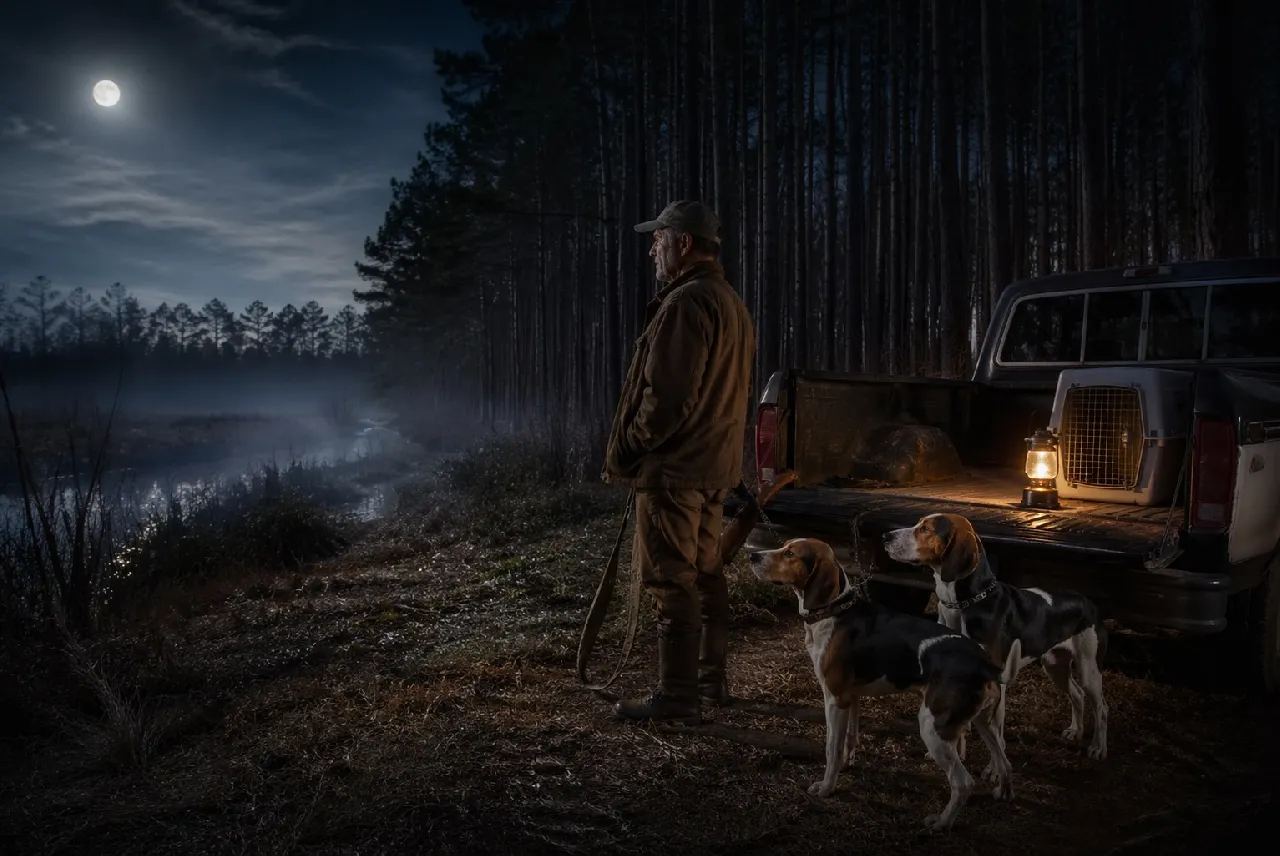
In the South, a coonhound is rarely just a dog. He is a partner, a point of pride, and in many homes, part of the family story. Southern coonhound traditions were not built overnight, and they were never only about game. They came out of long humid nights, muddy creek crossings, tailgates dropped under the moonlight, and the kind of conversations that only happen when a man is standing in the dark listening to a good hound work a track. If you were raised around it, you know the sound. If you were not, it is hard to explain just how much feeling can live in one long bawl rolling through the timber.
Across the South, from river swamps to pine ridges, coonhounds have earned their place honestly. These dogs were bred to hunt, to trail with determination, and to tree with confidence. Generations of hunters shaped their lines around nose, grit, mouth, brains, and heart. A good hound was not measured by papers alone. He was measured by what he did on a tough night, on a cold track, when the woods were quiet and other dogs came up empty.
That old standard still matters today. Even with modern tracking collars and better roads to hunting land, the spirit of Southern coonhound culture has held onto what made it strong in the first place: respect for the dog, respect for the hunt, and respect for the people who taught you both.
The Roots of Southern Coonhound Culture
Southern coonhound traditions are tied closely to rural life. In many communities, hounds were as common as a tractor in the yard or a cane pole by the porch. Boys learned to tell one dog from another by voice before they were old enough to drive. Men traded stories over coffee at daylight after a long hunt, and women often knew every dog in the kennel by name, habit, and bloodline. Hunting seasons came and went, but hounds stayed at the center of the routine.
The South gave coonhounds room to become what they are. Thick bottoms, cutovers, creek country, cornfield edges, and hardwood ridges all demanded a dog that could adapt. That is part of why Southern hunters developed such fierce loyalty to particular strains and breeds. Whether a man favored a Treeing Walker, Black and Tan, Redbone, Bluetick, English Coonhound, or Plott, he usually had a reason tied to country, family, and the kind of track he expected a dog to finish.
For some, the tradition started as necessity. Raccoon hunting helped protect crops, provided fur in years when that mattered more, and gave people a practical reason to keep working hounds. For others, it became a way of life all its own. Over time, the practical side blended with fellowship and competition, and the culture around these dogs took on a life bigger than the hunt itself.
How Family Lines and Dog Lines Grew Together
One of the things outsiders often miss is how closely family history and hound history run together in Southern hunting country. A man may tell you about his grandfather, and two minutes later he is talking about a famous old dog from the same era with equal affection. That is not unusual. In many kennels, bloodlines were guarded and discussed with the same seriousness as farmland boundaries.
An old hunter might remember where a certain female came from, what kind of mouth she had, how accurate she was on the tree, and what she crossed best with. Those details were not trivia. They were part of preserving something earned through experience. The best Southern coonhound traditions have always depended on observation. Hunters watched pups closely, saw what held up under pressure, and bred for traits that worked in real woods under real conditions.
The Night Hunt as Southern Ritual
There is a rhythm to a Southern night hunt that stays with you. The air changes after dark. Damp earth rises stronger from the ground. Frogs pick up in the low places. Truck doors shut softer out of habit, and when the dogs are cut loose, every man listening is measuring them against memory. You learn a lot in those first few minutes. A dog that opens honestly, moves a track with purpose, and settles into a steady locate can make an old hunter smile in the dark where nobody sees it.
That ritual is a major part of why the tradition has lasted. The hunt itself is only one layer. There is also the preparation, the kennel work, the feed routines, the handling, and the quiet pride in seeing a young dog figure things out. In the South, many hunters remember their first ride in the dog box, their first time carrying a light, and the first hound that made them believe they were hearing something special.
The best nights are not always the easiest ones. Sometimes the track is thin, the ground is dry, and the dogs have to work for every yard. That is when real hounds show themselves. Southern hunters have always admired a dog with enough sense to move a bad track and enough honesty not to lie when he comes treed. Those values are still at the heart of what experienced handlers look for today.
Voices in the Dark
Every seasoned coonhunter knows that a hound's voice tells a story. Southern coonhound traditions place great value on mouth because a hunter often judges the race long before he sees the dog. A long bawl on track, a hard chop on tree, a clear locate you can trust from half a mile through creek fog, those qualities mean something. They are practical, but they are emotional too. A memorable hound has a voice that settles into a hunter's bones.
I have stood on ridges in the South where three generations listened together without saying a word, each man knowing exactly which dog was moving and which one was checking up. That kind of knowledge does not come from a book. It comes from time, attention, and a love for hounds deep enough to shape your ear.
Training, Manners, and the Southern Standard
A lot of Southern houndsmen will tell you that breeding matters, and it does, but tradition also demands proper handling. A coonhound has to be given a fair chance to learn. Pups are brought along with patience. They are exposed to the woods, taught kennel manners, taught to load, taught to come when called, and expected to understand that hunting hard does not excuse poor behavior around people or other dogs.
The old Southern standard was never simply to make a dog wild for game. The goal was balance. You wanted a hound with desire, but also one with enough sense to be manageable, dependable, and trustworthy. Good dog owners still value that balance because a coonhound is not only judged in the woods. He is judged back at the kennel, in the truck, around children, and in the everyday moments that reveal his true temperament.
That is one reason these traditions still appeal to modern dog owners who may not hunt every week. The coonhound's heritage offers lessons in consistency, structure, and respect for natural ability. When people understand where these dogs came from, they often handle them better. They recognize that a hound was built for scent, endurance, and independence, and those qualities need the right outlet to become strengths rather than frustrations.
Competition Hunts and Community Pride
No discussion of Southern coonhound traditions is complete without mentioning competition hunts. For many hunters, local hunts added another layer to the culture, bringing together breeders, handlers, and spectators who all wanted to see good dogs tested. A competition cast could settle bragging rights for a while, start fresh arguments by sunrise, and give a young hunter a close-up education in what polished hounds and seasoned handlers looked like.
At their best, these events strengthened community ties. They gave hunters a reason to keep improving dogs, preserving bloodlines, and introducing younger folks to the sport. They also created a shared language around accuracy, strike, tree power, track speed, and composure under pressure. Even hunters who preferred pleasure hunting often kept an eye on the competition world because it reflected what was happening across the broader coonhound community.
That competitive side has changed over the years, but the pride behind it has not. Southern hunters still admire a hound that can perform night after night, not just once in favorable conditions. Consistency remains one of the most respected traits in any dog carrying on this tradition.
Why Southern Coonhound Traditions Still Matter
Some people look at old hunting traditions and assume they are fading into memory, but that has not been my experience. Southern coonhound traditions continue because they offer something people are hungry for: connection. They connect dog owners to the purpose behind the breed, connect families to one another, and connect modern life to a slower, older rhythm that still feels right when your boots hit leaf litter under a cold moon.
For hound dog owners especially, understanding this heritage matters. It explains why coonhounds think the way they do, why they crave scent work, why they can be independent but deeply loyal, and why their voices carry so much of their identity. These are not generic dogs. They were shaped by place, by use, and by generations of people who asked a lot from them and admired them for meeting the challenge.
Southern coonhound traditions also remind us that a good dog is never an accident. He is the result of careful breeding, steady handling, and time in the woods. The old hunters knew that, and the best dog owners today know it too. Whether you keep a hound for hunting, field events, or simply because you love the breed, you are carrying a piece of that tradition forward every time you give the dog work that suits his nature and treat him with the respect he has earned.
In the end, what lasts is not just the chase or the tree. It is the memory of headlights in a pasture gate, steam rising off a dog on a frosty night, and the kind of pride that cannot be bought because it was built over years. Southern coonhound traditions endure because they were never only about raccoons. They were, and still are, about hounds, people, and the bond forged between them in the dark Southern woods.
Across the South, from river swamps to pine ridges, coonhounds have earned their place honestly. These dogs were bred to hunt, to trail with determination, and to tree with confidence. Generations of hunters shaped their lines around nose, grit, mouth, brains, and heart. A good hound was not measured by papers alone. He was measured by what he did on a tough night, on a cold track, when the woods were quiet and other dogs came up empty.
That old standard still matters today. Even with modern tracking collars and better roads to hunting land, the spirit of Southern coonhound culture has held onto what made it strong in the first place: respect for the dog, respect for the hunt, and respect for the people who taught you both.
The Roots of Southern Coonhound Culture
Southern coonhound traditions are tied closely to rural life. In many communities, hounds were as common as a tractor in the yard or a cane pole by the porch. Boys learned to tell one dog from another by voice before they were old enough to drive. Men traded stories over coffee at daylight after a long hunt, and women often knew every dog in the kennel by name, habit, and bloodline. Hunting seasons came and went, but hounds stayed at the center of the routine.
The South gave coonhounds room to become what they are. Thick bottoms, cutovers, creek country, cornfield edges, and hardwood ridges all demanded a dog that could adapt. That is part of why Southern hunters developed such fierce loyalty to particular strains and breeds. Whether a man favored a Treeing Walker, Black and Tan, Redbone, Bluetick, English Coonhound, or Plott, he usually had a reason tied to country, family, and the kind of track he expected a dog to finish.
For some, the tradition started as necessity. Raccoon hunting helped protect crops, provided fur in years when that mattered more, and gave people a practical reason to keep working hounds. For others, it became a way of life all its own. Over time, the practical side blended with fellowship and competition, and the culture around these dogs took on a life bigger than the hunt itself.
How Family Lines and Dog Lines Grew Together
One of the things outsiders often miss is how closely family history and hound history run together in Southern hunting country. A man may tell you about his grandfather, and two minutes later he is talking about a famous old dog from the same era with equal affection. That is not unusual. In many kennels, bloodlines were guarded and discussed with the same seriousness as farmland boundaries.
An old hunter might remember where a certain female came from, what kind of mouth she had, how accurate she was on the tree, and what she crossed best with. Those details were not trivia. They were part of preserving something earned through experience. The best Southern coonhound traditions have always depended on observation. Hunters watched pups closely, saw what held up under pressure, and bred for traits that worked in real woods under real conditions.
The Night Hunt as Southern Ritual
There is a rhythm to a Southern night hunt that stays with you. The air changes after dark. Damp earth rises stronger from the ground. Frogs pick up in the low places. Truck doors shut softer out of habit, and when the dogs are cut loose, every man listening is measuring them against memory. You learn a lot in those first few minutes. A dog that opens honestly, moves a track with purpose, and settles into a steady locate can make an old hunter smile in the dark where nobody sees it.
That ritual is a major part of why the tradition has lasted. The hunt itself is only one layer. There is also the preparation, the kennel work, the feed routines, the handling, and the quiet pride in seeing a young dog figure things out. In the South, many hunters remember their first ride in the dog box, their first time carrying a light, and the first hound that made them believe they were hearing something special.
The best nights are not always the easiest ones. Sometimes the track is thin, the ground is dry, and the dogs have to work for every yard. That is when real hounds show themselves. Southern hunters have always admired a dog with enough sense to move a bad track and enough honesty not to lie when he comes treed. Those values are still at the heart of what experienced handlers look for today.
Voices in the Dark
Every seasoned coonhunter knows that a hound's voice tells a story. Southern coonhound traditions place great value on mouth because a hunter often judges the race long before he sees the dog. A long bawl on track, a hard chop on tree, a clear locate you can trust from half a mile through creek fog, those qualities mean something. They are practical, but they are emotional too. A memorable hound has a voice that settles into a hunter's bones.
I have stood on ridges in the South where three generations listened together without saying a word, each man knowing exactly which dog was moving and which one was checking up. That kind of knowledge does not come from a book. It comes from time, attention, and a love for hounds deep enough to shape your ear.
Training, Manners, and the Southern Standard
A lot of Southern houndsmen will tell you that breeding matters, and it does, but tradition also demands proper handling. A coonhound has to be given a fair chance to learn. Pups are brought along with patience. They are exposed to the woods, taught kennel manners, taught to load, taught to come when called, and expected to understand that hunting hard does not excuse poor behavior around people or other dogs.
The old Southern standard was never simply to make a dog wild for game. The goal was balance. You wanted a hound with desire, but also one with enough sense to be manageable, dependable, and trustworthy. Good dog owners still value that balance because a coonhound is not only judged in the woods. He is judged back at the kennel, in the truck, around children, and in the everyday moments that reveal his true temperament.
That is one reason these traditions still appeal to modern dog owners who may not hunt every week. The coonhound's heritage offers lessons in consistency, structure, and respect for natural ability. When people understand where these dogs came from, they often handle them better. They recognize that a hound was built for scent, endurance, and independence, and those qualities need the right outlet to become strengths rather than frustrations.
Competition Hunts and Community Pride
No discussion of Southern coonhound traditions is complete without mentioning competition hunts. For many hunters, local hunts added another layer to the culture, bringing together breeders, handlers, and spectators who all wanted to see good dogs tested. A competition cast could settle bragging rights for a while, start fresh arguments by sunrise, and give a young hunter a close-up education in what polished hounds and seasoned handlers looked like.
At their best, these events strengthened community ties. They gave hunters a reason to keep improving dogs, preserving bloodlines, and introducing younger folks to the sport. They also created a shared language around accuracy, strike, tree power, track speed, and composure under pressure. Even hunters who preferred pleasure hunting often kept an eye on the competition world because it reflected what was happening across the broader coonhound community.
That competitive side has changed over the years, but the pride behind it has not. Southern hunters still admire a hound that can perform night after night, not just once in favorable conditions. Consistency remains one of the most respected traits in any dog carrying on this tradition.
Why Southern Coonhound Traditions Still Matter
Some people look at old hunting traditions and assume they are fading into memory, but that has not been my experience. Southern coonhound traditions continue because they offer something people are hungry for: connection. They connect dog owners to the purpose behind the breed, connect families to one another, and connect modern life to a slower, older rhythm that still feels right when your boots hit leaf litter under a cold moon.
For hound dog owners especially, understanding this heritage matters. It explains why coonhounds think the way they do, why they crave scent work, why they can be independent but deeply loyal, and why their voices carry so much of their identity. These are not generic dogs. They were shaped by place, by use, and by generations of people who asked a lot from them and admired them for meeting the challenge.
Southern coonhound traditions also remind us that a good dog is never an accident. He is the result of careful breeding, steady handling, and time in the woods. The old hunters knew that, and the best dog owners today know it too. Whether you keep a hound for hunting, field events, or simply because you love the breed, you are carrying a piece of that tradition forward every time you give the dog work that suits his nature and treat him with the respect he has earned.
In the end, what lasts is not just the chase or the tree. It is the memory of headlights in a pasture gate, steam rising off a dog on a frosty night, and the kind of pride that cannot be bought because it was built over years. Southern coonhound traditions endure because they were never only about raccoons. They were, and still are, about hounds, people, and the bond forged between them in the dark Southern woods.




View all 0 comments