How to Read a Beagle Race Like a Seasoned Hunter
Jeff Davis | https://hounddogcentral.com
 0
0 0
0 0
0 0
0 0
0
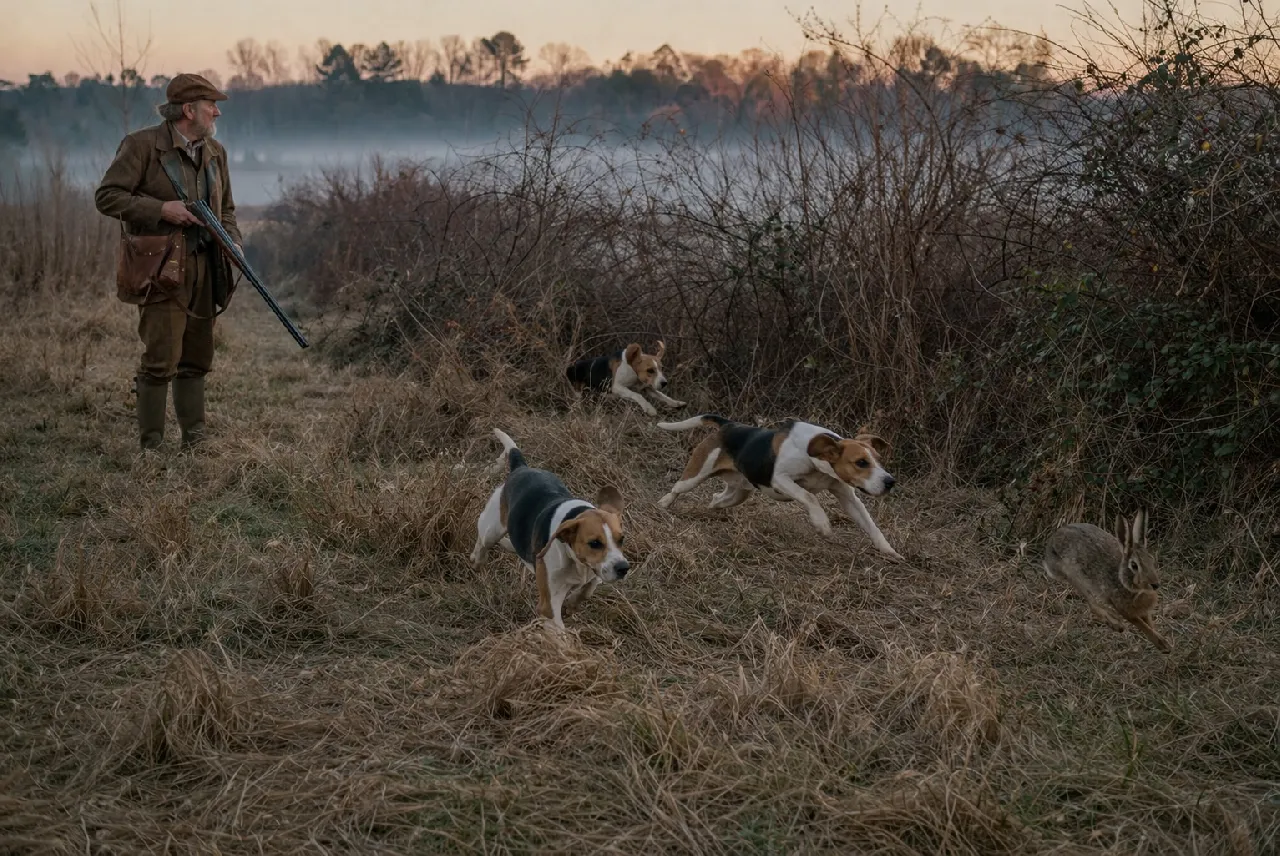
If you spend enough mornings behind beagles, you come to understand that a race has its own language. To folks who haven't stood in frosty broom sedge or knee-high briars with a shotgun tucked under one arm and coffee still warming the gut, it can sound like nothing more than dogs making music. But to a hunter who has followed hounds for years, every chop, bawl, breakdown, and pickup tells you something. Reading a beagle race is part listening, part watching, and part plain old time in the field.
A beagle race is not just about whether the dogs are running. It is about how they are running, what the rabbit is doing, how scent is holding, and whether the pack is solving the problem in front of them. If you learn to read those things, you'll enjoy the hunt more, judge dogs more honestly, and understand the difference between wild noise and clean rabbit work.
Start With the Sound of the Pack
The first thing most hunters learn is to trust their ears. In thick cover, you often hear a race long before you see anything. A solid beagle race has rhythm. It moves with purpose. The dogs may open hard on a hot line, then steady up as the rabbit makes a swing through cover. The sound rolls across the field edge or through the timber in a way that feels connected. That connection matters.
When a pack is driving well, the mouths tend to move forward. You can hear progression. The cry does not stay bottled up in one patch of briars for too long unless the rabbit is circling tight. A clean race has direction, and even if the rabbit doubles back or cuts across a ditch, you can hear the dogs sorting it out with confidence. That is the kind of race that makes an old hunter smile without saying much.
On the other hand, if the race sounds busy but never seems to travel, pay attention. Dogs may be over-running, swinging too wide, or opening without enough line. Some hounds are honest and only speak when scent is there. Others like to talk because the rest of the pack is fired up. Learning the difference is one of the biggest parts of reading a beagle race well.
What Mouth Can Tell You
A beagle's mouth is more than volume. It tells you intensity, confidence, and often position on the line. A hard, fast chop can mean a dog is driving with scent right under its nose. A more drawn-out bawl may come when scent is drifting or the dog is reaching. Every line of hounds has its own sound, but over time you'll notice when a dog is speaking from truth and when it is guessing.
If one dog opens sharp and the others honor quickly, chances are the line is good. If one hound keeps babbling while the rest stay doubtful, that may be a sign of loose mouth. In a real rabbit race, honest mouth is worth its weight in gold because it lets both hunter and pack know what is happening on the ground.
Watch for Line Control, Not Just Speed
Plenty of folks get dazzled by speed. There is no denying that a hard-charging pack can raise the hair on your neck. But a beagle race is not judged by excitement alone. The best rabbit dogs do more than run fast. They hold the line. They account for losses. They keep pressure on the rabbit without blowing the track apart.
Picture a cottontail breaking from a brush pile on a damp morning. The rabbit cuts along a fence row, slips through a wash, and hooks back into honeysuckle. A reckless dog may fly past the turn and carry the pack with it. A smart dog checks itself, works the scent where the rabbit actually turned, and gets things moving again. That is line control, and it is the backbone of a quality race.
When you read a race, listen for how often the pack breaks down and how they recover. One short check in tough cover is no sin. Rabbits are built to fool hounds. But if the dogs lose the line every hundred yards, or if the pack spends more time scrambling than driving, that tells you they are not in full command of the rabbit.
Understanding the Check
A check is where the race stalls because the line is lost. Good hunters do not panic when they hear silence. Silence is information. It means the rabbit has made a move worth respecting. Maybe it jumped a log, cut through standing water, ran a road edge, or doubled back through its own scent. A strong pack will tighten up at the point of loss, work with purpose, and recover the line close to where it was lost.
If dogs keep reaching farther and farther without method, the race starts to unravel. If one cool-headed hound drops its nose, circles smart, and picks the line up where the rabbit slipped out, you are hearing brains at work. A man can learn a lot about his beagles during a check. Sometimes more than during the hottest stretch of the chase.
Read the Rabbit Through the Dogs
The hounds are telling you what the rabbit is doing, even when you never lay eyes on it. A rabbit under heavy pressure often circles back toward familiar cover. That is why old-timers post on likely crossings and trust the race to come around. If the pack swings wide and then tightens, the rabbit may be making a short loop. If the cry stretches out straight across country, that rabbit may be running long before settling into a circle.
There is a certain moment in a mature race when you can feel the pattern taking shape. The rabbit has chosen its route, and the dogs have settled into honest pursuit. You begin to recognize likely escape lanes: a brushy ditch, a creek bank, a gap in the hedge row, the edge of a cut cornfield. Reading a beagle race means reading all of that together, not just the dogs alone.
Weather and ground conditions shape the story too. On a wet, cool morning with good scent, the race may sound tight and smooth. On dry, windy days, scent can break up, and even fine hounds may struggle to hold a line cleanly. Frost, dust, heat, and swirling wind all affect what you hear. If you ignore conditions, you may blame the dogs for a track no hound alive could make look easy.
Know the Difference Between Pack Pressure and Pack Trouble
A good pack pushes a rabbit with enough pressure to keep it moving but not so much confusion that the race falls apart. This is where experience matters. When several dogs are working together, each one should add something to the race. One may excel on the front end with foot. Another may be the check dog that saves the day at losses. Another may keep honest pressure from just behind.
But there is a line between teamwork and trouble. Too much extra mouth, too much skirting, or too many dogs reaching for the front can wreck the flow of a race. You will hear it when the cry turns ragged and uncertain. Instead of one forward-moving chase, the pack sounds split, with pieces of the race happening in different spots. That usually means some dogs are no longer running the same rabbit the same way.
The best beagle races feel balanced. There is excitement, sure, but also order. The rabbit is being accounted for. The pack is not just making noise. It is solving a puzzle in real time.
When to Stand Still and When to Move
One mistake new hunters make is moving too much. A rabbit often circles, and if you know how to read the race, you can let the woods work for you. If the pack is driving and the line is shaping into a loop, hold your spot near a good crossing. Fence gaps, logging roads, and brushy lane edges are classic places. If the race blows out straight and keeps stretching, then it may be time to reposition.
Reading a race also means reading your own timing. Move during a long push, not during a check where the rabbit could pop out anywhere. Stay quiet. Let your ears do the work. A hunter stomping around at the wrong moment can ruin what the beagles have built.
Why Reading a Beagle Race Makes You Better With Hounds
Once you learn to read a beagle race, every hunt becomes richer. You stop judging dogs by volume or excitement alone. You notice the hound that recovers the tough turn in frozen grass. You appreciate the one that does not bark unless it has rabbit. You begin to value control, brains, and honesty as much as foot speed.
That understanding helps whether you are hunting, training young dogs, or picking the right beagle for your kennel. It teaches patience too. Not every race will be a picture-perfect circle with the rabbit hopping back on schedule. Some days are rough, and some rabbits are trickier than a politician. But if you listen carefully, the race will still teach you something.
I have stood on creek banks at daylight and heard a pack open so clean it sounded like one mind with many voices. I have also heard races that were all commotion and no account. The difference was never hard to spot once I learned to stop chasing noise and start listening for truth. That, more than anything, is how to read a beagle race.
A beagle race is not just about whether the dogs are running. It is about how they are running, what the rabbit is doing, how scent is holding, and whether the pack is solving the problem in front of them. If you learn to read those things, you'll enjoy the hunt more, judge dogs more honestly, and understand the difference between wild noise and clean rabbit work.
Start With the Sound of the Pack
The first thing most hunters learn is to trust their ears. In thick cover, you often hear a race long before you see anything. A solid beagle race has rhythm. It moves with purpose. The dogs may open hard on a hot line, then steady up as the rabbit makes a swing through cover. The sound rolls across the field edge or through the timber in a way that feels connected. That connection matters.
When a pack is driving well, the mouths tend to move forward. You can hear progression. The cry does not stay bottled up in one patch of briars for too long unless the rabbit is circling tight. A clean race has direction, and even if the rabbit doubles back or cuts across a ditch, you can hear the dogs sorting it out with confidence. That is the kind of race that makes an old hunter smile without saying much.
On the other hand, if the race sounds busy but never seems to travel, pay attention. Dogs may be over-running, swinging too wide, or opening without enough line. Some hounds are honest and only speak when scent is there. Others like to talk because the rest of the pack is fired up. Learning the difference is one of the biggest parts of reading a beagle race well.
What Mouth Can Tell You
A beagle's mouth is more than volume. It tells you intensity, confidence, and often position on the line. A hard, fast chop can mean a dog is driving with scent right under its nose. A more drawn-out bawl may come when scent is drifting or the dog is reaching. Every line of hounds has its own sound, but over time you'll notice when a dog is speaking from truth and when it is guessing.
If one dog opens sharp and the others honor quickly, chances are the line is good. If one hound keeps babbling while the rest stay doubtful, that may be a sign of loose mouth. In a real rabbit race, honest mouth is worth its weight in gold because it lets both hunter and pack know what is happening on the ground.
Watch for Line Control, Not Just Speed
Plenty of folks get dazzled by speed. There is no denying that a hard-charging pack can raise the hair on your neck. But a beagle race is not judged by excitement alone. The best rabbit dogs do more than run fast. They hold the line. They account for losses. They keep pressure on the rabbit without blowing the track apart.
Picture a cottontail breaking from a brush pile on a damp morning. The rabbit cuts along a fence row, slips through a wash, and hooks back into honeysuckle. A reckless dog may fly past the turn and carry the pack with it. A smart dog checks itself, works the scent where the rabbit actually turned, and gets things moving again. That is line control, and it is the backbone of a quality race.
When you read a race, listen for how often the pack breaks down and how they recover. One short check in tough cover is no sin. Rabbits are built to fool hounds. But if the dogs lose the line every hundred yards, or if the pack spends more time scrambling than driving, that tells you they are not in full command of the rabbit.
Understanding the Check
A check is where the race stalls because the line is lost. Good hunters do not panic when they hear silence. Silence is information. It means the rabbit has made a move worth respecting. Maybe it jumped a log, cut through standing water, ran a road edge, or doubled back through its own scent. A strong pack will tighten up at the point of loss, work with purpose, and recover the line close to where it was lost.
If dogs keep reaching farther and farther without method, the race starts to unravel. If one cool-headed hound drops its nose, circles smart, and picks the line up where the rabbit slipped out, you are hearing brains at work. A man can learn a lot about his beagles during a check. Sometimes more than during the hottest stretch of the chase.
Read the Rabbit Through the Dogs
The hounds are telling you what the rabbit is doing, even when you never lay eyes on it. A rabbit under heavy pressure often circles back toward familiar cover. That is why old-timers post on likely crossings and trust the race to come around. If the pack swings wide and then tightens, the rabbit may be making a short loop. If the cry stretches out straight across country, that rabbit may be running long before settling into a circle.
There is a certain moment in a mature race when you can feel the pattern taking shape. The rabbit has chosen its route, and the dogs have settled into honest pursuit. You begin to recognize likely escape lanes: a brushy ditch, a creek bank, a gap in the hedge row, the edge of a cut cornfield. Reading a beagle race means reading all of that together, not just the dogs alone.
Weather and ground conditions shape the story too. On a wet, cool morning with good scent, the race may sound tight and smooth. On dry, windy days, scent can break up, and even fine hounds may struggle to hold a line cleanly. Frost, dust, heat, and swirling wind all affect what you hear. If you ignore conditions, you may blame the dogs for a track no hound alive could make look easy.
Know the Difference Between Pack Pressure and Pack Trouble
A good pack pushes a rabbit with enough pressure to keep it moving but not so much confusion that the race falls apart. This is where experience matters. When several dogs are working together, each one should add something to the race. One may excel on the front end with foot. Another may be the check dog that saves the day at losses. Another may keep honest pressure from just behind.
But there is a line between teamwork and trouble. Too much extra mouth, too much skirting, or too many dogs reaching for the front can wreck the flow of a race. You will hear it when the cry turns ragged and uncertain. Instead of one forward-moving chase, the pack sounds split, with pieces of the race happening in different spots. That usually means some dogs are no longer running the same rabbit the same way.
The best beagle races feel balanced. There is excitement, sure, but also order. The rabbit is being accounted for. The pack is not just making noise. It is solving a puzzle in real time.
When to Stand Still and When to Move
One mistake new hunters make is moving too much. A rabbit often circles, and if you know how to read the race, you can let the woods work for you. If the pack is driving and the line is shaping into a loop, hold your spot near a good crossing. Fence gaps, logging roads, and brushy lane edges are classic places. If the race blows out straight and keeps stretching, then it may be time to reposition.
Reading a race also means reading your own timing. Move during a long push, not during a check where the rabbit could pop out anywhere. Stay quiet. Let your ears do the work. A hunter stomping around at the wrong moment can ruin what the beagles have built.
Why Reading a Beagle Race Makes You Better With Hounds
Once you learn to read a beagle race, every hunt becomes richer. You stop judging dogs by volume or excitement alone. You notice the hound that recovers the tough turn in frozen grass. You appreciate the one that does not bark unless it has rabbit. You begin to value control, brains, and honesty as much as foot speed.
That understanding helps whether you are hunting, training young dogs, or picking the right beagle for your kennel. It teaches patience too. Not every race will be a picture-perfect circle with the rabbit hopping back on schedule. Some days are rough, and some rabbits are trickier than a politician. But if you listen carefully, the race will still teach you something.
I have stood on creek banks at daylight and heard a pack open so clean it sounded like one mind with many voices. I have also heard races that were all commotion and no account. The difference was never hard to spot once I learned to stop chasing noise and start listening for truth. That, more than anything, is how to read a beagle race.




View all 0 comments