Squirrel Dog Competitions
What to Expect and How to Prepare Your Hound
Jeff Davis | https://hounddogcentral.com
 0
0 0
0 0
0 0
0 0
0
Squirrel dog competitions are one of the best places to see what a dog is really made of. You can read pedigrees, listen to clubhouse talk, and hear every owner swear his dog is the handiest squirrel dog in three counties, but when the cast cuts loose in the timber, the truth shows itself in short order. A good competition dog has to do more than bark up a tree. It needs to hunt with purpose, use its nose honestly, handle pressure, and show the kind of accuracy that puts fur in front of a hunter when the season opens.
For folks who own hounds and squirrel dogs, these events are more than weekend entertainment. They are a proving ground. They sharpen dogs, humble handlers, and give you a close look at bloodlines, training methods, and natural ability. If you are curious about entering your first event or simply want to understand how squirrel dog competitions work, it helps to hear it from someone who has stood in wet leaves at daylight, listened to a young dog work a cold track, and watched a cast swing from frustration to excitement in the space of a single bark.
What Are Squirrel Dog Competitions?
Squirrel dog competitions are organized events designed to evaluate the hunting ability of dogs bred and trained to locate and tree squirrels. Depending on the registry or club, these may be hunt tests, bench shows tied to field weekends, or competitive casts where dogs are judged on performance in real hunting cover. The heart of it all is simple: a dog is expected to strike, trail if needed, locate game, and tree with confidence and accuracy.
Some competitions focus on pass-or-fail standards, where the dog is measured against a set level of hunting competence. Others are scored head to head, with handlers competing against each other in a timed cast. In either format, the best dogs tend to show the same core traits. They hunt out without babysitting, stay busy, use the wind and ground scent well, and settle on the right tree with enough intensity to hold pressure.
Most hunters picture squirrel dog events as a cur dog world, and there is truth in that. Mountain Curs, Treeing Curs, Stephens Curs, Feists, and other purpose-bred squirrel dogs are common. But hounds with the right style and training can also make a strong showing, especially when they have the nose, brains, and grit to adapt to squirrel work in mixed timber.
How a Competition Hunt Usually Unfolds
The day often starts before sunrise at the clubhouse or meeting point. Handlers sign in, draw casts, and spend a few minutes studying one another while pretending not to. By the time everyone reaches the woods, there is a mix of confidence, nerves, and good-natured storytelling. Once the judge gives the word and dogs are cut loose, all that clubhouse chatter fades behind the sound of paws in leaves.
A typical cast runs for a set amount of time. During that hunt, dogs are judged on how they search for game, how they open on track if they are the kind to do so, how they locate, and how they tree. Accuracy matters. A flashy dog that slams trees all morning without squirrels to show for it may impress a newcomer, but seasoned judges and hunters know the difference between excitement and honesty.
What Judges Look For in a Squirrel Dog
Judges usually reward a dog that hunts independently but not foolishly. There is a balance to it. You want a dog that will leave your boots and go find a squirrel, but not one that spends the whole cast out of pocket with no productive work. A polished dog checks the right places, works scent according to conditions, and shows enough sense to move on when a tree does not add up.
Tree style matters too. A dog should be clear about where the game went and should stay put when it has it. Chopping hard on the wood can be impressive, but style without accuracy does not win much over time. In squirrel dog competitions, the dog that consistently shows game often beats the one that simply makes the most noise.
Handlers also learn quickly that composure counts. A dog that gets rattled by strange dogs, rough terrain, or a handler's tension can unravel in a hurry. The best competition dogs are mentally steady. They hunt their own game and do not need constant direction.
Preparing a Dog for Competition
If you want to enter squirrel dog competitions, start by being honest about what your dog is right now. Not what you hope it becomes, and not what your buddies tell you around the tailgate. Ask whether the dog can consistently find squirrels under different conditions. Can it tree and hold pressure? Can it stay accurate when leaves are on, when wind is tricky, or when scenting is poor? If the answer changes from one hunt to the next, more woods time is usually the cure.
Nothing replaces wild game. A dog gets better at squirrel work by hunting squirrels. That sounds plain because it is. Feed, breeding, obedience, and handling all matter, but the timber is where a competition dog is made. Hunt the dog in thin game and thick game. Hunt creek bottoms, ridges, hardwoods, and edges where den trees change the puzzle. Let it learn to solve problems instead of depending on staged setups.
Conditioning and Handling Matter More Than People Think
A tired dog makes poor decisions. Before competition season, I like a dog to have enough roadwork, free casting, and real hunting that a hard hour or two in rough cover does not empty its tank. Physical shape affects mental sharpness. The dogs that keep hunting smart late in the cast are often the ones that were properly conditioned before they ever saw the scorecard.
Handling is another overlooked piece. Your dog does not need to be robotic, but it should lead quietly, load well, come when called, and stand calmly while trees are being shined. A dog that burns energy fighting the leash, milling around, or getting distracted between drops is already giving ground away. In a close cast, those little cracks in preparation show up.
Common Mistakes First-Time Competitors Make
The biggest mistake is entering too early. A young dog that shows promise in pleasure hunts is not always ready for company, pressure, and strange woods. There is nothing wrong with waiting until the dog has enough seasoning to handle a cast. Confidence is hard won and easy lost, especially in dogs that are naturally sensitive.
Another mistake is overhandling. I have seen handlers talk too much, worry too much, and try to steer a dog that was better at the job than they were. In squirrel dog competitions, your work should mostly be done before the cast begins. Trust the training. Trust the dog. If it is truly ready, it will show you.
Some hunters also get distracted by style over substance. They want a dog that looks dramatic instead of one that trees squirrels. But judges, and certainly serious hunters, remember the dogs that finish with game seen. A dog that works honestly, even if it is not flashy, will earn respect in any set of woods.
The Value of Competition for the Everyday Hunter
Even if you never chase titles, squirrel dog competitions can make you a better dog owner and a sharper woodsman. They expose weaknesses that regular hunting can hide. They teach you how your dog performs around others. They also help you measure your own expectations. Plenty of dogs are enjoyable and useful in a pleasure hunt but are not built for the pressure of competition, and there is no shame in that.
On the other hand, some dogs rise when the tailgate drops beside unfamiliar trucks and strange handlers. Those are special dogs. They seem to know the stakes have changed. They hunt harder, tree cleaner, and carry themselves like they belong there. Seeing one work right is enough to keep a hunter coming back, because a top squirrel dog is one of the finest sights in the fall woods.
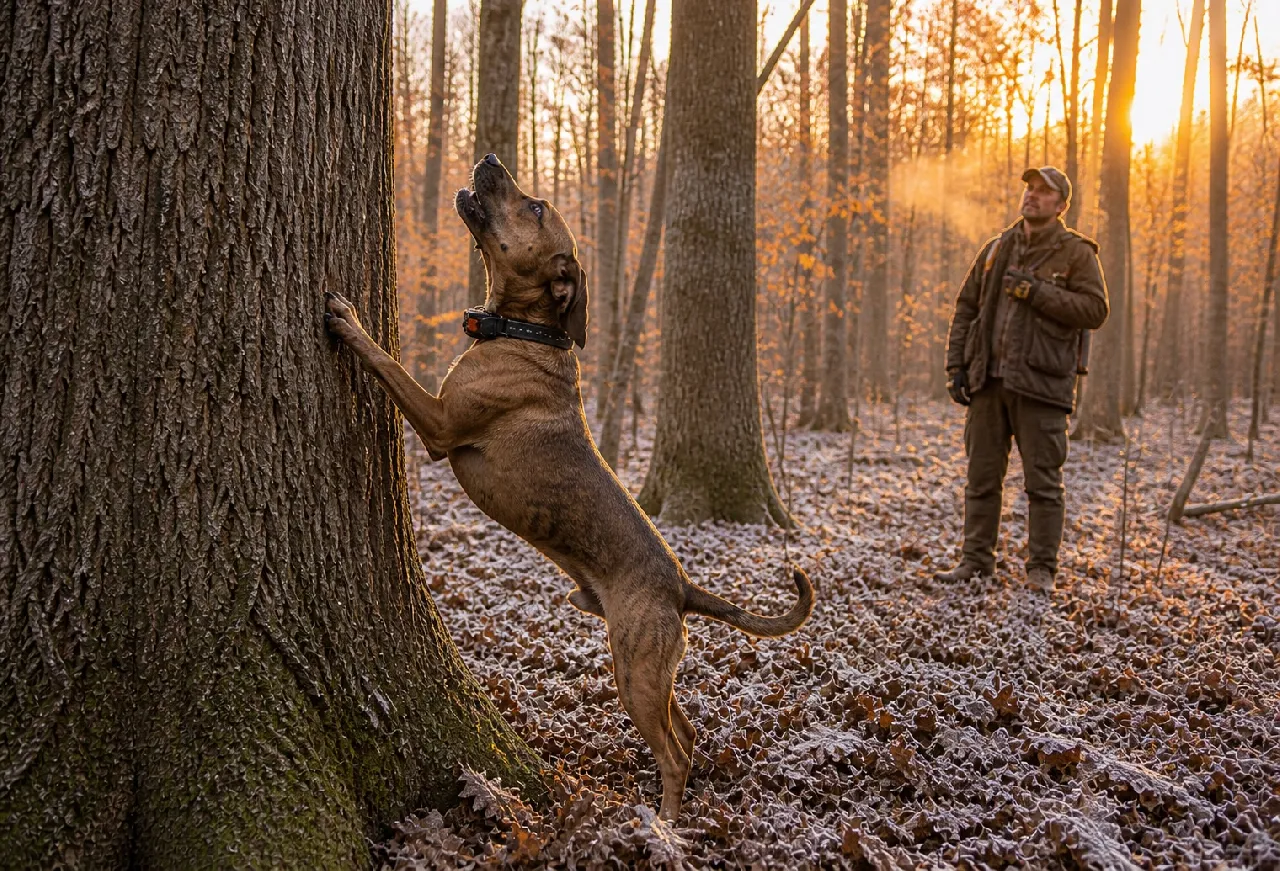
I still remember a frosty morning when a compact little cur was cut loose in a patch of big white oaks just after first light. It did not race around trying to prove anything. It slipped off with purpose, worked a feeding area, drifted a track no louder than needed, and settled into a steady tree bark that made every head in the cast turn. We walked in expecting a den. Instead, there sat a fox squirrel stretched along a limb in plain sight. That dog did not win by showmanship. It won by being right.
Is Competition Right for Your Dog?
If your hound or squirrel dog has natural hunt, accuracy, enough independence, and the temperament to handle a cast, competition may be a fine next step. Start local. Learn the rules of the registry you plan to hunt under. Go spectate before you enter. Talk less than you listen. Most old hands at these events can teach you something if you pay attention, even the ones who act like they do not want to.
At their best, squirrel dog competitions preserve the qualities that matter in a working dog. They reward nose, brains, grit, and honesty in the timber. For dog owners interested in hound dogs, they offer more than ribbons or bragging rights. They connect us to the practical standards that built these dogs in the first place. In a world full of talk, the woods still tell the truth, and that is exactly why these competitions matter.
For folks who own hounds and squirrel dogs, these events are more than weekend entertainment. They are a proving ground. They sharpen dogs, humble handlers, and give you a close look at bloodlines, training methods, and natural ability. If you are curious about entering your first event or simply want to understand how squirrel dog competitions work, it helps to hear it from someone who has stood in wet leaves at daylight, listened to a young dog work a cold track, and watched a cast swing from frustration to excitement in the space of a single bark.
What Are Squirrel Dog Competitions?
Squirrel dog competitions are organized events designed to evaluate the hunting ability of dogs bred and trained to locate and tree squirrels. Depending on the registry or club, these may be hunt tests, bench shows tied to field weekends, or competitive casts where dogs are judged on performance in real hunting cover. The heart of it all is simple: a dog is expected to strike, trail if needed, locate game, and tree with confidence and accuracy.
Some competitions focus on pass-or-fail standards, where the dog is measured against a set level of hunting competence. Others are scored head to head, with handlers competing against each other in a timed cast. In either format, the best dogs tend to show the same core traits. They hunt out without babysitting, stay busy, use the wind and ground scent well, and settle on the right tree with enough intensity to hold pressure.
Most hunters picture squirrel dog events as a cur dog world, and there is truth in that. Mountain Curs, Treeing Curs, Stephens Curs, Feists, and other purpose-bred squirrel dogs are common. But hounds with the right style and training can also make a strong showing, especially when they have the nose, brains, and grit to adapt to squirrel work in mixed timber.
How a Competition Hunt Usually Unfolds
The day often starts before sunrise at the clubhouse or meeting point. Handlers sign in, draw casts, and spend a few minutes studying one another while pretending not to. By the time everyone reaches the woods, there is a mix of confidence, nerves, and good-natured storytelling. Once the judge gives the word and dogs are cut loose, all that clubhouse chatter fades behind the sound of paws in leaves.
A typical cast runs for a set amount of time. During that hunt, dogs are judged on how they search for game, how they open on track if they are the kind to do so, how they locate, and how they tree. Accuracy matters. A flashy dog that slams trees all morning without squirrels to show for it may impress a newcomer, but seasoned judges and hunters know the difference between excitement and honesty.
What Judges Look For in a Squirrel Dog
Judges usually reward a dog that hunts independently but not foolishly. There is a balance to it. You want a dog that will leave your boots and go find a squirrel, but not one that spends the whole cast out of pocket with no productive work. A polished dog checks the right places, works scent according to conditions, and shows enough sense to move on when a tree does not add up.
Tree style matters too. A dog should be clear about where the game went and should stay put when it has it. Chopping hard on the wood can be impressive, but style without accuracy does not win much over time. In squirrel dog competitions, the dog that consistently shows game often beats the one that simply makes the most noise.
Handlers also learn quickly that composure counts. A dog that gets rattled by strange dogs, rough terrain, or a handler's tension can unravel in a hurry. The best competition dogs are mentally steady. They hunt their own game and do not need constant direction.
Preparing a Dog for Competition
If you want to enter squirrel dog competitions, start by being honest about what your dog is right now. Not what you hope it becomes, and not what your buddies tell you around the tailgate. Ask whether the dog can consistently find squirrels under different conditions. Can it tree and hold pressure? Can it stay accurate when leaves are on, when wind is tricky, or when scenting is poor? If the answer changes from one hunt to the next, more woods time is usually the cure.
Nothing replaces wild game. A dog gets better at squirrel work by hunting squirrels. That sounds plain because it is. Feed, breeding, obedience, and handling all matter, but the timber is where a competition dog is made. Hunt the dog in thin game and thick game. Hunt creek bottoms, ridges, hardwoods, and edges where den trees change the puzzle. Let it learn to solve problems instead of depending on staged setups.
Conditioning and Handling Matter More Than People Think
A tired dog makes poor decisions. Before competition season, I like a dog to have enough roadwork, free casting, and real hunting that a hard hour or two in rough cover does not empty its tank. Physical shape affects mental sharpness. The dogs that keep hunting smart late in the cast are often the ones that were properly conditioned before they ever saw the scorecard.
Handling is another overlooked piece. Your dog does not need to be robotic, but it should lead quietly, load well, come when called, and stand calmly while trees are being shined. A dog that burns energy fighting the leash, milling around, or getting distracted between drops is already giving ground away. In a close cast, those little cracks in preparation show up.
Common Mistakes First-Time Competitors Make
The biggest mistake is entering too early. A young dog that shows promise in pleasure hunts is not always ready for company, pressure, and strange woods. There is nothing wrong with waiting until the dog has enough seasoning to handle a cast. Confidence is hard won and easy lost, especially in dogs that are naturally sensitive.
Another mistake is overhandling. I have seen handlers talk too much, worry too much, and try to steer a dog that was better at the job than they were. In squirrel dog competitions, your work should mostly be done before the cast begins. Trust the training. Trust the dog. If it is truly ready, it will show you.
Some hunters also get distracted by style over substance. They want a dog that looks dramatic instead of one that trees squirrels. But judges, and certainly serious hunters, remember the dogs that finish with game seen. A dog that works honestly, even if it is not flashy, will earn respect in any set of woods.
The Value of Competition for the Everyday Hunter
Even if you never chase titles, squirrel dog competitions can make you a better dog owner and a sharper woodsman. They expose weaknesses that regular hunting can hide. They teach you how your dog performs around others. They also help you measure your own expectations. Plenty of dogs are enjoyable and useful in a pleasure hunt but are not built for the pressure of competition, and there is no shame in that.
On the other hand, some dogs rise when the tailgate drops beside unfamiliar trucks and strange handlers. Those are special dogs. They seem to know the stakes have changed. They hunt harder, tree cleaner, and carry themselves like they belong there. Seeing one work right is enough to keep a hunter coming back, because a top squirrel dog is one of the finest sights in the fall woods.
I still remember a frosty morning when a compact little cur was cut loose in a patch of big white oaks just after first light. It did not race around trying to prove anything. It slipped off with purpose, worked a feeding area, drifted a track no louder than needed, and settled into a steady tree bark that made every head in the cast turn. We walked in expecting a den. Instead, there sat a fox squirrel stretched along a limb in plain sight. That dog did not win by showmanship. It won by being right.
Is Competition Right for Your Dog?
If your hound or squirrel dog has natural hunt, accuracy, enough independence, and the temperament to handle a cast, competition may be a fine next step. Start local. Learn the rules of the registry you plan to hunt under. Go spectate before you enter. Talk less than you listen. Most old hands at these events can teach you something if you pay attention, even the ones who act like they do not want to.
At their best, squirrel dog competitions preserve the qualities that matter in a working dog. They reward nose, brains, grit, and honesty in the timber. For dog owners interested in hound dogs, they offer more than ribbons or bragging rights. They connect us to the practical standards that built these dogs in the first place. In a world full of talk, the woods still tell the truth, and that is exactly why these competitions matter.




View all 0 comments