GPS Tracking Collars for Hounds
What Matters in the Woods
Jeff Davis | https://hounddogcentral.com
 0
0 0
0 0
0 0
0 0
0
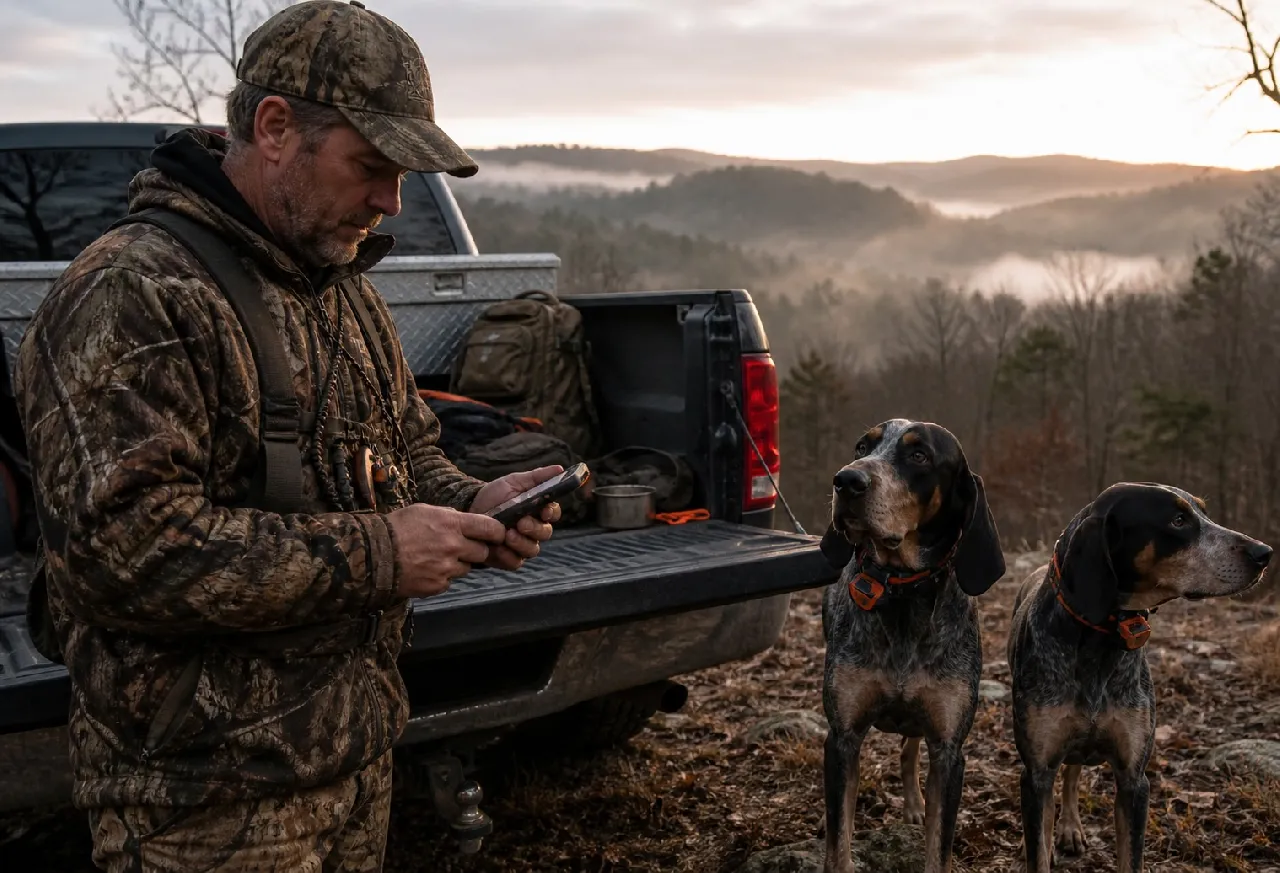
If you have hunted behind hounds for any length of time, you already know there are few sounds better than a dog opening honest on a track and driving it the way nature built him to do. You also know there are few feelings worse than standing at the tailgate after dark, listening for a dog that should have checked back in by now. That is where GPS tracking collars for hounds have earned their place. They are not a luxury anymore for most serious houndsmen. They are a working tool, and in many cases they are the difference between a long night of guessing and getting your dog handled safely.
Years ago, a hunter had to lean hard on instinct, local knowledge, and a good ear. There was a certain romance in that, but there was also a lot of worry and a lot of walking. Modern GPS systems have changed the game. They let you see where your hound is, how he is moving, whether he is stopped, and often whether he is treed, bayed, or ranging out in a way that tells a story before you ever reach him. For anyone running coonhounds, foxhounds, beagling dogs, or big game hounds, a reliable tracking collar gives you more than convenience. It gives you information you can use in real time.
Why GPS matters for hound hunters
Hounds are bred to go. That is one of the reasons we admire them. A hard-hunting dog does not always stay where roads are friendly, property lines are simple, or signal comes easy. He may drift through creek bottoms, cross ridges, cut through cutovers, or push a track into rough country where a handheld light and a whistle are not going to solve your problem. A GPS collar helps you follow the race without relying on hope.
I have seen good dogs get deep on a cold track and circle into places where you would swear nothing could get through. I have also seen young dogs overrun country because excitement outran experience. In both cases, being able to glance down and understand direction, distance, and movement takes some of the chaos out of the hunt. You are no longer hunting blind for your own dog. You are making decisions based on what the collar is telling you.
That information becomes even more valuable when weather turns bad or darkness settles in thick. A hound standing still for too long in the wrong place might be tangled, hurt, or sitting at a fence line he cannot solve. A dog moving steadily toward a highway is a situation you want to know about sooner rather than later. Good GPS tracking collars can give you that edge.
How GPS tracking collars for hounds work
At the simplest level, the collar uses satellites to determine the dog's location and sends that data back to your handheld or mobile-connected device. The quality of that system depends on several things, including satellite reception, the communication method between collar and receiver, terrain, weather, and the build quality of the equipment itself.
Some systems are designed specifically for hunting dogs and use dedicated handheld units with mapping, compass screens, and real-time dog status updates. Others pair with smartphones and app-based platforms. Either can work, but hound hunters tend to lean toward rugged, purpose-built systems when they are in steep timber, deep hollows, or places where cell coverage is unreliable. A collar that works fine for a suburban pet owner may not hold up when a hound is pushing through briars, creek crossings, and miles of hard country.
That is an important distinction. A collar for a hound dog is not just about finding a pet in the backyard. It is about maintaining awareness of a driven animal in demanding terrain, often for hours at a time.
Features that actually matter in the field
The first feature most hunters look at is range, and for good reason. A hound with any ambition can cover ground quickly. Manufacturer range claims can be useful, but they should always be viewed through the lens of real woods conditions. A system that reaches several miles in open country may perform very differently in mountains, river bottoms, or dense forest. What matters is not the best-case number on the box. What matters is whether the collar maintains a dependable connection where you hunt.
Battery life is another major concern. Long races, all-night coon hunts, and back-to-back days in the field can expose weak equipment fast. You want a collar that holds a charge well and a receiver that will not die when you are trying to make your last pickup after midnight. Recharge time, battery replacement options, and how the unit performs in cold weather are all worth paying attention to.
Durability may be the feature that separates a decent collar from one you trust. Hounds do not move gently through the world. They crash brush, hit water, squeeze through wire gaps, slam into logs, and find every ugly corner of the country. A collar needs to be waterproof, tough at the antenna connection, and built with enough grit to take repeated abuse. If a system feels fragile in your hand, it probably is.
Then there is update rate and map clarity. Faster updates can help you understand a race as it develops, especially when dogs split or one dog checks off by himself. Clear mapping matters too. Good topographic views, road overlays, property awareness, and simple dog icons make life easier when your heart rate is up and you need answers quickly.
Training functions and tracking in one collar
Many hound hunters prefer a collar system that combines GPS tracking with training functions. That setup can be practical because it reduces neck clutter on the dog and keeps everything in one platform. Used correctly, training features can help reinforce handling, correct dangerous behavior, or tone a dog back when needed. Used carelessly, they can create confusion. The best hunters I know treat the training side of the collar with respect and timing, not as a substitute for proper dog work.
If you choose a combo system, make sure the tracking side is still the priority. Fancy features are fine, but if the collar loses signal in rough country or the handheld becomes slow and complicated when several dogs are out, none of the extras matter much. Reliability beats novelty every time.
What to consider before you buy
Start with the kind of hounds you run and the country you hunt. A beagler in smaller cover may not need the same setup as a man turning loose big-running coonhounds or bear dogs. Think about average distance, terrain, how many dogs you run at once, and whether you need mapping that shows land boundaries or road access in detail.
Also think about the collar fit and weight. A tracking collar should be secure without rubbing the dog raw or interfering with his movement. On a muscular, hard-going hound, poor fit can turn into sores or collar rotation that affects antenna position. Comfort matters because discomfort changes behavior, and behavior tells the hunter a story. You do not want that story distorted by poor equipment.
Ease of use is another point often overlooked. The fanciest system in the world is not much help if it takes too many steps to find basic information. When dogs are moving, you need a screen you can read quickly and controls you can manage in the dark, in gloves, or with cold hands. Good design shows up under pressure.
Using GPS collars to learn your hounds
One of the biggest advantages of GPS tracking collars for hounds is something that often gets less attention than safety: they help you understand your dogs better. Over time, patterns emerge. You start to see which dog hunts smart, which dog tends to swing wide, which one checks back naturally, and which one gets pulled off game too easily. A track on the screen can confirm what your ears hinted at.
I have watched a seasoned hound work a drifting track with patience while a younger dog blew through country trying to force the issue. Without GPS, you hear pieces of that. With GPS, you see the shape of it. That can make you a better trainer and a more honest evaluator of your pack. It can also save frustration. Sometimes the dog is not making a mistake at all. Sometimes he is doing exactly what the track and terrain require, and the screen proves it.
That kind of knowledge adds up over a season. You learn who to trust on a bad track, who needs help at crossings, and who has the brains to locate accurately when the race tightens up. Technology does not replace a houndsman's judgment. It sharpens it when used right.
Maintenance and field habits that pay off
Even the best collar will fail if you treat it carelessly. Keep contacts clean, inspect antennas, check straps for wear, and charge everything before you need it. Make a habit of updating maps and software before the season gets busy. Test each collar before turning dogs loose, especially if gear has been sitting a while. A five-minute check at the truck can save hours of trouble later.
It also pays to carry backup charging options and to know your system well enough that you are not learning it during a live race. Practice with it in daylight. Learn how to switch screens, mark locations, and manage multiple dogs quickly. The woods are not the place for guesswork with electronics.
Final thoughts on choosing the right GPS collar
At the end of the day, the best GPS tracking collar for hounds is the one that stays dependable when your dog is deep, the weather is turning, and you need real information fast. It should fit your style of hunting, your terrain, and your dogs. It should be rugged, readable, and simple enough to trust when the pressure is on.
For hound owners, these collars offer peace of mind, but they also offer something more useful than peace of mind alone. They provide a clearer window into what your dogs are doing and why they are doing it. In a sport built on instinct, breeding, patience, and miles in the dark, that kind of clarity is valuable.
A good hound will still make your pulse jump when he opens on a track and drives it out of hearing. That will never change, and truthfully, we would not want it to. But with a solid GPS collar on his neck, you can enjoy the race with a little more confidence and a lot less guessing.
Years ago, a hunter had to lean hard on instinct, local knowledge, and a good ear. There was a certain romance in that, but there was also a lot of worry and a lot of walking. Modern GPS systems have changed the game. They let you see where your hound is, how he is moving, whether he is stopped, and often whether he is treed, bayed, or ranging out in a way that tells a story before you ever reach him. For anyone running coonhounds, foxhounds, beagling dogs, or big game hounds, a reliable tracking collar gives you more than convenience. It gives you information you can use in real time.
Why GPS matters for hound hunters
Hounds are bred to go. That is one of the reasons we admire them. A hard-hunting dog does not always stay where roads are friendly, property lines are simple, or signal comes easy. He may drift through creek bottoms, cross ridges, cut through cutovers, or push a track into rough country where a handheld light and a whistle are not going to solve your problem. A GPS collar helps you follow the race without relying on hope.
I have seen good dogs get deep on a cold track and circle into places where you would swear nothing could get through. I have also seen young dogs overrun country because excitement outran experience. In both cases, being able to glance down and understand direction, distance, and movement takes some of the chaos out of the hunt. You are no longer hunting blind for your own dog. You are making decisions based on what the collar is telling you.
That information becomes even more valuable when weather turns bad or darkness settles in thick. A hound standing still for too long in the wrong place might be tangled, hurt, or sitting at a fence line he cannot solve. A dog moving steadily toward a highway is a situation you want to know about sooner rather than later. Good GPS tracking collars can give you that edge.
How GPS tracking collars for hounds work
At the simplest level, the collar uses satellites to determine the dog's location and sends that data back to your handheld or mobile-connected device. The quality of that system depends on several things, including satellite reception, the communication method between collar and receiver, terrain, weather, and the build quality of the equipment itself.
Some systems are designed specifically for hunting dogs and use dedicated handheld units with mapping, compass screens, and real-time dog status updates. Others pair with smartphones and app-based platforms. Either can work, but hound hunters tend to lean toward rugged, purpose-built systems when they are in steep timber, deep hollows, or places where cell coverage is unreliable. A collar that works fine for a suburban pet owner may not hold up when a hound is pushing through briars, creek crossings, and miles of hard country.
That is an important distinction. A collar for a hound dog is not just about finding a pet in the backyard. It is about maintaining awareness of a driven animal in demanding terrain, often for hours at a time.
Features that actually matter in the field
The first feature most hunters look at is range, and for good reason. A hound with any ambition can cover ground quickly. Manufacturer range claims can be useful, but they should always be viewed through the lens of real woods conditions. A system that reaches several miles in open country may perform very differently in mountains, river bottoms, or dense forest. What matters is not the best-case number on the box. What matters is whether the collar maintains a dependable connection where you hunt.
Battery life is another major concern. Long races, all-night coon hunts, and back-to-back days in the field can expose weak equipment fast. You want a collar that holds a charge well and a receiver that will not die when you are trying to make your last pickup after midnight. Recharge time, battery replacement options, and how the unit performs in cold weather are all worth paying attention to.
Durability may be the feature that separates a decent collar from one you trust. Hounds do not move gently through the world. They crash brush, hit water, squeeze through wire gaps, slam into logs, and find every ugly corner of the country. A collar needs to be waterproof, tough at the antenna connection, and built with enough grit to take repeated abuse. If a system feels fragile in your hand, it probably is.
Then there is update rate and map clarity. Faster updates can help you understand a race as it develops, especially when dogs split or one dog checks off by himself. Clear mapping matters too. Good topographic views, road overlays, property awareness, and simple dog icons make life easier when your heart rate is up and you need answers quickly.
Training functions and tracking in one collar
Many hound hunters prefer a collar system that combines GPS tracking with training functions. That setup can be practical because it reduces neck clutter on the dog and keeps everything in one platform. Used correctly, training features can help reinforce handling, correct dangerous behavior, or tone a dog back when needed. Used carelessly, they can create confusion. The best hunters I know treat the training side of the collar with respect and timing, not as a substitute for proper dog work.
If you choose a combo system, make sure the tracking side is still the priority. Fancy features are fine, but if the collar loses signal in rough country or the handheld becomes slow and complicated when several dogs are out, none of the extras matter much. Reliability beats novelty every time.
What to consider before you buy
Start with the kind of hounds you run and the country you hunt. A beagler in smaller cover may not need the same setup as a man turning loose big-running coonhounds or bear dogs. Think about average distance, terrain, how many dogs you run at once, and whether you need mapping that shows land boundaries or road access in detail.
Also think about the collar fit and weight. A tracking collar should be secure without rubbing the dog raw or interfering with his movement. On a muscular, hard-going hound, poor fit can turn into sores or collar rotation that affects antenna position. Comfort matters because discomfort changes behavior, and behavior tells the hunter a story. You do not want that story distorted by poor equipment.
Ease of use is another point often overlooked. The fanciest system in the world is not much help if it takes too many steps to find basic information. When dogs are moving, you need a screen you can read quickly and controls you can manage in the dark, in gloves, or with cold hands. Good design shows up under pressure.
Using GPS collars to learn your hounds
One of the biggest advantages of GPS tracking collars for hounds is something that often gets less attention than safety: they help you understand your dogs better. Over time, patterns emerge. You start to see which dog hunts smart, which dog tends to swing wide, which one checks back naturally, and which one gets pulled off game too easily. A track on the screen can confirm what your ears hinted at.
I have watched a seasoned hound work a drifting track with patience while a younger dog blew through country trying to force the issue. Without GPS, you hear pieces of that. With GPS, you see the shape of it. That can make you a better trainer and a more honest evaluator of your pack. It can also save frustration. Sometimes the dog is not making a mistake at all. Sometimes he is doing exactly what the track and terrain require, and the screen proves it.
That kind of knowledge adds up over a season. You learn who to trust on a bad track, who needs help at crossings, and who has the brains to locate accurately when the race tightens up. Technology does not replace a houndsman's judgment. It sharpens it when used right.
Maintenance and field habits that pay off
Even the best collar will fail if you treat it carelessly. Keep contacts clean, inspect antennas, check straps for wear, and charge everything before you need it. Make a habit of updating maps and software before the season gets busy. Test each collar before turning dogs loose, especially if gear has been sitting a while. A five-minute check at the truck can save hours of trouble later.
It also pays to carry backup charging options and to know your system well enough that you are not learning it during a live race. Practice with it in daylight. Learn how to switch screens, mark locations, and manage multiple dogs quickly. The woods are not the place for guesswork with electronics.
Final thoughts on choosing the right GPS collar
At the end of the day, the best GPS tracking collar for hounds is the one that stays dependable when your dog is deep, the weather is turning, and you need real information fast. It should fit your style of hunting, your terrain, and your dogs. It should be rugged, readable, and simple enough to trust when the pressure is on.
For hound owners, these collars offer peace of mind, but they also offer something more useful than peace of mind alone. They provide a clearer window into what your dogs are doing and why they are doing it. In a sport built on instinct, breeding, patience, and miles in the dark, that kind of clarity is valuable.
A good hound will still make your pulse jump when he opens on a track and drives it out of hearing. That will never change, and truthfully, we would not want it to. But with a solid GPS collar on his neck, you can enjoy the race with a little more confidence and a lot less guessing.




View all 0 comments