Hardwood Timber vs Pine Woods Hunting With Hounds
Jeff Davis | https://hounddogcentral.com
 0
0 0
0 0
0 0
0 0
0
=If you hunt long enough behind hounds, you learn the woods themselves are never just background. They shape the race, change the scent, test your dogs, and often decide whether the day ends with a clean piece of work or a frustrating circle through rough country. The difference between hardwood timber and pine woods hunting is not a small one. To a houndsman, it can feel like stepping into two separate worlds, each with its own rules.
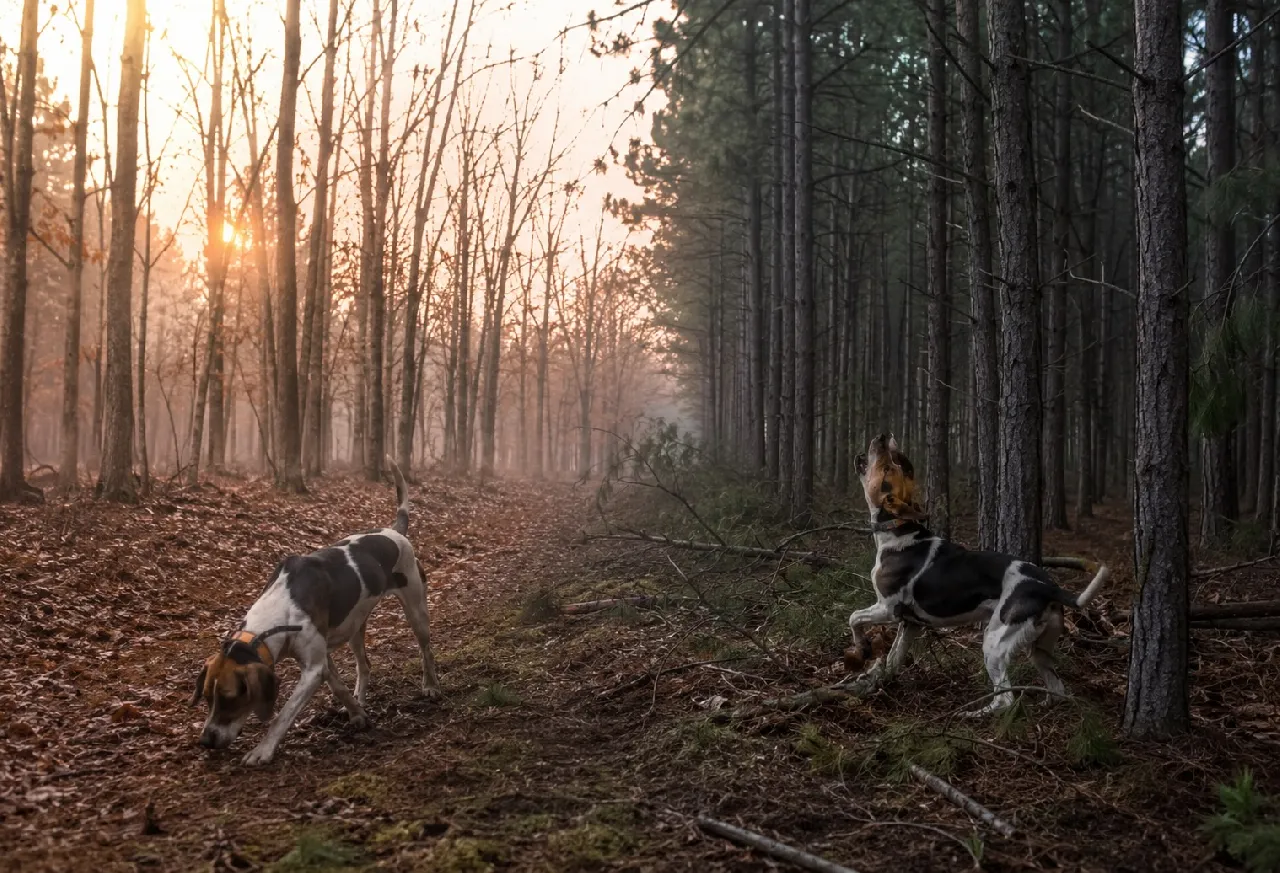
I have followed dogs through open hardwood ridges where you could hear a track drift a half mile ahead and nearly picture the game slipping through the leaves. I have also pushed into tight pine cover where every step felt muffled, visibility shrank to a few yards, and the race turned into a close, gritty contest of nose, heart, and patience. Both types of country can produce fine hunting. Both can humble a man who assumes one strategy works everywhere.
For dog owners interested in hound dogs, understanding the difference between these habitats matters. It helps you condition the right way, handle your dogs with better judgment, and set realistic expectations for what a good race should sound and look like in each kind of timber.
How Hardwood Timber Hunts
Hardwood country often gives a hunter a cleaner read on what the dogs are doing. In mature oak, hickory, beech, or mixed hardwood stands, the ground tends to be more open. You may have leaf cover, scattered blowdowns, and patches of brush, but in many places the timber itself allows movement, sound travel, and visibility that make it easier to follow a race. A hound can spread out, work with freedom, and use both nose and brains without getting bottled up in heavy cover every few yards.
That openness changes everything. Sound carries better in hardwoods, especially on cool mornings when the air sits low in the hollows. A hunter can often tell whether the dogs are lining out well, checking a loss, or drifting a cold track simply by listening. In pine woods, the race can feel swallowed up by the cover. In hardwoods, the woods tend to tell on the dogs a little more honestly.
Game movement in hardwood timber also has a certain rhythm. Deer, bear, coon, bobcat, and other game often use ridges, saddles, creek bottoms, mast flats, and old logging traces. Food sources can be more scattered and seasonal, especially when acorns or beech mast are falling. That means good dogs may find game in patterns a knowledgeable hunter can predict. You begin to see how feeding sign, water, elevation, and wind tie together, and your cast becomes more deliberate.
Scenting Conditions in Hardwoods
Hardwood leaf litter can be a blessing and a curse. On damp mornings, those leaves can hold enough moisture to lay a track in a way a seasoned hound can work beautifully. When the air is cool and the ground has a little body to it, hardwood hunting can produce some of the finest trailing of the year. Dogs move with confidence, and the race develops with a steady, meaningful mouth that lets you hear each piece come together.
But dry leaves can cause trouble. After a string of warm days with low humidity, the timber floor turns noisy and brittle underfoot, and scent may rise and break apart. A fast dog can overrun. A young dog may sound rougher than he really is. The hunter who knows hardwood country does not panic at every check. He waits to see whether the dog can settle, regroup, and put the line back together.
What Makes Pine Woods Different
Pine woods hunting is tighter, darker, and often more physical for both hunter and hound. Whether you are dealing with planted pines, old cutover regrowth, or mixed pine thickets with gallberry, briars, and young hardwood understory, the cover can close in fast. The game uses that to its advantage. A track that would stretch out plainly across open timber may become a twisting, short-range puzzle in the pines.
Hounds in pine country need grit and discipline. They must push through rough cover, stay mentally engaged when visibility is limited, and often solve scent that gets trapped, scattered, or hung in layers depending on moisture and wind. This kind of hunting can produce exciting, close races, but it can also punish sloppy dog work. In pine cover, a dog that reaches too hard or hunts with too much waste motion can spend the day out of position.
There is also the matter of movement through the woods. In pines, game frequently uses edges, drains, thick bedding pockets, firebreaks, cutovers, and transition lines where cover changes. Those edge zones are often where the action starts. A hunter who pays attention to those shifts in vegetation will usually turn dogs loose in smarter places and recover them more efficiently when the race gets tangled.
Scent, Moisture, and Pine Needles
Pine needles can handle scent differently than hardwood leaves, especially when the ground is damp and shaded. In some pine stands, cool shade and protected soil let scent hold better later into the day than you might expect. In others, especially where sandy ground and dry wind dominate, tracks can vanish in a hurry. That is why pine woods hunting teaches humility. One tract may run beautifully while another, just over the road, feels dead under the dogs.
Resin, dense cover, and limited airflow can also create races that sound tighter and more abrupt. You may hear bursts of good running followed by silence, then a pickup a hundred yards off where the dogs finally sort out the line. A young hunter sometimes mistakes that for poor dog work. An older hand knows that pine country often makes dogs solve problems in shorter, more difficult pieces.
Which Woods Are Better for Hounds?
The honest answer is neither one is always better. They simply ask for different strengths. Hardwood timber tends to reward dogs with good line control, clear brains, and the ability to move a track through changing topography. Pine woods reward toughness, close focus, and the determination to keep pressure on game in places where footing, scent, and visibility all work against you.
If I am starting a young hound, I usually prefer enough openness that I can hear and judge him properly. Hardwood country often gives me that. I can tell whether he is honest, whether he checks himself, and whether he is learning to account for his game. In thick pine cover, it is harder to read a young dog because the country itself causes so many interruptions. That does not mean pine woods are poor training ground. It means the trainer must understand what the cover is doing before he blames the dog.
Finished dogs, on the other hand, ought to handle both if they are worth feeding. A balanced hound should be able to drift a workable line in hardwoods and stay collected when pine thickets turn the race into a grind. Versatility matters, especially for hunters who travel or hunt mixed terrain throughout the season.
Handling Hounds in Hardwoods vs Pines
A man can get away with louder, longer handling in open hardwoods because the dogs can hear and adjust over distance. In pine woods, too much handling often creates confusion. Sound bounces strangely, the dogs may be close without you knowing it, and every unnecessary command adds noise to an already pressured situation. I have seen good races spoiled because the handler kept trying to control what he could not clearly see.
In hardwood timber, your biggest advantage is information. Listen carefully. Watch crossings. Read the terrain. Let the dogs tell the story. In pine woods, your biggest advantage is positioning. Think ahead about roads, drains, fire lanes, and edges where game may break. Hunt enough of that kind of country and you stop reacting late. You begin anticipating where the race is likely to surface.
Safety matters in both, but for different reasons. Hardwoods can hide steep hollows, rocky creek crossings, and old fences. Pine country often brings thicker tangles, more cutover debris, and a greater chance of dogs getting out of sight near roads. GPS collars help in either habitat, but in pine woods they feel close to essential.
Season, Weather, and the Better Choice
The best cover on any given day often depends on weather more than personal preference. After a rain, hardwoods can be magnificent. Damp leaves, softened ground, and cool shade help a dog work with confidence. During dry spells, especially when the hardwood floor gets crisp and powdery, a shaded pine tract may carry scent better than expected. Wind can also tip the scales. Swirling gusts on exposed ridges can make hardwood hunting tricky, while protected pine cover sometimes steadies scent enough for a patient pack to piece things together.
This is where experience pays off. A houndsman should not ask only, "Where do I like to hunt?" He should ask, "Where will my dogs have the fairest chance to do right today" That one question saves a lot of disappointment and teaches you to hunt the conditions rather than your habits.
Choosing the Right Ground for Your Dogs
Every pack has a personality. Some dogs are natural open-country movers that seem to float a line through timber. Others are hard-driving brush hounds that come alive when the cover turns ugly and the race gets close. The trick is knowing what your dogs are and not forcing them into an image they were never built to fit.
I have owned hounds that made hardwood hunting look easy. They had enough patience to work out losses and enough foot to move game honestly without blowing apart. I have also hunted behind rougher, tougher dogs that earned their keep in pine thickets where softer dogs lost heart. Neither kind was wrong. The country simply revealed what they were made for.
That is one of the great pleasures of hunting hounds over time. The woods teach you your dogs, and your dogs teach you the woods. Before long, you stop arguing about whether hardwood timber or pine woods hunting is superior in some absolute sense. You start appreciating how each tests a hound in its own way.
Final Thoughts on Hardwood Timber vs Pine Woods Hunting
If you hunt hounds long enough, you learn to respect any ground that can make a good dog look average and then, on the right day, make an average dog rise to the occasion. Hardwood timber offers room, sound, and usually a cleaner picture of the race. Pine woods offer pressure, complexity, and a deeper test of grit and focus. Both are honest country. Both can sharpen a pack when hunted the right way.
For dog owners interested in hound dogs, the smartest approach is not choosing sides too quickly. Learn both. Hunt both in different weather. Pay attention to how your dogs strike, trail, check, and recover in each. Over time, that knowledge becomes more valuable than any opinion passed around at the tailgate. In the end, the woods do not care what we prefer. They only reveal what our hounds can truly do.
I have followed dogs through open hardwood ridges where you could hear a track drift a half mile ahead and nearly picture the game slipping through the leaves. I have also pushed into tight pine cover where every step felt muffled, visibility shrank to a few yards, and the race turned into a close, gritty contest of nose, heart, and patience. Both types of country can produce fine hunting. Both can humble a man who assumes one strategy works everywhere.
For dog owners interested in hound dogs, understanding the difference between these habitats matters. It helps you condition the right way, handle your dogs with better judgment, and set realistic expectations for what a good race should sound and look like in each kind of timber.
How Hardwood Timber Hunts
Hardwood country often gives a hunter a cleaner read on what the dogs are doing. In mature oak, hickory, beech, or mixed hardwood stands, the ground tends to be more open. You may have leaf cover, scattered blowdowns, and patches of brush, but in many places the timber itself allows movement, sound travel, and visibility that make it easier to follow a race. A hound can spread out, work with freedom, and use both nose and brains without getting bottled up in heavy cover every few yards.
That openness changes everything. Sound carries better in hardwoods, especially on cool mornings when the air sits low in the hollows. A hunter can often tell whether the dogs are lining out well, checking a loss, or drifting a cold track simply by listening. In pine woods, the race can feel swallowed up by the cover. In hardwoods, the woods tend to tell on the dogs a little more honestly.
Game movement in hardwood timber also has a certain rhythm. Deer, bear, coon, bobcat, and other game often use ridges, saddles, creek bottoms, mast flats, and old logging traces. Food sources can be more scattered and seasonal, especially when acorns or beech mast are falling. That means good dogs may find game in patterns a knowledgeable hunter can predict. You begin to see how feeding sign, water, elevation, and wind tie together, and your cast becomes more deliberate.
Scenting Conditions in Hardwoods
Hardwood leaf litter can be a blessing and a curse. On damp mornings, those leaves can hold enough moisture to lay a track in a way a seasoned hound can work beautifully. When the air is cool and the ground has a little body to it, hardwood hunting can produce some of the finest trailing of the year. Dogs move with confidence, and the race develops with a steady, meaningful mouth that lets you hear each piece come together.
But dry leaves can cause trouble. After a string of warm days with low humidity, the timber floor turns noisy and brittle underfoot, and scent may rise and break apart. A fast dog can overrun. A young dog may sound rougher than he really is. The hunter who knows hardwood country does not panic at every check. He waits to see whether the dog can settle, regroup, and put the line back together.
What Makes Pine Woods Different
Pine woods hunting is tighter, darker, and often more physical for both hunter and hound. Whether you are dealing with planted pines, old cutover regrowth, or mixed pine thickets with gallberry, briars, and young hardwood understory, the cover can close in fast. The game uses that to its advantage. A track that would stretch out plainly across open timber may become a twisting, short-range puzzle in the pines.
Hounds in pine country need grit and discipline. They must push through rough cover, stay mentally engaged when visibility is limited, and often solve scent that gets trapped, scattered, or hung in layers depending on moisture and wind. This kind of hunting can produce exciting, close races, but it can also punish sloppy dog work. In pine cover, a dog that reaches too hard or hunts with too much waste motion can spend the day out of position.
There is also the matter of movement through the woods. In pines, game frequently uses edges, drains, thick bedding pockets, firebreaks, cutovers, and transition lines where cover changes. Those edge zones are often where the action starts. A hunter who pays attention to those shifts in vegetation will usually turn dogs loose in smarter places and recover them more efficiently when the race gets tangled.
Scent, Moisture, and Pine Needles
Pine needles can handle scent differently than hardwood leaves, especially when the ground is damp and shaded. In some pine stands, cool shade and protected soil let scent hold better later into the day than you might expect. In others, especially where sandy ground and dry wind dominate, tracks can vanish in a hurry. That is why pine woods hunting teaches humility. One tract may run beautifully while another, just over the road, feels dead under the dogs.
Resin, dense cover, and limited airflow can also create races that sound tighter and more abrupt. You may hear bursts of good running followed by silence, then a pickup a hundred yards off where the dogs finally sort out the line. A young hunter sometimes mistakes that for poor dog work. An older hand knows that pine country often makes dogs solve problems in shorter, more difficult pieces.
Which Woods Are Better for Hounds?
The honest answer is neither one is always better. They simply ask for different strengths. Hardwood timber tends to reward dogs with good line control, clear brains, and the ability to move a track through changing topography. Pine woods reward toughness, close focus, and the determination to keep pressure on game in places where footing, scent, and visibility all work against you.
If I am starting a young hound, I usually prefer enough openness that I can hear and judge him properly. Hardwood country often gives me that. I can tell whether he is honest, whether he checks himself, and whether he is learning to account for his game. In thick pine cover, it is harder to read a young dog because the country itself causes so many interruptions. That does not mean pine woods are poor training ground. It means the trainer must understand what the cover is doing before he blames the dog.
Finished dogs, on the other hand, ought to handle both if they are worth feeding. A balanced hound should be able to drift a workable line in hardwoods and stay collected when pine thickets turn the race into a grind. Versatility matters, especially for hunters who travel or hunt mixed terrain throughout the season.
Handling Hounds in Hardwoods vs Pines
A man can get away with louder, longer handling in open hardwoods because the dogs can hear and adjust over distance. In pine woods, too much handling often creates confusion. Sound bounces strangely, the dogs may be close without you knowing it, and every unnecessary command adds noise to an already pressured situation. I have seen good races spoiled because the handler kept trying to control what he could not clearly see.
In hardwood timber, your biggest advantage is information. Listen carefully. Watch crossings. Read the terrain. Let the dogs tell the story. In pine woods, your biggest advantage is positioning. Think ahead about roads, drains, fire lanes, and edges where game may break. Hunt enough of that kind of country and you stop reacting late. You begin anticipating where the race is likely to surface.
Safety matters in both, but for different reasons. Hardwoods can hide steep hollows, rocky creek crossings, and old fences. Pine country often brings thicker tangles, more cutover debris, and a greater chance of dogs getting out of sight near roads. GPS collars help in either habitat, but in pine woods they feel close to essential.
Season, Weather, and the Better Choice
The best cover on any given day often depends on weather more than personal preference. After a rain, hardwoods can be magnificent. Damp leaves, softened ground, and cool shade help a dog work with confidence. During dry spells, especially when the hardwood floor gets crisp and powdery, a shaded pine tract may carry scent better than expected. Wind can also tip the scales. Swirling gusts on exposed ridges can make hardwood hunting tricky, while protected pine cover sometimes steadies scent enough for a patient pack to piece things together.
This is where experience pays off. A houndsman should not ask only, "Where do I like to hunt?" He should ask, "Where will my dogs have the fairest chance to do right today" That one question saves a lot of disappointment and teaches you to hunt the conditions rather than your habits.
Choosing the Right Ground for Your Dogs
Every pack has a personality. Some dogs are natural open-country movers that seem to float a line through timber. Others are hard-driving brush hounds that come alive when the cover turns ugly and the race gets close. The trick is knowing what your dogs are and not forcing them into an image they were never built to fit.
I have owned hounds that made hardwood hunting look easy. They had enough patience to work out losses and enough foot to move game honestly without blowing apart. I have also hunted behind rougher, tougher dogs that earned their keep in pine thickets where softer dogs lost heart. Neither kind was wrong. The country simply revealed what they were made for.
That is one of the great pleasures of hunting hounds over time. The woods teach you your dogs, and your dogs teach you the woods. Before long, you stop arguing about whether hardwood timber or pine woods hunting is superior in some absolute sense. You start appreciating how each tests a hound in its own way.
Final Thoughts on Hardwood Timber vs Pine Woods Hunting
If you hunt hounds long enough, you learn to respect any ground that can make a good dog look average and then, on the right day, make an average dog rise to the occasion. Hardwood timber offers room, sound, and usually a cleaner picture of the race. Pine woods offer pressure, complexity, and a deeper test of grit and focus. Both are honest country. Both can sharpen a pack when hunted the right way.
For dog owners interested in hound dogs, the smartest approach is not choosing sides too quickly. Learn both. Hunt both in different weather. Pay attention to how your dogs strike, trail, check, and recover in each. Over time, that knowledge becomes more valuable than any opinion passed around at the tailgate. In the end, the woods do not care what we prefer. They only reveal what our hounds can truly do.




View all 0 comments