How Bay Dogs Locate Wild Hogs
Jeff Davis | https://hounddogcentral.com
 0
0 0
0 0
0 0
0 0
0
If you spend enough time in hog country, you learn pretty quickly that wild hogs are masters of using the land to their advantage. They slip through creek bottoms, bury themselves in palmetto, cut across muddy sloughs, and disappear into thickets that would stop a man cold. A good bay dog, though, has a way of making that country feel smaller. To someone watching from the outside, it can look like the dog just turns loose and magically finds hogs. That is not what is happening. A real bay dog locates wild hogs by combining nose, instinct, experience, and pressure sense in a way that takes breeding and time to develop.
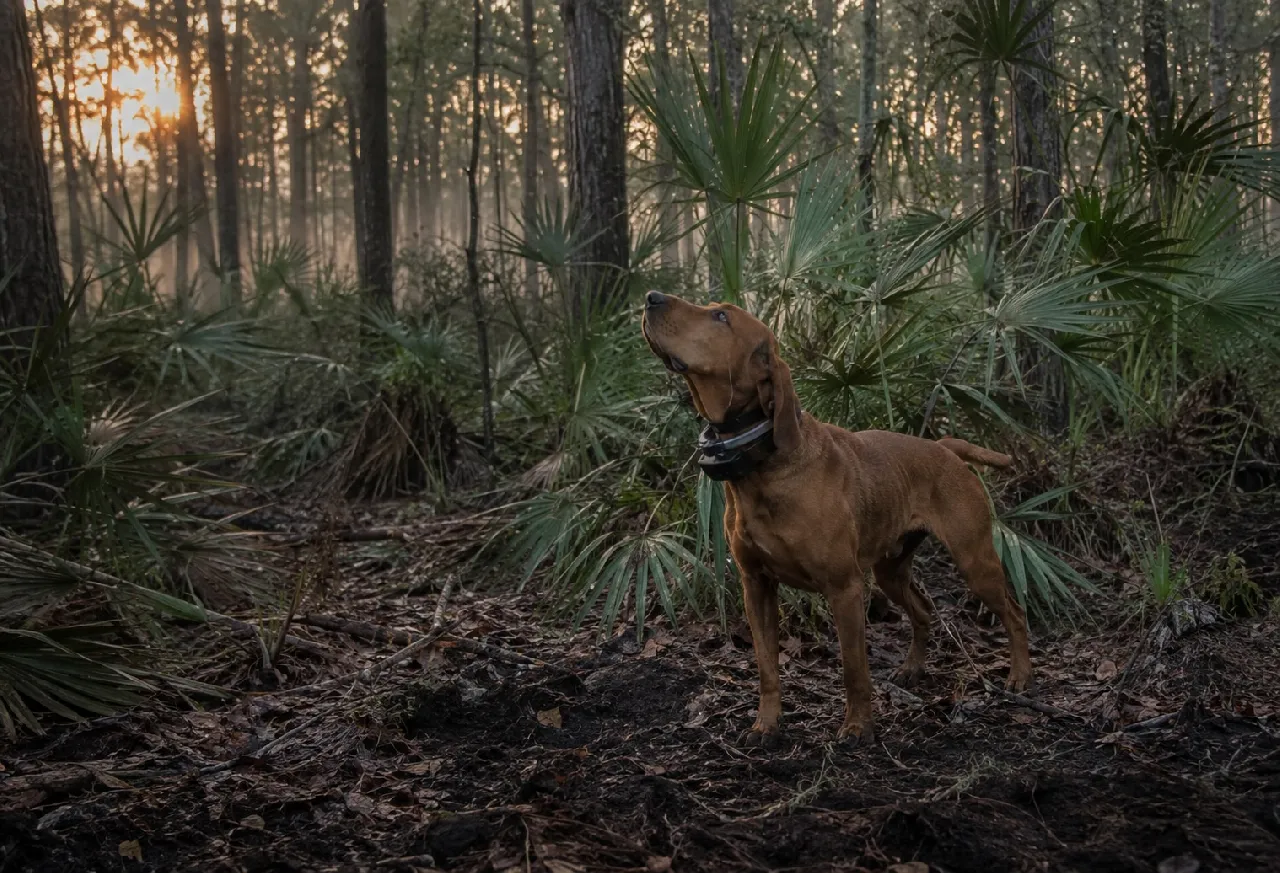
I have seen young dogs blow through a piece of timber like their tail was on fire and never know a hog had crossed that trail ten minutes before. I have also seen older, seasoned dogs ease into a bottom, throw their head into the wind, and drift sideways fifty yards before ever opening their mouth. Then, all at once, they lock up on scent, push into cover, and you know by the change in their voice that they have something worth walking to. That difference is what separates raw energy from a true hog dog.
The Nose Comes First
The first and most important tool a bay dog uses is its nose. Wild hogs leave plenty behind if you know how to read it. They root up ground, cut tracks in mud, rub against trees, bed in cane, and leave body scent along every path they travel. A bay dog is built to gather that information. It is not just smelling "hog" in a general sense. A capable dog is sorting layers of scent, figuring out what is fresh, what is stale, what direction the hog traveled, and whether that trail is worth pushing.
On a cool morning with a little moisture in the air, scent tends to hold better. Dogs can work a track with confidence because the odor sits lower and stays stronger on vegetation and soil. In dry heat, especially when the wind is moving hard, scent can get tricky. That is where an experienced bay dog starts proving its value. It may slow down, cast wider, or switch from trailing on the ground to lifting its head and testing the air. Good dogs adjust without needing a lesson.
Ground Scent and Air Scent
Most bay dogs locate hogs using some combination of ground scent and air scent. Ground scent is what many hunters picture first. The dog puts its nose down and follows where the hog has physically been. That works well in soft dirt, damp leaves, creek crossings, and anywhere tracks and disturbance hold odor. But hog dogs that rely only on the ground can struggle when hogs move through dry grass, sand, or rocky country.
That is where air scenting becomes important. Hogs carry a strong body odor, especially boars, and when wind conditions are right, a dog can catch that scent drifting out of a bedding area or off a travel corridor. Some dogs are naturals at winding hogs from a surprising distance. They will lift their head, angle into the breeze, and move with purpose before a handler ever sees a track. In thick cover, that ability saves time and saves energy.
Reading Hog Sign Before the Dog Opens
A seasoned hunter pays attention to the same country the dog does. Fresh rooting, wet wallows, shiny tracks, dung that has not dried, and rubs on saplings all tell a story. Bay dogs are reading that story too, only faster and through scent. When a dog starts checking around a wallow or slows at a crossing, it is often confirming what the terrain already suggests. Hogs are creatures of habit, but they are also cautious. They feed, water, and bed according to pressure, weather, and available cover. Good dogs learn those patterns from repetition.
One of the best bay dogs I ever followed had a habit of checking just off the obvious sign. If hogs had rooted heavily in an open flat during the night, that dog would not waste much time there after sunrise. He knew the hogs had likely pulled back into thicker, cooler security cover. He would skirt the edge, catch where the scent line tightened, and work from feeding sign toward bedding cover. That kind of efficiency is not luck. It comes from a dog learning how hogs behave in real country.
How Bay Dogs Use the Wind
Wind is a bay dog's silent partner. In open woods or cutover land, a smart dog hunts the wind almost the way a bird dog works for quail, except the game is bigger, meaner, and often buried in ugly cover. If the wind is steady, a dog can quarter through likely areas and pick up drifting hog scent without ever stepping directly on the track. In swamp edges or creek drains, swirling wind makes things tougher. A dog may overshoot, circle back, lose the line, then snap right back onto it once the scent settles in a usable pocket.
Handlers sometimes make the mistake of thinking faster is better. It usually is not. When a dog is trying to locate wild hogs, control and scent sense matter more than speed. A dog that hunts just hard enough to stay connected to scent will find more hogs than one that tears through every patch of cover and blows them out before it can settle into a bay.
Cover Changes Everything
Hogs love nasty places for a reason. Briars, cane, palmetto, mesquite, and creek tangles break up scent and visibility at the same time. Bay dogs have to move through that cover while keeping enough awareness not to crowd a hog too early. If the hog breaks before the dog can pin down the exact location, the chase starts all over. Some dogs get too excited at the first strong whiff and rush in. Better dogs ease the last stretch, listening, smelling, and feeling out where the hog is holding.
You can often hear the change before you see anything. A locating bark has a different sound than a hard bay. Once the dog confirms the hog and applies enough pressure to stop it, the barking becomes more rhythmic and intense. That is the moment every hog hunter listens for, because it means the dog has done more than find sign. It has found the hog and made it stand.
Instinct, Brains, and Pressure Sense
Courage gets talked about a lot in hog dogs, and it should. A bay dog that lacks grit will not stay honest when a rank boar pops its jaws and comes forward. But locating wild hogs is as much a mental game as a physical one. Bay dogs need enough brains to know when to push, when to circle, and when to keep distance. If they crowd too hard, the hog runs. If they give too much room, the hog slips off. The best ones hold that line naturally.
This is where pressure sense comes in. A polished bay dog reads the hog's body language almost the same way an old cow dog reads cattle. It watches the head, shoulders, ears, and feet. It feels the moment the hog wants to break and shifts to block or turn it. That skill helps the dog hold the hog in one place long enough for the hunter to get there. A dog that can do that consistently is worth feeding every day of the year.
How Experience Sharpens a Bay Dog
No dog starts finished. Young dogs may show plenty of promise, but locating hogs cleanly takes experience. They need to learn the difference between old hog scent and moving hogs. They need to figure out when deer, cattle, or raccoons have crossed the same ground. They need to understand that some hogs will run a long way and some will hook up in the first hundred yards. Time in the woods teaches all of that better than any kennel talk ever will.
Older dogs become efficient because they waste fewer motions. They know how hogs use creek bends in hot weather. They know where sounders tend to feed after rain. They understand that a boar tucked into a shaded blowdown smells different and behaves different than a group of younger hogs in open timber. A seasoned bay dog is not just hunting scent. It is hunting a pattern built from memory.
The Handler's Role in Success
Even the best dog works better for a hunter who pays attention. Turning dogs loose in the wrong place, ignoring wind direction, or pushing into an area too loudly can make the dog's job harder than it needs to be. Good handlers learn to read their dogs closely. The tail carriage changes. The head comes up. The pace shifts. A dog drifting left across a breeze may be working scent before it ever barks. Hunters who recognize those details arrive at more bays and lose fewer hogs.
Conditioning matters too. A tired dog will not hunt as sharp as a fresh one, especially in heat. Hydration, foot care, and common sense all play into how well a bay dog can locate and hold hogs over the course of a long hunt. The romance of hog hunting is real, but so is the responsibility. These dogs give everything they have when they are cut loose.
Why Bay Dogs Are So Effective on Wild Hogs
What makes bay dogs special is that they do not rely on one trait alone. It is the combination that gets results. They use their nose to sort scent, their body to cover rough country, their ears to key on movement, and their instincts to apply just enough pressure to stop a hog without getting caught. In thick Southern bottoms, dry Texas brush, or rough river country anywhere hogs roam, that blend of sense and toughness is hard to match.
When you have followed enough good dogs, you stop taking it for granted. You realize they are making hundreds of tiny decisions in real time, each one helping them close the gap between old sign and a living hog. That is why a true bay dog is more than a dog that barks at a hog. It is a hunter in its own right, one that uses nose, brains, and heart to do a job most men could never do alone.
For dog owners interested in hound dogs, understanding how bay dogs locate wild hogs gives you a deeper respect for what these animals are bred and trained to do. They are not simply reckless catch chasers. The good ones are methodical, smart, and intensely aware of the game they pursue. When a bay rolls up from deep in the brush and settles into that steady, hard bark, you are hearing the end result of scent work, judgment, and grit coming together exactly the way nature and breeding intended.
I have seen young dogs blow through a piece of timber like their tail was on fire and never know a hog had crossed that trail ten minutes before. I have also seen older, seasoned dogs ease into a bottom, throw their head into the wind, and drift sideways fifty yards before ever opening their mouth. Then, all at once, they lock up on scent, push into cover, and you know by the change in their voice that they have something worth walking to. That difference is what separates raw energy from a true hog dog.
The Nose Comes First
The first and most important tool a bay dog uses is its nose. Wild hogs leave plenty behind if you know how to read it. They root up ground, cut tracks in mud, rub against trees, bed in cane, and leave body scent along every path they travel. A bay dog is built to gather that information. It is not just smelling "hog" in a general sense. A capable dog is sorting layers of scent, figuring out what is fresh, what is stale, what direction the hog traveled, and whether that trail is worth pushing.
On a cool morning with a little moisture in the air, scent tends to hold better. Dogs can work a track with confidence because the odor sits lower and stays stronger on vegetation and soil. In dry heat, especially when the wind is moving hard, scent can get tricky. That is where an experienced bay dog starts proving its value. It may slow down, cast wider, or switch from trailing on the ground to lifting its head and testing the air. Good dogs adjust without needing a lesson.
Ground Scent and Air Scent
Most bay dogs locate hogs using some combination of ground scent and air scent. Ground scent is what many hunters picture first. The dog puts its nose down and follows where the hog has physically been. That works well in soft dirt, damp leaves, creek crossings, and anywhere tracks and disturbance hold odor. But hog dogs that rely only on the ground can struggle when hogs move through dry grass, sand, or rocky country.
That is where air scenting becomes important. Hogs carry a strong body odor, especially boars, and when wind conditions are right, a dog can catch that scent drifting out of a bedding area or off a travel corridor. Some dogs are naturals at winding hogs from a surprising distance. They will lift their head, angle into the breeze, and move with purpose before a handler ever sees a track. In thick cover, that ability saves time and saves energy.
Reading Hog Sign Before the Dog Opens
A seasoned hunter pays attention to the same country the dog does. Fresh rooting, wet wallows, shiny tracks, dung that has not dried, and rubs on saplings all tell a story. Bay dogs are reading that story too, only faster and through scent. When a dog starts checking around a wallow or slows at a crossing, it is often confirming what the terrain already suggests. Hogs are creatures of habit, but they are also cautious. They feed, water, and bed according to pressure, weather, and available cover. Good dogs learn those patterns from repetition.
One of the best bay dogs I ever followed had a habit of checking just off the obvious sign. If hogs had rooted heavily in an open flat during the night, that dog would not waste much time there after sunrise. He knew the hogs had likely pulled back into thicker, cooler security cover. He would skirt the edge, catch where the scent line tightened, and work from feeding sign toward bedding cover. That kind of efficiency is not luck. It comes from a dog learning how hogs behave in real country.
How Bay Dogs Use the Wind
Wind is a bay dog's silent partner. In open woods or cutover land, a smart dog hunts the wind almost the way a bird dog works for quail, except the game is bigger, meaner, and often buried in ugly cover. If the wind is steady, a dog can quarter through likely areas and pick up drifting hog scent without ever stepping directly on the track. In swamp edges or creek drains, swirling wind makes things tougher. A dog may overshoot, circle back, lose the line, then snap right back onto it once the scent settles in a usable pocket.
Handlers sometimes make the mistake of thinking faster is better. It usually is not. When a dog is trying to locate wild hogs, control and scent sense matter more than speed. A dog that hunts just hard enough to stay connected to scent will find more hogs than one that tears through every patch of cover and blows them out before it can settle into a bay.
Cover Changes Everything
Hogs love nasty places for a reason. Briars, cane, palmetto, mesquite, and creek tangles break up scent and visibility at the same time. Bay dogs have to move through that cover while keeping enough awareness not to crowd a hog too early. If the hog breaks before the dog can pin down the exact location, the chase starts all over. Some dogs get too excited at the first strong whiff and rush in. Better dogs ease the last stretch, listening, smelling, and feeling out where the hog is holding.
You can often hear the change before you see anything. A locating bark has a different sound than a hard bay. Once the dog confirms the hog and applies enough pressure to stop it, the barking becomes more rhythmic and intense. That is the moment every hog hunter listens for, because it means the dog has done more than find sign. It has found the hog and made it stand.
Instinct, Brains, and Pressure Sense
Courage gets talked about a lot in hog dogs, and it should. A bay dog that lacks grit will not stay honest when a rank boar pops its jaws and comes forward. But locating wild hogs is as much a mental game as a physical one. Bay dogs need enough brains to know when to push, when to circle, and when to keep distance. If they crowd too hard, the hog runs. If they give too much room, the hog slips off. The best ones hold that line naturally.
This is where pressure sense comes in. A polished bay dog reads the hog's body language almost the same way an old cow dog reads cattle. It watches the head, shoulders, ears, and feet. It feels the moment the hog wants to break and shifts to block or turn it. That skill helps the dog hold the hog in one place long enough for the hunter to get there. A dog that can do that consistently is worth feeding every day of the year.
How Experience Sharpens a Bay Dog
No dog starts finished. Young dogs may show plenty of promise, but locating hogs cleanly takes experience. They need to learn the difference between old hog scent and moving hogs. They need to figure out when deer, cattle, or raccoons have crossed the same ground. They need to understand that some hogs will run a long way and some will hook up in the first hundred yards. Time in the woods teaches all of that better than any kennel talk ever will.
Older dogs become efficient because they waste fewer motions. They know how hogs use creek bends in hot weather. They know where sounders tend to feed after rain. They understand that a boar tucked into a shaded blowdown smells different and behaves different than a group of younger hogs in open timber. A seasoned bay dog is not just hunting scent. It is hunting a pattern built from memory.
The Handler's Role in Success
Even the best dog works better for a hunter who pays attention. Turning dogs loose in the wrong place, ignoring wind direction, or pushing into an area too loudly can make the dog's job harder than it needs to be. Good handlers learn to read their dogs closely. The tail carriage changes. The head comes up. The pace shifts. A dog drifting left across a breeze may be working scent before it ever barks. Hunters who recognize those details arrive at more bays and lose fewer hogs.
Conditioning matters too. A tired dog will not hunt as sharp as a fresh one, especially in heat. Hydration, foot care, and common sense all play into how well a bay dog can locate and hold hogs over the course of a long hunt. The romance of hog hunting is real, but so is the responsibility. These dogs give everything they have when they are cut loose.
Why Bay Dogs Are So Effective on Wild Hogs
What makes bay dogs special is that they do not rely on one trait alone. It is the combination that gets results. They use their nose to sort scent, their body to cover rough country, their ears to key on movement, and their instincts to apply just enough pressure to stop a hog without getting caught. In thick Southern bottoms, dry Texas brush, or rough river country anywhere hogs roam, that blend of sense and toughness is hard to match.
When you have followed enough good dogs, you stop taking it for granted. You realize they are making hundreds of tiny decisions in real time, each one helping them close the gap between old sign and a living hog. That is why a true bay dog is more than a dog that barks at a hog. It is a hunter in its own right, one that uses nose, brains, and heart to do a job most men could never do alone.
For dog owners interested in hound dogs, understanding how bay dogs locate wild hogs gives you a deeper respect for what these animals are bred and trained to do. They are not simply reckless catch chasers. The good ones are methodical, smart, and intensely aware of the game they pursue. When a bay rolls up from deep in the brush and settles into that steady, hard bark, you are hearing the end result of scent work, judgment, and grit coming together exactly the way nature and breeding intended.




View all 0 comments