
Common Training Mistakes with Beagles
Jeff Davis | https://hounddogcentral.com
 0
0 0
0 0
0 0
0 0
0
If you have spent any time around Beagles, you already know they are not stubborn in the lazy sense people like to talk about. They are scent hounds, and once that nose switches on, the rest of the world can seem mighty unimportant. I have seen good people call a Beagle hardheaded when the truth is simpler than that. The dog was doing exactly what generations of breeding told him to do. That is where many training problems begin. Folks try to train a Beagle like a breed that lives to stare into your eyes and wait for direction, and a Beagle just is not built that way.
A Beagle can be a fine companion, a fun rabbit dog, and a steady family hound, but getting there takes an honest understanding of the breed. The biggest mistakes usually do not come from bad intentions. They come from asking the wrong things, moving too fast, or expecting obedience without building communication first. If you can avoid those traps, you will have a much better dog and a lot less frustration on your boots.
Expecting a Beagle to Train Like a People-Pleasing Breed
One of the most common training mistakes with Beagles is expecting immediate compliance just because the command was given. A Beagle often weighs his options. If there is a hot scent trail drifting across the yard, your “come” may have to compete with instincts older than any obedience class. That does not mean the dog cannot be trained. It means training has to be built with the breed in mind.
I have watched owners sour a young Beagle by repeating commands louder and louder, as if volume could beat a rabbit track. All that usually teaches the dog is that words are cheap. With Beagles, clarity and consistency matter more than force. Short sessions, high-value rewards, and realistic expectations go a long way. You are not trying to turn a hound into something else. You are trying to shape natural drive into good manners and dependable habits.
Why breed instincts matter
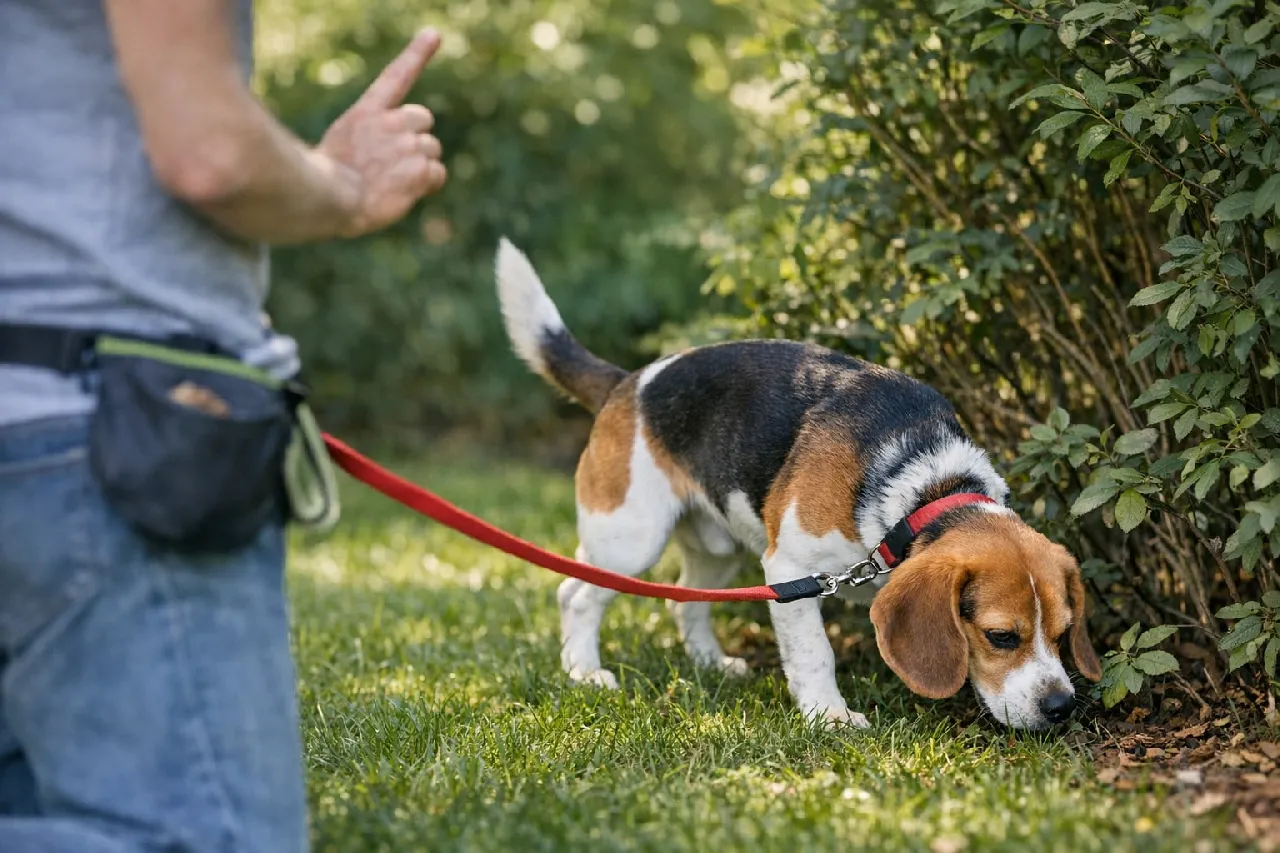
A Beagle’s nose is not a side feature. It is the main engine. Training that ignores scent drive will always feel like a wrestling match. The better route is to use that drive as part of the process. Let the dog work for rewards, give him structured sniff time, and understand that mental stimulation can tire a Beagle as effectively as a long walk. When owners respect the hound’s wiring, progress usually comes steadier and with less conflict.
Being Inconsistent With Rules
Beagles are sharp enough to notice every loophole you leave open. If the dog is allowed on the couch one day, corrected for it the next, and ignored the day after that, he is not the confused one. You are. Inconsistency is a quiet training killer, and it shows up in all kinds of ways. Sometimes one person in the household enforces rules while another gives in. Sometimes the dog is expected to heel on walks until he starts pulling hard, and then everyone just lets him drag them down the path.
Hounds do best when the rules are plain and steady. If a command matters, it must always mean the same thing. If a behavior is not allowed, it cannot become acceptable when you are tired or in a hurry. Beagles are excellent at finding weak fences, and that includes the fences around your expectations.
Using Too Much Repetition and Too Little Timing
Another mistake I see often is repeating commands over and over until they lose all value. “Come, come, come, come,” while the dog keeps sniffing clover, is not training. It is background noise. A Beagle learns best when the cue is given clearly, followed by immediate guidance and a consequence that makes sense, whether that is a reward for success or a reset when he blows you off.
Timing is everything with a hound. If you praise too late, he may think you are rewarding the wrong behavior. If you correct too late, he has no earthly idea what earned your frustration. I have always believed a fair dog handler must be precise. Beagles especially need that precision because they are so often half a world away in their nose. Catch the moment right, and they learn. Miss it badly enough, and you are just making noise in the wind.
Keep sessions short and meaningful
Long, grinding lessons can dull a Beagle fast. Ten good minutes can do more than forty sloppy ones. End on a success when you can. Let the dog feel like he understands the game. A Beagle that enjoys training is far easier to live with than one that has learned every session ends in confusion or pressure.
Skipping Recall Training Until It Is Too Late
If there is one area where owners get humbled, it is recall. People often wait until the Beagle is older, bolder, and already convinced the world beyond the yard is full of better ideas. Then they try to teach “come” in the middle of heavy distractions and wonder why the dog fails. Recall should start early, in controlled settings, and with enough reward that the dog believes returning to you is worth interrupting whatever his nose has found.
I have seen more than one young Beagle get loose and turn a pleasant morning into an all-day hunt because nobody laid the foundation. A long line is your friend here. It gives freedom without surrendering control. Call once, help the dog succeed, reward generously, and build from there. Do not poison recall by only using it when fun is over. Sometimes call the dog in, praise him, and send him back out. That small habit can save you a heap of trouble down the road.
Relying on Punishment Instead of Building Motivation
Heavy-handed training is a poor match for most Beagles. These dogs can shut down, get sneaky, or simply decide you are not worth listening to if every interaction feels like pressure. That does not mean training should be soft and shapeless. It means the dog needs a reason to engage. Food works well with many Beagles. So does play, praise, and access to what they want. If the dog wants to sniff, make that part of the reward structure when possible.
The best handlers I have known are not the loudest. They are the most readable. Their dogs understand exactly where success lives. Beagles respond to that kind of fairness. When they trust the process, they come along better. When every mistake is met with anger, they start operating around you instead of with you.
Ignoring Exercise and Mental Work
A bored Beagle is a creative Beagle, and usually not in ways you will appreciate. Chewing, baying, digging, wandering, and selective listening often get blamed on poor temperament when the real issue is unmet need. These dogs were bred to use their noses, move their feet, and stay busy. A quick lap around the block may not touch the edge of their energy.
Training improves when daily life improves. Scent games in the yard, structured walks, short obedience sessions, and chances to problem-solve can take the edge off a restless hound. I remember a young male that seemed impossible in the house. He whined, stole things, and could not settle for ten minutes. Once his owner started giving him regular nose work and more purposeful exercise, he turned into a different dog. Not perfect, but trainable. That is an important distinction.
Channel the nose, do not fight itHide treats, lay short scent trails, and make the Beagle use his head. A dog that gets to satisfy his instincts in acceptable ways is less likely to create his own entertainment. Good training is often less about suppressing a Beagle and more about directing him.
Moving Too Fast Around Distractions
Owners often practice commands in the kitchen, see the dog respond, and assume the lesson is finished. Then they head outside where birds, squirrels, scents, children, and passing dogs all compete for attention, and the Beagle suddenly acts untrained. That is not betrayal. That is proof the training was never generalized.
Beagles need gradual exposure to harder environments. Start where the dog can win. Then add distraction in sensible steps. A command that works in the living room may need weeks of reinforcement before it works near an open field. I learned long ago that patience in training saves time in the long run. Rush the process, and you usually circle back to fix what should have been built properly the first time.
Neglecting Early Socialization and Handling
Some owners focus so much on basic commands that they forget the Beagle also needs to be comfortable with the ordinary pressures of life. Handling the ears, feet, and mouth, meeting different people, hearing everyday sounds, riding in the truck, and learning to settle in new places all matter. A Beagle that panics at routine care or becomes overexcited in every fresh setting is harder to manage and harder to train.
Socialization should not mean chaos. It should mean steady, positive exposure. Let the pup learn that the world is broad, but not threatening. That confidence pays off later whether the dog is a house companion, a field hound, or both.
Letting Frustration Set the Tone
Beagles can test your patience. Anybody who says otherwise has not spent much time with one on a live scent. But frustration is contagious, and once it becomes the main tone of training, progress slows down. Dogs read us better than we like to admit. If every session starts with irritation, the Beagle feels that pressure before the first command is spoken.
The best thing you can do on a rough day is shorten the session and get one clean win. Training should build a pattern of understanding, not a history of arguments. There is no shame in stepping back, lowering the difficulty, and reminding the dog of something he knows well. That kind of reset can keep a temporary problem from becoming a lasting one.
Final Thoughts on Training a Beagle the Right Way
Beagles are honest dogs. They tell you exactly what they were bred for, and if you listen to that truth, training starts making more sense. Most common training mistakes with Beagles come from fighting the breed instead of working with it. Owners expect too much too soon, repeat commands until they mean nothing, neglect recall, skimp on exercise, and let inconsistency muddy the water. None of that is fatal, but all of it can slow a good dog down.
A well-trained Beagle is not a machine. He is a hound with instincts, curiosity, grit, and a nose that can carry him clean out of your plans if you are careless. But with patience, fairness, and enough practical work, you can shape that raw material into a dependable companion. And when you do, there is something deeply satisfying about it. A Beagle earned the right way is a fine dog to walk behind, hunt over, or welcome home at the end of the day.
A Beagle can be a fine companion, a fun rabbit dog, and a steady family hound, but getting there takes an honest understanding of the breed. The biggest mistakes usually do not come from bad intentions. They come from asking the wrong things, moving too fast, or expecting obedience without building communication first. If you can avoid those traps, you will have a much better dog and a lot less frustration on your boots.
Expecting a Beagle to Train Like a People-Pleasing Breed
One of the most common training mistakes with Beagles is expecting immediate compliance just because the command was given. A Beagle often weighs his options. If there is a hot scent trail drifting across the yard, your “come” may have to compete with instincts older than any obedience class. That does not mean the dog cannot be trained. It means training has to be built with the breed in mind.
I have watched owners sour a young Beagle by repeating commands louder and louder, as if volume could beat a rabbit track. All that usually teaches the dog is that words are cheap. With Beagles, clarity and consistency matter more than force. Short sessions, high-value rewards, and realistic expectations go a long way. You are not trying to turn a hound into something else. You are trying to shape natural drive into good manners and dependable habits.
Why breed instincts matter
A Beagle’s nose is not a side feature. It is the main engine. Training that ignores scent drive will always feel like a wrestling match. The better route is to use that drive as part of the process. Let the dog work for rewards, give him structured sniff time, and understand that mental stimulation can tire a Beagle as effectively as a long walk. When owners respect the hound’s wiring, progress usually comes steadier and with less conflict.
Being Inconsistent With Rules
Beagles are sharp enough to notice every loophole you leave open. If the dog is allowed on the couch one day, corrected for it the next, and ignored the day after that, he is not the confused one. You are. Inconsistency is a quiet training killer, and it shows up in all kinds of ways. Sometimes one person in the household enforces rules while another gives in. Sometimes the dog is expected to heel on walks until he starts pulling hard, and then everyone just lets him drag them down the path.
Hounds do best when the rules are plain and steady. If a command matters, it must always mean the same thing. If a behavior is not allowed, it cannot become acceptable when you are tired or in a hurry. Beagles are excellent at finding weak fences, and that includes the fences around your expectations.
Using Too Much Repetition and Too Little Timing
Another mistake I see often is repeating commands over and over until they lose all value. “Come, come, come, come,” while the dog keeps sniffing clover, is not training. It is background noise. A Beagle learns best when the cue is given clearly, followed by immediate guidance and a consequence that makes sense, whether that is a reward for success or a reset when he blows you off.
Timing is everything with a hound. If you praise too late, he may think you are rewarding the wrong behavior. If you correct too late, he has no earthly idea what earned your frustration. I have always believed a fair dog handler must be precise. Beagles especially need that precision because they are so often half a world away in their nose. Catch the moment right, and they learn. Miss it badly enough, and you are just making noise in the wind.
Keep sessions short and meaningful
Long, grinding lessons can dull a Beagle fast. Ten good minutes can do more than forty sloppy ones. End on a success when you can. Let the dog feel like he understands the game. A Beagle that enjoys training is far easier to live with than one that has learned every session ends in confusion or pressure.
Skipping Recall Training Until It Is Too Late
If there is one area where owners get humbled, it is recall. People often wait until the Beagle is older, bolder, and already convinced the world beyond the yard is full of better ideas. Then they try to teach “come” in the middle of heavy distractions and wonder why the dog fails. Recall should start early, in controlled settings, and with enough reward that the dog believes returning to you is worth interrupting whatever his nose has found.
I have seen more than one young Beagle get loose and turn a pleasant morning into an all-day hunt because nobody laid the foundation. A long line is your friend here. It gives freedom without surrendering control. Call once, help the dog succeed, reward generously, and build from there. Do not poison recall by only using it when fun is over. Sometimes call the dog in, praise him, and send him back out. That small habit can save you a heap of trouble down the road.
Relying on Punishment Instead of Building Motivation
Heavy-handed training is a poor match for most Beagles. These dogs can shut down, get sneaky, or simply decide you are not worth listening to if every interaction feels like pressure. That does not mean training should be soft and shapeless. It means the dog needs a reason to engage. Food works well with many Beagles. So does play, praise, and access to what they want. If the dog wants to sniff, make that part of the reward structure when possible.
The best handlers I have known are not the loudest. They are the most readable. Their dogs understand exactly where success lives. Beagles respond to that kind of fairness. When they trust the process, they come along better. When every mistake is met with anger, they start operating around you instead of with you.
Ignoring Exercise and Mental Work
A bored Beagle is a creative Beagle, and usually not in ways you will appreciate. Chewing, baying, digging, wandering, and selective listening often get blamed on poor temperament when the real issue is unmet need. These dogs were bred to use their noses, move their feet, and stay busy. A quick lap around the block may not touch the edge of their energy.
Training improves when daily life improves. Scent games in the yard, structured walks, short obedience sessions, and chances to problem-solve can take the edge off a restless hound. I remember a young male that seemed impossible in the house. He whined, stole things, and could not settle for ten minutes. Once his owner started giving him regular nose work and more purposeful exercise, he turned into a different dog. Not perfect, but trainable. That is an important distinction.
Channel the nose, do not fight itHide treats, lay short scent trails, and make the Beagle use his head. A dog that gets to satisfy his instincts in acceptable ways is less likely to create his own entertainment. Good training is often less about suppressing a Beagle and more about directing him.
Moving Too Fast Around Distractions
Owners often practice commands in the kitchen, see the dog respond, and assume the lesson is finished. Then they head outside where birds, squirrels, scents, children, and passing dogs all compete for attention, and the Beagle suddenly acts untrained. That is not betrayal. That is proof the training was never generalized.
Beagles need gradual exposure to harder environments. Start where the dog can win. Then add distraction in sensible steps. A command that works in the living room may need weeks of reinforcement before it works near an open field. I learned long ago that patience in training saves time in the long run. Rush the process, and you usually circle back to fix what should have been built properly the first time.
Neglecting Early Socialization and Handling
Some owners focus so much on basic commands that they forget the Beagle also needs to be comfortable with the ordinary pressures of life. Handling the ears, feet, and mouth, meeting different people, hearing everyday sounds, riding in the truck, and learning to settle in new places all matter. A Beagle that panics at routine care or becomes overexcited in every fresh setting is harder to manage and harder to train.
Socialization should not mean chaos. It should mean steady, positive exposure. Let the pup learn that the world is broad, but not threatening. That confidence pays off later whether the dog is a house companion, a field hound, or both.
Letting Frustration Set the Tone
Beagles can test your patience. Anybody who says otherwise has not spent much time with one on a live scent. But frustration is contagious, and once it becomes the main tone of training, progress slows down. Dogs read us better than we like to admit. If every session starts with irritation, the Beagle feels that pressure before the first command is spoken.
The best thing you can do on a rough day is shorten the session and get one clean win. Training should build a pattern of understanding, not a history of arguments. There is no shame in stepping back, lowering the difficulty, and reminding the dog of something he knows well. That kind of reset can keep a temporary problem from becoming a lasting one.
Final Thoughts on Training a Beagle the Right Way
Beagles are honest dogs. They tell you exactly what they were bred for, and if you listen to that truth, training starts making more sense. Most common training mistakes with Beagles come from fighting the breed instead of working with it. Owners expect too much too soon, repeat commands until they mean nothing, neglect recall, skimp on exercise, and let inconsistency muddy the water. None of that is fatal, but all of it can slow a good dog down.
A well-trained Beagle is not a machine. He is a hound with instincts, curiosity, grit, and a nose that can carry him clean out of your plans if you are careless. But with patience, fairness, and enough practical work, you can shape that raw material into a dependable companion. And when you do, there is something deeply satisfying about it. A Beagle earned the right way is a fine dog to walk behind, hunt over, or welcome home at the end of the day.




View all 0 comments