
Bavarian Mountain Hound
Description
The Bavarian Mountain Hound is a highly skilled and versatile scent hound, originally bred in Germany for tracking and hunting in mountainous terrain. Known for its exceptional tracking abilities, especially in difficult conditions, this breed was traditionally used to track wounded large game, such as deer and wild boar, due to its strong sense of smell and determination. It is a reliable working dog that has gained recognition for its endurance, intelligence, and loyalty.
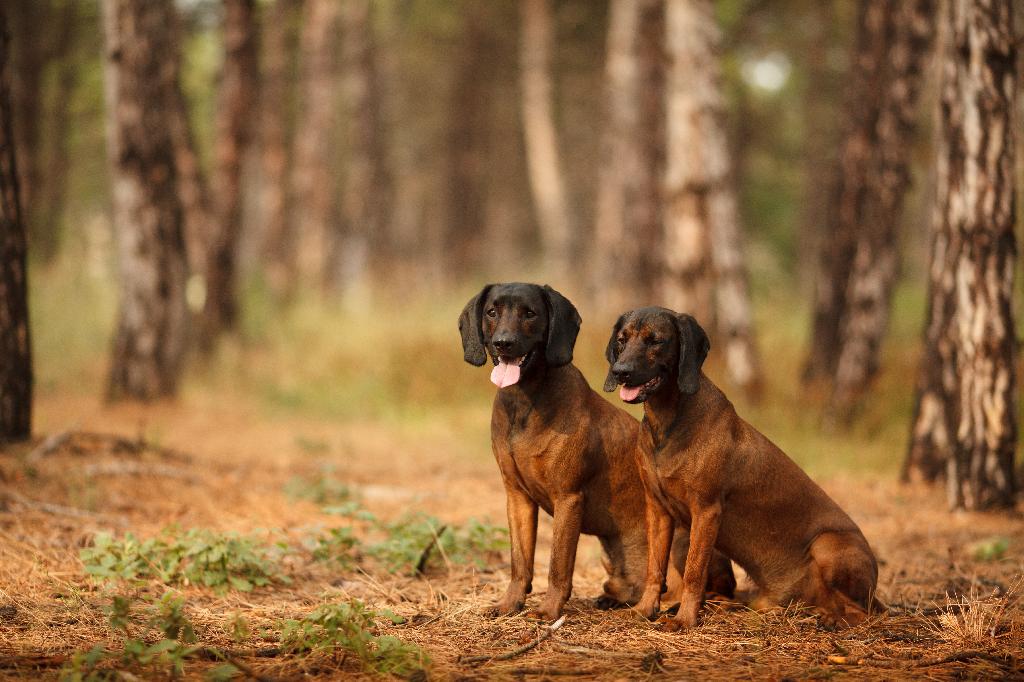
Physically, the Bavarian Mountain Hound is a medium-sized dog with a muscular, athletic build, designed for stamina and agility in rugged terrain. It has a short, dense coat that is usually reddish-brown or a combination of tan and black with a lighter mask on the face. The breed's eyes are often dark and expressive, contributing to its alert and focused appearance. Its ears are medium-sized and slightly floppy, further enhancing its expressive face.
Temperament-wise, the Bavarian Mountain Hound is known for its calm, steady, and determined nature. It is independent and focused when working, but with its family, it is affectionate, loyal, and gentle. While it can be reserved with strangers, the Bavarian Mountain Hound is generally good with children and other pets when properly socialized. Due to its hunting instincts, it may be more reserved or cautious around unfamiliar people or animals, but it is never aggressive.
Training the Bavarian Mountain Hound can be somewhat challenging due to its independent streak, which is common among scent hounds. However, it is intelligent and responds well to consistent, positive reinforcement. Early socialization and training are important to ensure that it develops into a well-behaved and balanced companion.
The Bavarian Mountain Hound is a high-energy breed that requires regular exercise to stay healthy and happy. It thrives in environments where it can be mentally and physically engaged, particularly with activities that tap into its natural hunting and tracking instincts. It is best suited for active families or individuals who can provide the dog with ample space to roam and explore, as well as opportunities for scent work and outdoor adventures.
In summary, the Bavarian Mountain Hound is a dedicated, intelligent, and loyal breed that makes an excellent working dog and companion for experienced owners who appreciate its strong hunting drive and need for mental stimulation. With proper care, training, and attention, it can be a wonderful and devoted member of the family.
History
The Bavarian Mountain Hound, known in its homeland as the **Bayerischer Gebirgsschweißhund**, was developed in the mountainous regions of southern Germany to track and trail wounded game. Its origins date back to the 19th century, when hunters and gamekeepers in the Bavarian Alps sought a specialized scenthound capable of following faint blood trails over steep, rugged terrain. To achieve this, they selectively crossed the larger and heavier **Hanoverian Scenthound** (Hannoverscher Schweißhund) with lighter, more agile Alpine hounds. The resulting dog combined the Hanoverian’s powerful scenting ability and diligence with the agility and sure-footedness necessary to navigate the rocky environments of Bavaria.
As hunting practices modernized in the late 1800s, the need for a specialized tracking dog became even more pressing. The Bavarian Mountain Hound fit the bill perfectly: it was smaller than its Hanoverian forebear, making it more suitable for narrow mountain paths, yet it retained the deep-rooted instinct to track wounded game over long distances. These dogs were often handled by professional gamekeepers, or **Revierjäger**, who managed large hunting estates and needed reliable dogs that could work independently with steady focus. Over time, the breed’s reputation for relentless tracking and calm, loyal temperament spread, leading to increased demand throughout Bavaria and beyond.
In the early 20th century, the Bavarian Mountain Hound caught the attention of hunters across Germany, eventually prompting efforts to safeguard its bloodlines. The formation of breed clubs and the establishment of formal standards helped preserve the Hound’s unique characteristics. Recognized by the **Fédération Cynologique Internationale (FCI)**, the breed has continued to maintain a following among hunters throughout Europe, who prize its unwavering dedication to following a scent trail. Although still relatively rare outside of continental Europe, the Bavarian Mountain Hound has found enthusiasts in other parts of the world as well, drawn by its history, work ethic, and unwavering devotion to its handler.
Colors
• Black Brindle
• Brindle
• Brown Brindle
• Fawn
• Red
• Reddish Brown