
Hungarian hound
Description
The Hungarian Hound, also known as the Magyar Agar, is a versatile and skilled sighthound breed from Hungary, primarily bred for hunting. This ancient breed has a long history dating back over a thousand years, with roots believed to trace back to the steppe regions of Asia. The Magyar Agar was used for hunting small and medium-sized game, including hares, rabbits, and foxes, in the wide-open landscapes of Hungary. It is a dog that relies on its exceptional speed, agility, and sharp vision to chase and capture prey. The breed has been highly valued by Hungarian hunters for its stamina and ability to work in both solitary and group hunting situations.
Physically, the Hungarian Hound is a medium-sized dog with a slender yet muscular build, reflecting its purpose as a swift and efficient hunter. It typically stands between 24 to 28 inches at the shoulder and has a sleek, well-proportioned frame that supports its natural speed and endurance. The breed’s head is long and narrow, with a gentle, intelligent expression. Its coat is short and smooth, providing minimal resistance while running and allowing the dog to maintain its high-speed pursuits. The coat can come in a variety of colors, including fawn, brindle, and black, often with white markings on the chest, legs, or face. The Magyar Agar’s long, powerful legs and graceful, curved tail contribute to its elegant, athletic appearance.
The Hungarian Hound is renowned for its ability to run at high speeds for long distances. Like many sighthounds, it has exceptional vision that allows it to spot prey from far away, making it a formidable hunter. Its prey drive is strong, and it is driven by its instinct to chase moving objects. However, despite its independent nature while hunting, the Magyar Agar is also known for being affectionate and loyal to its family. It typically forms strong bonds with its owners and enjoys being part of the household. Although the breed is known for being calm and laid-back at home, it still requires regular exercise to keep its hunting instincts sharp and to stay in top physical condition.
In terms of temperament, the Hungarian Hound is typically gentle, calm, and independent, with a strong, natural hunting instinct. While it can be reserved around strangers, it is generally good-natured and social with its family, including children. However, due to its strong prey drive, it may not be suitable for households with smaller pets such as rabbits or cats unless properly socialized from a young age. As with many sighthound breeds, the Magyar Agar benefits from a home with access to open spaces where it can safely run and stretch its legs, but it also enjoys lounging indoors and is relatively low-maintenance in terms of grooming.
In conclusion, the **Hungarian Hound** is a remarkable breed that combines speed, intelligence, and agility with a calm, affectionate nature. Its history as a skilled hunter, along with its natural athleticism, make it an ideal companion for active individuals and families with the space to allow the breed to run and play. Whether working in the field or lounging at home, the Magyar Agar is a loyal and graceful dog with a deep connection to its historical roots as a hunting partner.
History
The Hungarian Hound, more commonly known as the *Transylvanian Hound* (*Erdélyi Kopó*), is an ancient scent hound breed that has a deep history in Hungary and the surrounding Carpathian Basin. Its origins trace back over a thousand years, to the time when the Magyars settled in the region during the 9th century. These early settlers brought hunting dogs with them, which were subsequently crossed with local breeds to develop the Transylvanian Hound. The breed was refined to excel in hunting in the dense forests and mountainous terrain of Transylvania, making it a highly valued companion for Hungarian nobility and hunters.
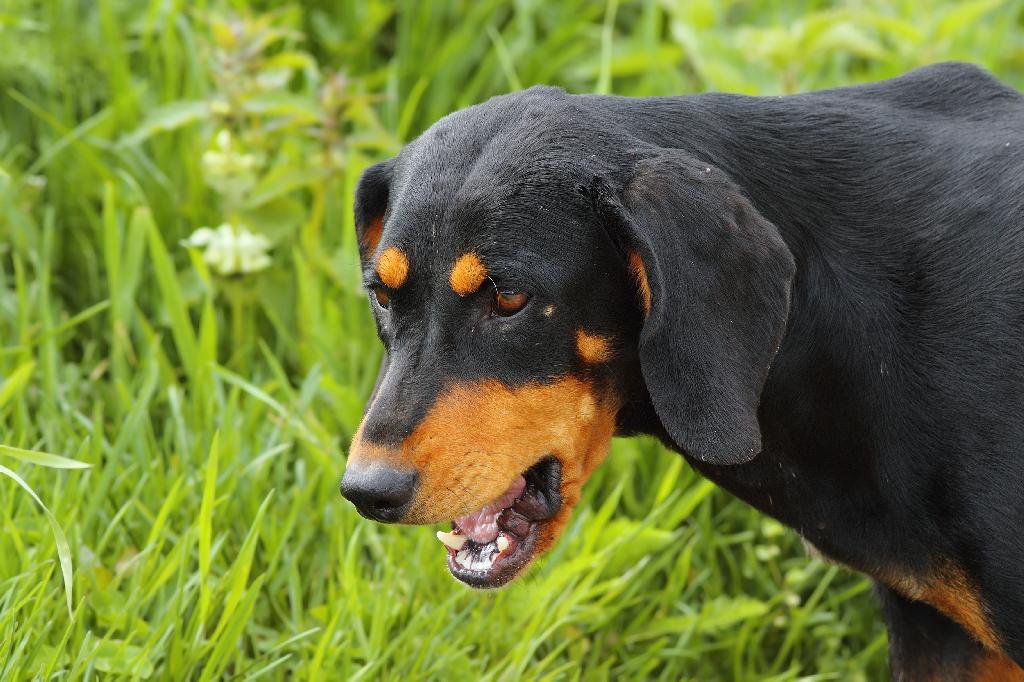
The breed was developed in two distinct varieties: a long-legged type for pursuing large game like boar, bear, and deer, and a short-legged type for hunting smaller game such as hare and fox. This adaptability, combined with its keen scenting ability and stamina, made the Transylvanian Hound a versatile and indispensable hunting dog for centuries. Its striking black-and-tan coat and athletic build further distinguished it as a breed well-suited to the rugged landscapes of its homeland.
The decline of the Transylvanian Hound began in the 19th and 20th centuries due to political changes, urbanization, and restrictions on hunting. By the mid-20th century, the breed was on the brink of extinction, with only a few individuals surviving in remote areas of Hungary and Romania. Efforts to preserve the breed were initiated in the 1960s, led by Hungarian enthusiasts who recognized its historical and cultural significance. Through careful breeding programs, the population was restored, and the breed was recognized by the Fédération Cynologique Internationale (FCI) in 1968.
Today, the Hungarian Hound remains a rare breed but is cherished for its intelligence, endurance, and loyalty. It continues to be used as a hunting dog in its native regions and has also gained recognition as a family companion for those who appreciate its active nature and rich history. The Transylvanian Hound stands as a living link to Hungary’s hunting traditions and the legacy of its early settlers.
Colors
• Black & Tan
• Black Tan & White
• Red & White