Border Terrier
Description
The Border Terrier is a small, lively, and affectionate breed originally developed in England for hunting foxes and small game. Known for its feisty personality, agility, and strong prey drive, the Border Terrier was bred to work alongside hunters and was capable of navigating rough terrain and dense underbrush while chasing game.
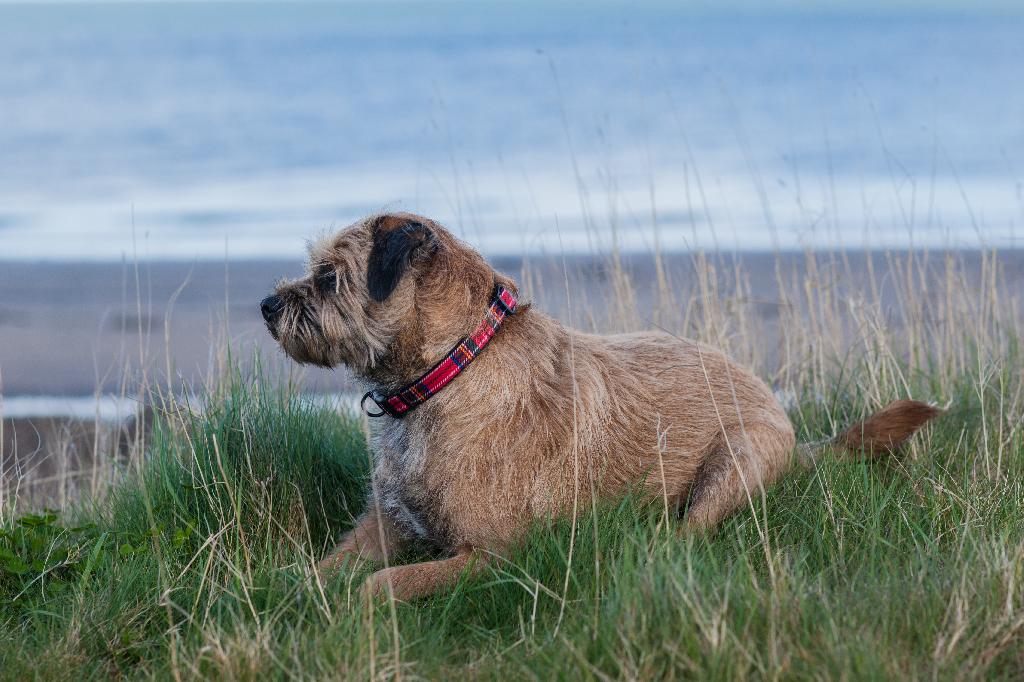
Physically, the Border Terrier is compact and sturdy, with a rectangular body shape and a rough, wiry coat. Its coat comes in various colors, including red, grizzle and tan, blue and tan, and others. The breed’s expressive eyes, small ears, and distinctive facial expression give it a charming and endearing appearance. Border Terriers typically weigh around 10 pounds and stand about 10 inches tall at the shoulder, making them one of the smaller terrier breeds.
In terms of temperament, Border Terriers are known for their affectionate and friendly nature. They are typically good with children and other pets, especially if socialized from a young age. Despite their small size, Border Terriers have a bold, confident demeanor and are often described as "big dogs in small bodies." They are intelligent and eager to please but can also be independent and stubborn, which can make training a challenge at times.
Border Terriers are generally easy to train, especially when positive reinforcement methods are used. However, they require consistent training to prevent undesirable behaviors, such as chasing small animals, due to their strong prey drive. They enjoy regular mental stimulation and physical activity, such as walks, playtime, or puzzle games, to keep them engaged.
The Border Terrier’s wiry coat requires regular grooming to prevent matting, and it benefits from occasional hand-stripping to maintain its texture and appearance. The breed is relatively low-maintenance compared to other terriers but still needs attention to its coat and overall care.
Overall, the Border Terrier is a loving, energetic, and intelligent breed that makes an excellent companion for active families or individuals. Its small size, friendly nature, and lively personality make it well-suited for both city and country living, as long as it receives the attention, training, and exercise it needs.
History
The Border Terrier originated in the rugged border country between England and Scotland, where farmers needed a small yet tough dog to help protect livestock from predators such as foxes. Dating back to the 18th century, these “border” terriers were bred to be agile enough to chase foxes and other vermin out of their dens, yet sturdy and determined in their pursuit. Their long legs—relative to other small terriers—enabled them to keep up with horses during foxhunts, while their small, flexible bodies allowed them to follow prey into tight spaces. Over time, local hunters and farmers came to value the dogs for their endurance, intelligence, and fearless demeanor despite their modest size.
By the late 19th and early 20th centuries, the Border Terrier’s reliable work ethic had caught the attention of foxhunts and sporting clubs throughout the region. The breed began to make appearances at dog shows, spurring greater interest in establishing breed standards. In 1920, the Kennel Club (UK) officially recognized the Border Terrier, marking a shift toward more formalized breeding programs. The breed’s popularity then began to spread beyond the borderlands, eventually reaching other parts of Europe and North America.
Even after this formal recognition, Border Terriers remained primarily working dogs for many years, continuing to serve on farms and foxhunts. However, their friendly and energetic nature soon earned them a place as beloved companions and family pets. The American Kennel Club (AKC) recognized the Border Terrier in 1930, and enthusiasts formed dedicated clubs to promote responsible breeding and preserve the breed’s distinctive characteristics. Today, the Border Terrier is celebrated worldwide for its blend of playful spirit, hardiness, and loyalty—qualities that trace back to its origins on the challenging terrain of the Anglo-Scottish border.
Colors
• Black & Red
• Black & Tan
• Black Grizzle
• Blue
• Blue & Tan
• Blue Grizzle
• Grizzle
• Grizzle & Tan
• Red
• Red Grizzle
• Red Grizzle & Tan
• Tan
• Wheaton